
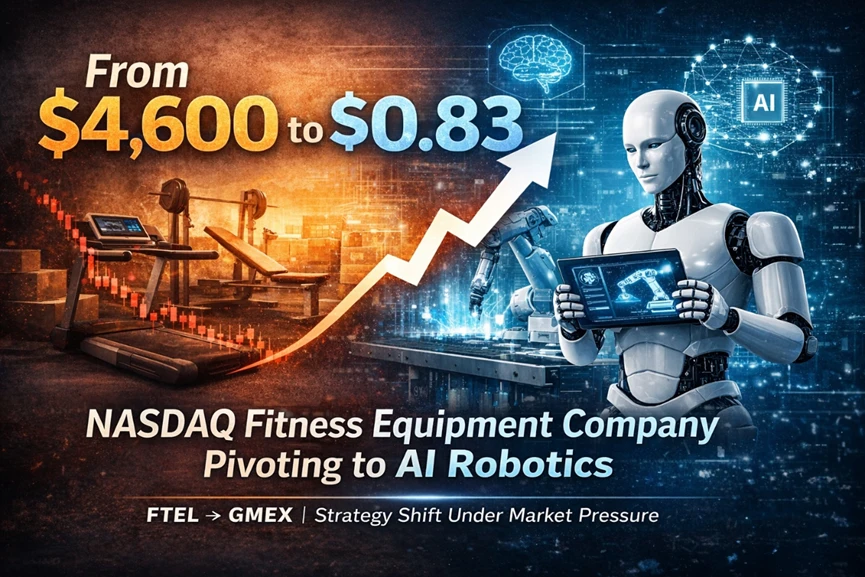
A NASDAQ-listed fitness equipment company has seen its stock fall from $4,600 to under $1 within less than two years.
Now, it is repositioning itself as an AI robotics business.
What’s driving this transformation—and what does it reveal about the intersection of capital markets, fitness equipment, and emerging technologies?
1. From Fitness E-commerce to AI Robotics
Originally focused on fitness equipment e-commerce, Fitell Corporation (NASDAQ: FTEL) has recently announced its rebranding to GMEX Robotics Corporation (NASDAQ: GMEX), alongside a strategic shift toward artificial intelligence and robotics.
This move signals the company’s intention to transition from a traditional consumer goods distribution model to a technology-driven development path centered on AI-enabled hardware and intelligent systems.
2. Stock Price Trajectory: From Peak to Sharp Decline
This strategic pivot comes after a period of significant volatility in the company’s capital market performance. Following its listing, Fitell attracted strong market attention, with its stock price reaching a peak of approximately $4,600 in November 2024.
However, this momentum proved short-lived. The stock began to decline rapidly and continued on a downward trajectory. As of March 20, 2026, the share price had fallen to approximately $0.83, corresponding to a market capitalization of roughly $1 million.
This dramatic shift reflects a substantial adjustment in market expectations. More importantly, it has weakened the company’s valuation base and financing capacity, placing it in a position where reassessing its strategic direction becomes increasingly necessary. In capital markets, valuation directly influences access to funding and growth potential; when that foundation changes, companies often need to rethink their future path.
3. Nasdaq Compliance Pressure
At the same time, the current share price level introduces potential regulatory pressure. According to Nasdaq listing rules, if a company’s stock price remains below $1.00 for 30 consecutive trading days, it will receive a deficiency notice and is typically granted a 180-day compliance period to regain eligibility.
Therefore, the stock price is not only a reflection of market sentiment but may also have direct implications for the company’s listing status.
4. The Original Business Model: A Typical Fitness E-commerce Platform
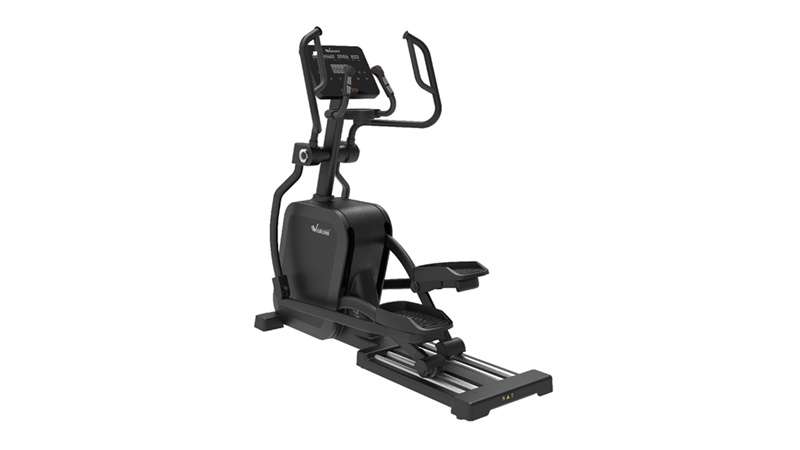
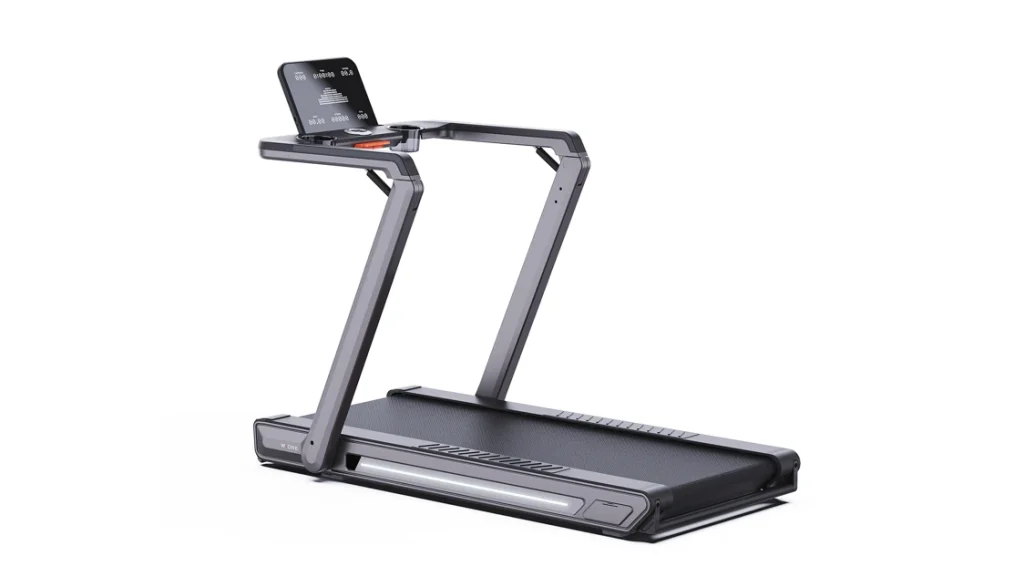
From a business perspective, Fitell’s core operations have been centered on a fitness equipment e-commerce platform, primarily targeting the Australian market. Through a combination of proprietary brands and online sales channels, the company has served both individual consumers and selected commercial clients.
Such business models are typically characterized by strong supply chain and distribution capabilities. However, scaling and profitability often require time and sustained investment. In Fitell’s case, revenue has remained at a relatively modest level—around several million USD annually—while the company continues to operate in an investment phase, with limited growth momentum.
5. Exploring AI: From Product Experimentation to Strategic Shift
Against this backdrop, the company has gradually explored new business directions. As early as late 2025, Fitell introduced a product called “2FCulinaryAI,” designed to integrate user health data with personalized nutrition planning through an automated cooking system.
This initiative suggests an early attempt to expand beyond traditional product sales toward an “AI + lifestyle hardware” model. The rebranding to GMEX Robotics further elevates this exploration into a company-wide strategic transition.
6. Industry Context: A Logical Direction, but a Different Path
From a broader industry perspective, the convergence of artificial intelligence and hardware is becoming a key development trend across multiple sectors. Within the fitness industry, AI is increasingly applied in areas such as training guidance, data analytics, and personalized fitness programming.
In this context, expanding into AI-related fields is a logical and understandable strategic choice.
However, from a structural standpoint, there is currently no clear evidence of strong synergy between the company’s new AI direction and its original fitness equipment business. While the legacy business focuses on product distribution and channel operations, AI and robotics involve entirely different technological frameworks and development cycles.
If these two areas cannot be effectively integrated—for example, by embedding AI capabilities into existing fitness products or leveraging the current user base for natural product extension—the company may need to manage two fundamentally different business tracks simultaneously.
7. The Challenges of Transition: Time, Resources, and Execution
This dual-structure approach implies that the company must continue supporting its existing operations while investing in new technological development. AI and robotics products typically require longer R&D cycles and gradual commercialization, meaning their contribution to revenue and profitability may take time to materialize.
As a result, changes in business structure and their financial implications will likely become key areas to monitor in the near term.
8. Conclusion: Transformation as a Starting Point
From a capital markets perspective, strategic transformation often attracts renewed attention, particularly when aligned with high-growth themes such as AI. However, long-term evaluation ultimately depends on tangible business performance, including revenue growth, product execution, and profitability.
Overall, Fitell’s transition to GMEX Robotics can be seen as a directional adjustment based on its current circumstances. Whether this shift will lead to a sustainable growth path remains to be seen and will depend on future execution and market response.
For the broader industry, this case offers a valuable perspective: as technological trends continue to evolve, companies must find a balance between strengthening their existing business foundations and exploring new opportunities.
Sources
- Investing.com – Fitell rebrands to GMEX Robotics, shifts focus to AI products
- Investing.com – Fitell Corp (FTEL) stock price and historical data
- Fitell Corporation official releases and public disclosures (including AI product announcements)
- Company profile and business overview from publicly available sources
Disclaimer
This article is based on publicly available information and is intended solely for industry analysis and informational purposes. While efforts have been made to ensure accuracy, the information presented may be subject to limitations or changes over time. This content does not constitute investment advice or a recommendation for any financial or business decisions. Readers are encouraged to refer to official company disclosures and conduct independent assessments where necessary.





You must be logged in to post a comment.