- In today’s fundraising environment, a business plan without an AI narrative can see its valuation immediately discounted — or ignored altogether.
- In many cases, the actual technological moat is far weaker than the marketing suggests.
- Real market value often comes from solving practical operational problems rather than showcasing technology.
Summary
As capital markets continue to evaluate the wellness industry through an “AI lens,” fitness equipment manufacturers may need something even more important: the ability to see reality clearly.
Without owning core AI technologies, traditional fitness equipment companies should avoid making strategic bets purely at the application layer. Blindly chasing market hype can easily divert businesses away from building sustainable long-term competitiveness.
Valuation Pressure: The “AI Fever” Driven by Capital Markets
Since the launch of ChatGPT in November 2022, global capital markets have entered what many would describe as an almost obsessive phase of AI enthusiasm. In today’s fundraising environment, a business plan without an AI narrative can see its valuation immediately discounted — or ignored altogether.
This frenzy has been reflected dramatically in public markets. The market capitalization of NVIDIA surged from less than US$300 billion to more than US$5 trillion, while leading Chinese optical module suppliers also experienced extraordinary stock gains within a short period.
The story promoted by capital markets is undeniably compelling: shortages in computing power, AI demand reportedly booked years in advance, and the belief that an entirely new technological era is unfolding. To many investors, it resembles the beginning of another “epic boom cycle.”
Yet beneath the excitement lies a more sobering reality. Industry statistics suggest that more than 90% of AI application projects worldwide have yet to achieve scalable profitability, while the commercialization success rate remains below 15%.
History offers a familiar warning. During the dot-com bubble of 2000, the NASDAQ Composite collapsed from 5,048 points to 1,114 points, with many individual companies losing more than 90% of their value. The larger the bubble becomes, the harsher the eventual correction tends to be.
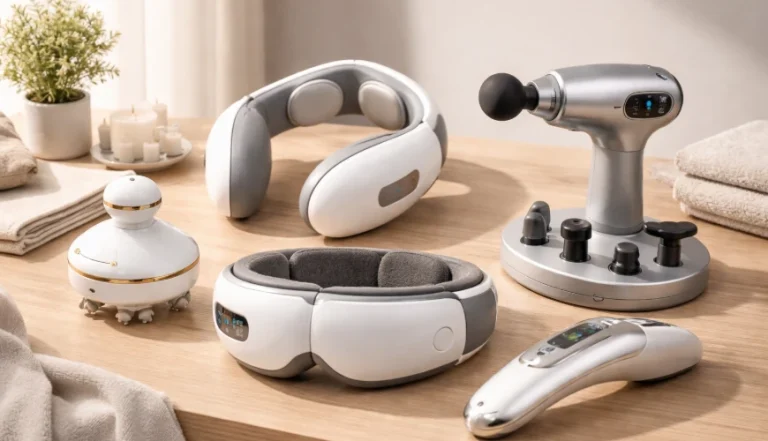
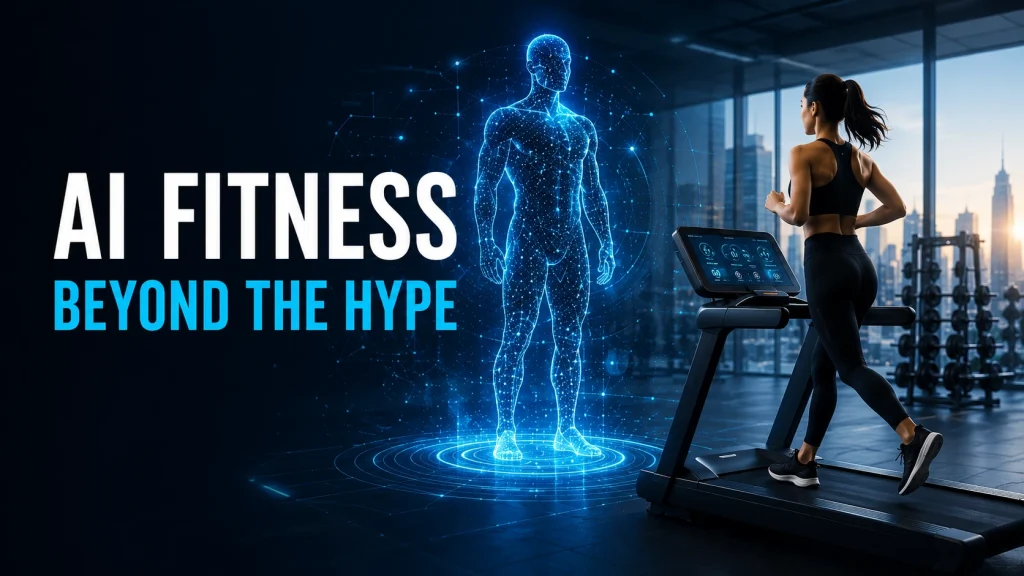
Within the fitness equipment industry, this market enthusiasm has encouraged many brands and manufacturers to chase the next “AI opportunity.” As a result, adding “AI-powered” labels to treadmills, strength equipment, or connected devices has become increasingly common. In many cases, even a simple voice assistant integrated into a screen is marketed as an AI breakthrough. The phenomenon itself has become an industry trend.
The Aescape Collapse: A $157 Million Warning Signal
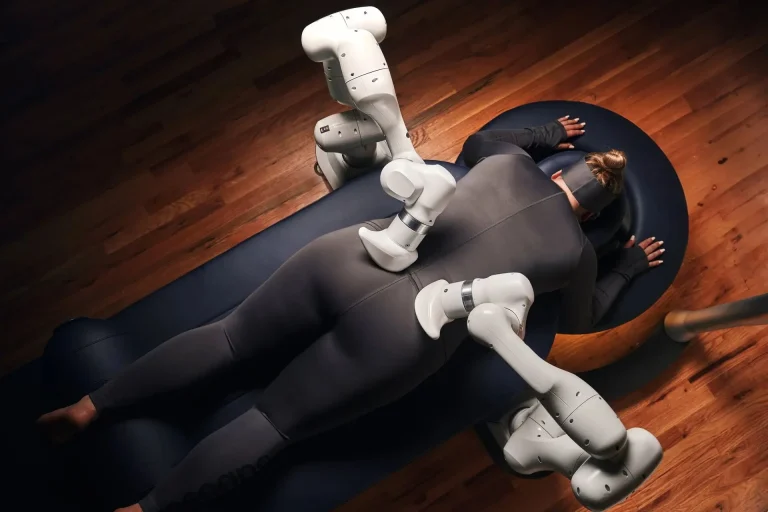
While investors continue to promote ambitious visions around AI applications, the recent collapse of U.S.-based robotic massage company Aescape has delivered a stark reality check to the broader “AI + wellness” sector.
Founded in 2017 and once regarded as a promising example of automated wellness technology, Aescape ultimately entered insolvency proceedings with an accumulated funding shortfall estimated at US$157 million.

The company attempted to disrupt the recovery and wellness industry through robotic massage tables powered by AI algorithms. However, its failure was not an isolated case. Instead, it exposed several structural weaknesses that are increasingly common across many AI-driven fitness and wellness ventures.
A Heavy-Asset Business Disguised as an AI Company
Despite its AI branding, Aescape fundamentally operated as a heavy-asset hardware business.
Building a robotic massage system required enormous investment in mechanical engineering, force feedback systems, motor control technologies, and hardware integration. At the same time, the company also had to continuously spend on AI algorithm development, software optimization, and aggressive marketing efforts.
The result was an extremely expensive operational structure with long commercialization cycles and significant financial pressure.
Questionable “Intelligence”
Aescape’s robotic massage system aimed to provide standardized recovery services through sensors and algorithms. However, important questions remained unanswered.
Did the algorithms truly deliver meaningful personalization? Were the sensors accurate enough to replicate nuanced human touch and pressure adjustment? Could the system consistently outperform experienced therapists?
These concerns extend far beyond Aescape itself. Across the broader market, many products promoted as “AI-powered” — including AI fitness mirrors and AI personal training systems — are in reality little more than interfaces connected to third-party generic APIs.
In many cases, the actual technological moat is far weaker than the marketing suggests.
Market Demand Cannot Simply Be “Created”
Even if the technology itself is functional, whether the market is ready to adopt entirely new product categories remains a major uncertainty.
Many smart fitness products initially receive strong media attention but struggle to sustain long-term user engagement after the novelty wears off. Consumers and commercial operators alike often hesitate when evaluating whether intelligent devices truly justify replacing existing solutions.
In practice, buyers consider multiple factors simultaneously: return on investment, maintenance costs, operational reliability, customer acceptance, staff training requirements, and long-term service support. Purchasing decisions are far more complex — and much slower — than many startups initially assume.
Strategic Recommendations for Traditional Hardware Manufacturers
The failure of several AI-focused startups does not mean the AI era is ending. However, it does indicate that the market is beginning to correct short-term speculation and unrealistic narratives.
For most traditional fitness equipment manufacturers, the most pragmatic strategy today is not to chase hype, but to return to the fundamentals of business and focus on strengthening core capabilities.
Reject “Fake AI” and Focus on Real Customer Needs
Companies should avoid implementing AI simply for marketing purposes.
If an AI module increases manufacturing costs by 50% but improves user experience by only 5% — such as adding a basic voice assistant or superficial smart features — the investment may not make commercial sense.
Real market value often comes from solving practical operational problems rather than showcasing technology.
In commercial fitness environments, simplicity, reliability, and low failure rates are frequently more valuable than complicated posture-recognition systems or over-engineered interactive functions.
Likewise, seamless integration between fitness equipment and gym management systems, stable data synchronization, and efficient member management tools may provide far greater long-term value than vague “AI-powered” branding.
Understand the Difference Between Manufacturing Logic and Capital Logic
Traditional manufacturers occupy a very different position within the industry value chain than venture-backed technology startups.
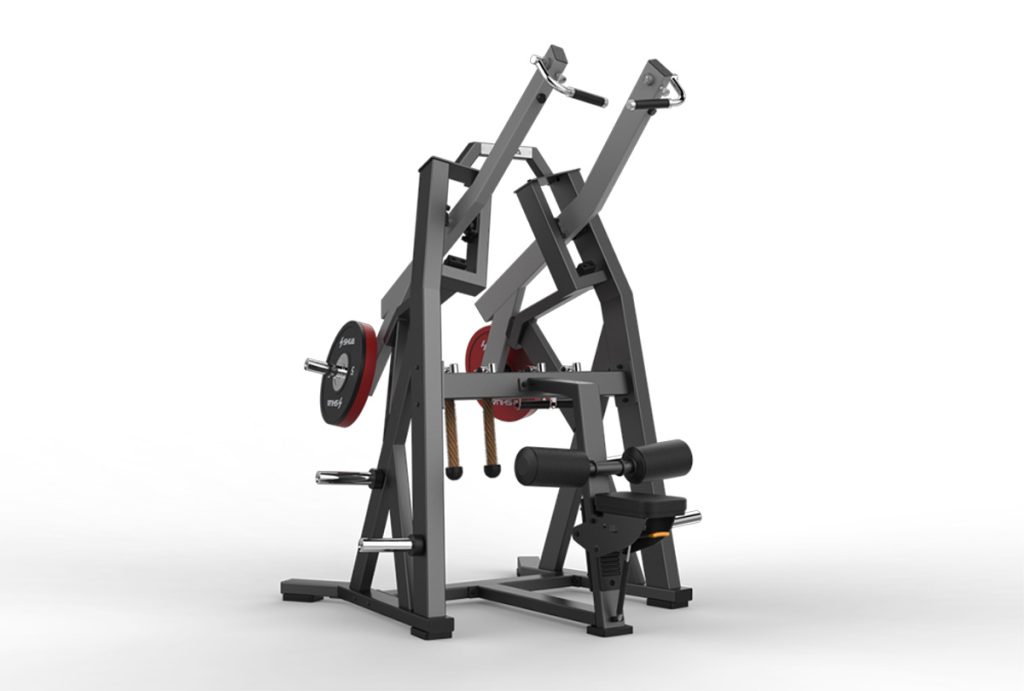
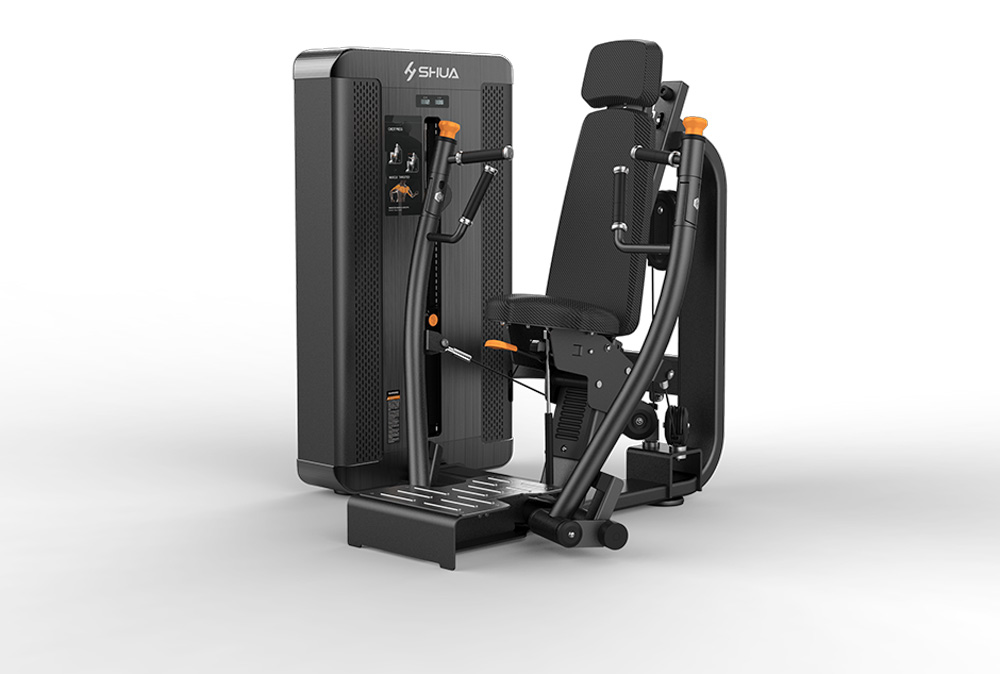
Most established fitness equipment companies — particularly many Chinese manufacturers — specialize in hardware R&D, manufacturing efficiency, supply chain coordination, and product quality management.
By contrast, many cross-industry AI startups operate under a fundamentally different business model. Their true customer is often not the end consumer, but capital itself. In many cases, the business model is designed primarily around attracting investment rather than achieving sustainable industrial profitability.
When capital enthusiasm fades, these companies are often among the first to collapse.
Of course, there are exceptions. Industry leaders such as Peloton, Technogym, and EGYM operate under very different commercial frameworks, combining hardware, software ecosystems, subscriptions, and brand influence.
The challenge is that most traditional hardware manufacturers cannot simply replicate these Western business models.
Build Competitive Advantages Within Your Real Capabilities
Manufacturers with strong industrial foundations should focus on leveraging what they already do best.
That means strengthening supply chain efficiency, hardware engineering capabilities, manufacturing consistency, quality control systems, and production scalability. These are the areas where traditional manufacturers can still establish meaningful barriers to entry.
This does not mean AI should be ignored entirely.
On the contrary, manufacturers should actively develop cost-effective “AI-ready” hardware platforms — products designed with future connectivity and upgrade flexibility in mind. However, the strategic focus should remain on building robust hardware ecosystems rather than betting the company’s future entirely on speculative “AI smart product” narratives.
Conclusion
AI technology will undoubtedly reshape the health and wellness industry in the years ahead. However, that does not mean every company will benefit equally from the transformation.
After the collapse of the dot-com bubble in 2000, it was ultimately companies like Amazon and Google that survived and laid the foundation for today’s digital economy.
For most fitness equipment manufacturers, the immediate challenge is not blindly chasing the next trend, but clearly understanding their own position within the industry value chain.
Companies should avoid making aggressive strategic bets on AI applications without owning core technologies. They should also avoid piling expensive technology concepts onto products before fully understanding real customer demand.
Only by staying grounded in business fundamentals, building competitive advantages aligned with their actual industrial role, and remaining open to future technological evolution can traditional fitness equipment companies successfully navigate industry cycles — and ultimately benefit when AI delivers genuine, sustainable value to the market.
Exhibit Smarter, Not Harder: A Practical Guide to International Trade Shows for Fitness Brands