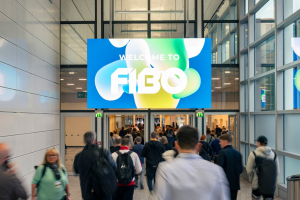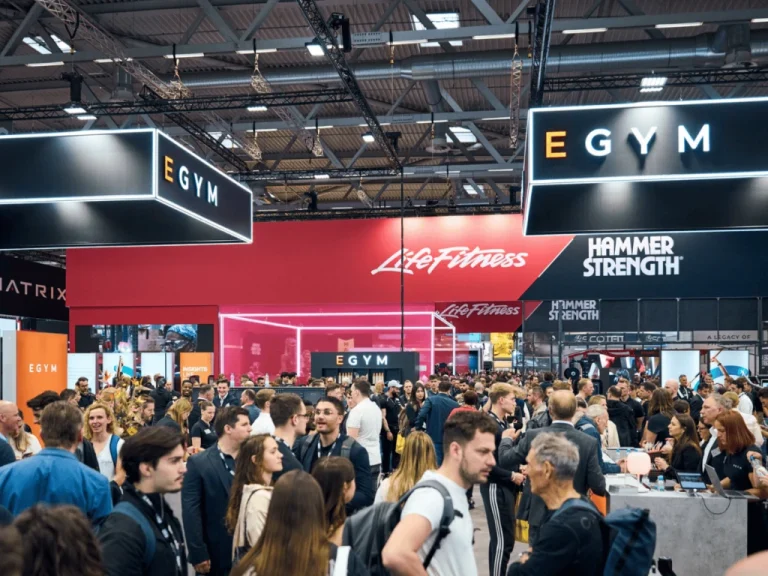
COLOGNE, Germany — April 16, 2026 — The world’s most influential fitness trade fair, FIBO 2026, opened its doors here today at Exhibition Centre Cologne under the theme “For a Strong and Healthy Society,” drawing more than 1,100 exhibitors from 53 nations and an expected 154,000+ professional visitors across its four-day run (April 16–19). The expo, organised by RX, coincides with a landmark moment for the European fitness industry — fresh off the back of last week’s record report showing 75.5 million members and €39.1 billion in revenue for 2025.
This year’s FIBO is first and foremost an AI story. The show floor features dedicated zones including the Confex Hall, Tech Valley, and the Future Forum, housing connected fitness solutions, AI-driven training platforms, digital health products, and data-enabled business models. A dedicated longevity and biohacking pavilion has been expanded to record size, spotlighting cryotherapy and sauna technologies with biometric tracking, next-generation EMS wireless systems, and AI startups capable of predicting injury risk before it manifests.
But the headline-generating subplot of FIBO 2026 is the assertiveness of Chinese fitness equipment manufacturers — and the strategic shift in how they are presenting themselves to the European market.
The New Chinese Playbook: From ‘Made in China’ to ‘Designed for Europe’
For years, Chinese manufacturers were synonymous with budget, low-margin equipment destined for price-sensitive gym operators in emerging markets. That narrative is being aggressively rewritten at FIBO 2026.
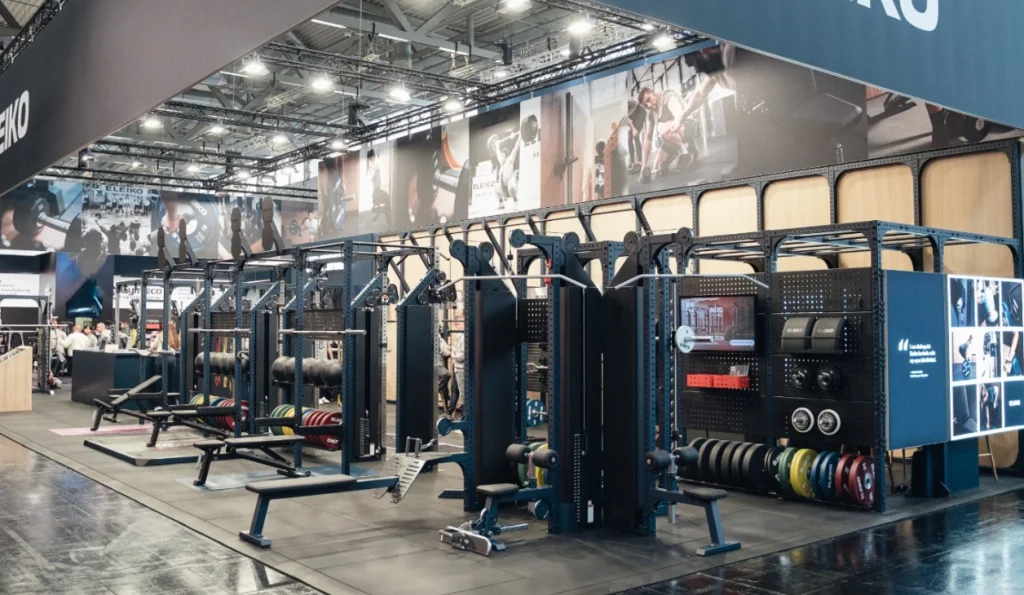
Shandong MND Fitness, which occupies dominant floor space across Halls 7 and 8 at this year’s show, is not exhibiting as an OEM supplier seeking European partners behind closed doors. It is presenting a fully branded commercial strength line with integrated AI coaching systems — and CE certification — front and centre, targeting European gym chains and boutique operators directly.
The message is calibrated to resonate: AI-powered, data-connected commercial strength equipment, priced at a significant discount to comparable European products. One product family on display reportedly uses machine learning to adjust resistance in real time based on a user’s movement velocity and fatigue indicators — functionality that, if the performance claims hold, places it in the same conversation as premium European brands at a markedly different price point.
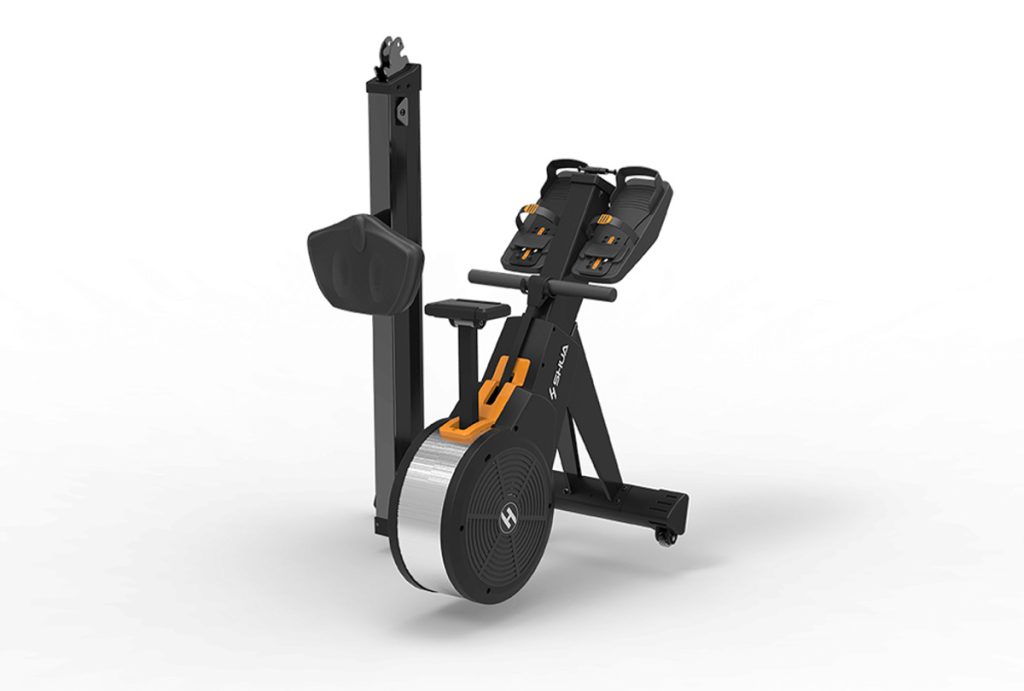
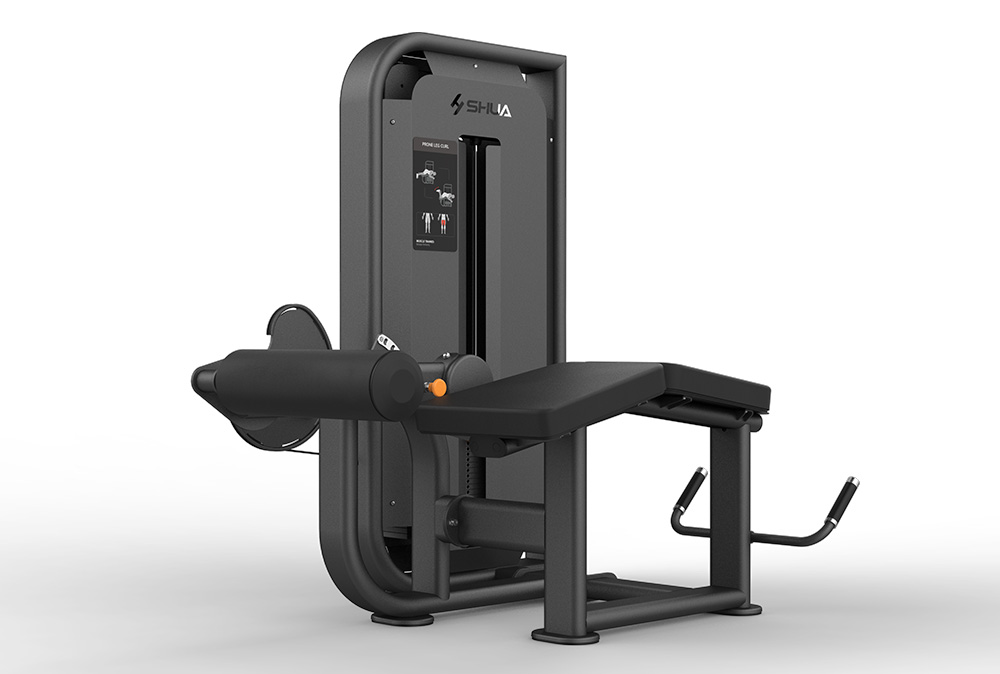
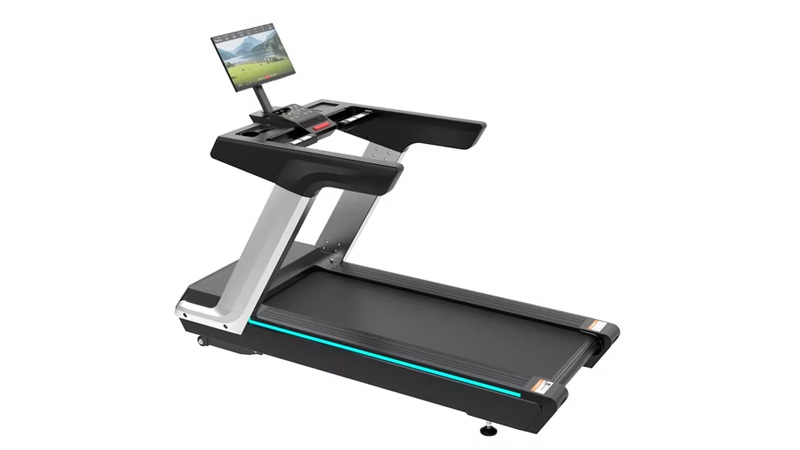
Shuhua, Johnson Health Tech, and Keep — all of which have previously used FIBO as a springboard into European distribution — are presenting upgraded product lines at this year’s edition. Collectively, China’s smart fitness equipment category reportedly achieved over 40% growth in order volume among FIBO exhibitors at the previous edition, according to industry data cited by exhibition analysts.
At the exhibition, Shandong Guwow Fitness Equipment Co., Ltd. made a stunning debut with its new original high-end sub-brand ASTRA. According to the company’s representative, ASTRA showcases technological wisdom from the design roots. It innovatively adopts the classic A-shaped tower structure of the Eiffel Tower, blending a century of architectural aesthetics with the pinnacle of industrial mechanics. This creates a stable frame as indestructible as the tower itself, completely resolving the issues of wobbling and noise found in traditional equipment. It remains rock solid even under high-intensity training, setting a new durability standard for professional venues.
Compliance as a Competitive Weapon
The Chinese push into Europe has been preceded by a significant compliance investment. Manufacturers entering the European commercial market in 2026 must navigate the EU’s updated Fitness Equipment Safety Directive, which takes effect this year, alongside existing requirements for CE marking, electrical safety under EN 957 standards, and GDPR-compliant data handling for connected software. Multiple Chinese manufacturers exhibiting at FIBO 2026 have completed or are in the final stages of obtaining these certifications — a signal that they are approaching European market entry as a long-term strategic commitment, not a transactional export exercise.
Europe’s Equipment Incumbents Respond
The timing of the Chinese offensive is notable. Europe’s health and fitness market grew revenues 9.1% to €39.1 billion in 2025, and the continent’s leading equipment manufacturers have been investing heavily in their own AI and connectivity capabilities. However, price pressure from technically capable new entrants is expected to intensify competitive dynamics — particularly in the commercial gym segment, where operator margins remain under pressure from rising energy costs and evolving consumer expectations.
EHFF 2026 Sets the Policy Stage
The commercial intensity on the FIBO show floor is mirrored by record-breaking attendance at the concurrent European Health & Fitness Forum (EHFF 2026), which opened alongside the trade fair. A record 585 industry leaders from 44 countries are attending this year’s forum, where policy discussions are focusing on integrating fitness data into national healthcare systems — a trend that, if realised, would significantly expand the addressable market for connected fitness technology across Europe.
“Today’s FIBO is no longer just a fitness equipment exhibition — it is a global health summit,” said Kai Troll, CEO of EuropeActive. The EHFF 2026 attendance figure represents the highest in the forum’s history, Troll noted, underscoring the sector’s elevation from niche fitness culture to mainstream health infrastructure.
What This Means for the Market
FIBO 2026 runs through April 19 at Exhibition Centre Cologne (Messeplatz 1, 50679). The show floor — spanning 160,000 square metres across 12 halls — will feature more than 550 seminars, workshops, and live demonstrations alongside the commercial exhibition. Key announcements on partnerships, product launches, and strategic expansions are expected throughout the week.
For European gym operators, equipment buyers, and investors, the message from FIBO 2026’s opening day is clear: the competitive landscape for commercial fitness equipment is undergoing a structural shift. Chinese manufacturers have arrived in force, armed with AI capabilities, CE certifications, and a price-to-performance proposition that the market can no longer afford to ignore.
About FIBO
FIBO is the world’s largest trade fair for health, fitness, and wellness, held annually at Exhibition Centre Cologne. Organised by RX, FIBO attracts over 150,000 professional visitors and more than 1,000 exhibitors from across the global fitness industry. Founded in 1985, it is widely regarded as the foremost global barometer of fitness industry trends and commercial opportunity.
About EuropeActive
EuropeActive is the leading not-for-profit organisation representing the European health and fitness sector, with member organisations spanning 45+ countries. EuropeActive co-produces the annual European Health & Fitness Market Report in partnership with Deloitte.
For more information, visit www.fibo.com