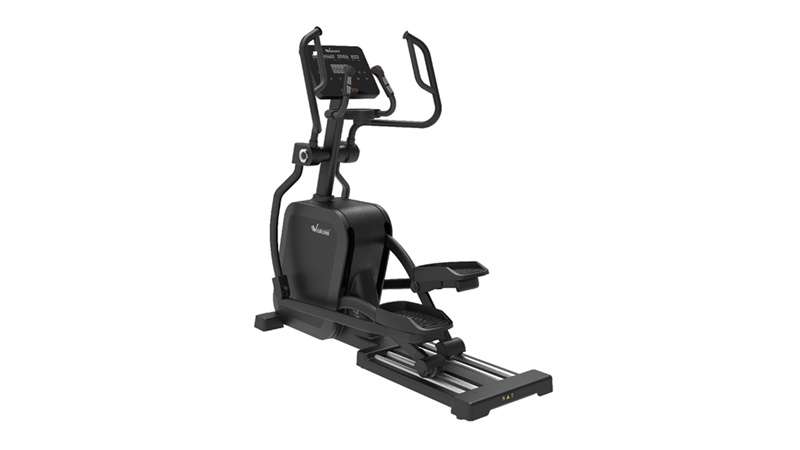


- Spain’s gym membership penetration has reached approximately 16.5%, closing the gap with the UK’s record 18% to just 1.5 percentage points — the narrowest margin in European fitness history.
- The UK fitness market generated £6.5 billion in revenue with 12.2 million members across 5,842 clubs, while club visits hit 679 million — nearly double NHS GP appointments.
- Low-cost democratization, Gen Z’s social fitness shift, GLP-1 medication integration, and government prevention policies are propelling growth in both markets simultaneously.
- For equipment manufacturers, sustained club expansion in both countries — combined with Spain’s 85% rate of gym-equipped new residential developments — represents a structurally growing commercial equipment market across all segments.
The European fitness industry is experiencing a historic convergence: Spain’s gym membership penetration has surged to approximately 16.5%, closing the gap with the United Kingdom’s record-high 18% to just 1.5 percentage points, according to data from the UK Health & Fitness Market Report 2026 and Spanish industry analysis published by GYM FACTORY. Both markets simultaneously hit all-time records in 2026 — a dual milestone that signals structural transformation in how Europeans engage with organized fitness.
The UK market, long established as one of the world’s most mature fitness economies, now counts 12.2 million members aged 16 and over, generating £6.5 billion in annual revenue across 5,842 health and fitness clubs. Spain, Europe’s fourth-largest fitness market by revenue, has reached over 7 million members and an estimated €3.2 billion-plus in industry income. That Spain — with notably lower per-capita income and purchasing power — has closed the penetration gap so dramatically is drawing attention from investors, operators, and equipment manufacturers worldwide.
European fitness industry Record-Breaking Penetration: UK at 18%, Spain at 16.5%
The UK Health & Fitness Market Report 2026, published by ukactive in partnership with Sport England, 4GLOBAL, and Grant Thornton UK, confirms that 18% of the UK’s over-16 population now holds a gym membership — up from 16.9% in 2024 and 14.6% in 2022. This represents a steady annual increase of approximately one percentage point, putting ukactive’s 2030 target of 20% penetration firmly within reach.
Total club visits surged to 679 million in 2025, a 10% year-on-year increase and nearly double the 383 million GP appointments recorded by the NHS over the same period. The sector’s attributable social value was quantified for the first time at £7.5 billion, reflecting health improvements, reduced disease burden, and enhanced life satisfaction.
Spain’s trajectory is equally compelling. Market analysis from GYM FACTORY and WifiTalents shows gym membership penetration has climbed to approximately 16.5%, up from an estimated 11.4% in earlier measurement cycles. The country’s 4,300-plus fitness facilities serve a rapidly diversifying member base: the 55-and-over demographic is the fastest-growing cohort, while the 25-to-34 age group maintains the highest attendance rate at 32%.
The Revenue Gap: Why UK Still Earns 2x More
Despite the narrowing penetration gap, the UK fitness market generates roughly twice the revenue of its Spanish counterpart — £6.5 billion versus approximately €3.2 billion. This disparity reflects deeper structural differences rather than weakness in the Spanish market.
The UK benefits from higher per-capita income, a more mature premium and mid-market segment, and higher average monthly membership fees. British consumers also exhibit stronger spending on ancillary services — personal training, recovery, nutrition, and wellness programming — that lift average revenue per member (ARPU). The UK’s fitness ecosystem, which includes deep integration with corporate wellness platforms and NHS referral schemes, further expands monetization pathways.
For Spain, the revenue gap is less a liability and more a roadmap. As the market matures beyond its low-cost-driven growth phase, operators are increasingly layering premium services — Pilates, recovery, personalized training, and corporate wellness — onto their membership base. This mirrors the UK’s own evolution over the past decade and points to substantial monetization headroom.
Spain’s Consolidation Engine: The VivaGym-Synergym Deal
Catalyzing Spain’s market momentum is the blockbuster acquisition announced on April 27, 2026: Providence Equity Partners-backed VivaGym signed a binding agreement to acquire Synergym, creating a combined platform of over 450 clubs across Spain and Portugal and making VivaGym the largest fitness operator in the Spanish market by location count.
The deal, which remains subject to regulatory approval, epitomizes the consolidation wave sweeping through Iberian fitness. Synergym had recently secured €70 million in syndicated financing and was targeting 200 clubs in Spain by year-end 2026. Combined with VivaGym’s existing footprint and its history of acquiring Fitness Hut, Duet Fit, Happy Gym, Smartfit, Macrofit, and Altafit, the merger represents the most significant concentration of fitness infrastructure in Iberian history.
“Scale is becoming as valuable as financial strength in the Iberian fitness market,” the transaction analysis noted, with the merged entity positioned to leverage route density, back-office integration, and cross-network cost amortization to compete against international entrants like Basic-Fit — which already operates 140-plus locations in Spain.
What’s Driving Growth in Both Markets
Several common forces are propelling the UK and Spain toward record penetration simultaneously:
Low-cost democratization. On both sides of the Channel, the HVLP (High-Value, Low-Price) model — led by PureGym and The Gym Group in the UK, and Basic-Fit, VivaGym, and Synergym in Spain — has removed the price barrier that historically limited gym membership to affluent demographics. Spain’s low-cost segment now accounts for 25% of total market revenue.
The social fitness shift. GYM FACTORY reports that Gen Z consumers are replacing bars with gyms as their primary social venue, a behavioral shift that is reshaping club design toward communal training zones, functional fitness areas, and cafe-style social spaces. In the UK, 49% of members cite “making friends” as an important benefit of their membership.
Beyond exercise. Fitness clubs in both markets are evolving into comprehensive health hubs. UK operators are integrating recovery services, co-working spaces, and nutrition programming. In Spain, 65% of mid-market gyms now offer virtual classes through platforms like Les Mills, and AI-driven member retention software has been adopted by 45% of clubs. The wearable fitness technology segment grew 22% in Spain in 2023 alone.
GLP-1 tailwinds. The rapid adoption of GLP-1 weight-loss medications is emerging as an unexpected demand driver. As both users and healthcare providers recognize that physical activity is essential for maintaining muscle mass and ensuring sustainable outcomes, gyms in both countries are positioning themselves as complementary infrastructure to pharmaceutical interventions.
Policy tailwinds. The UK government’s Prevention Agenda increasingly views fitness facilities as frontline health infrastructure, while Spain’s regional “Receta Deportiva” (Exercise Prescription) programs — which have grown 15% in uptake, particularly in Catalonia — are formally integrating gyms into the healthcare pathway.
Implications for Equipment Manufacturers and Suppliers
The dual-market surge carries direct consequences for the global fitness equipment supply chain:
The UK’s 5,842 clubs — growing at 4.2% annually — and Spain’s expanding base of 4,300-plus facilities represent sustained demand for commercial-grade cardiovascular equipment, strength training machines, and functional training rigs. The VivaGym-Synergym platform alone, at 450-plus clubs, will require ongoing equipment refresh cycles and new-fit procurement at scale.
Spain’s specific growth vectors — Pilates equipment (instructor demand up 18%), functional training zones (now 25% of gym floor space), and AI-integrated smart training systems — align closely with equipment categories where Chinese and global manufacturers have competitive strength. The country’s family fitness equipment market, valued at €280 million in 2022, continues to expand alongside the commercial segment.
Notably, Spain’s 85% rate of new residential developments incorporating gym facilities signals enduring structural demand that extends beyond standalone health clubs — a trend that benefits multi-family and hospitality-grade equipment suppliers.
“Spain closing to within 1.5 percentage points of the UK’s penetration rate is a watershed moment for European fitness,” said Huw Edwards, former CEO of ukactive. “It proves that the democratization model — making fitness accessible, affordable, and socially relevant — works across different economic contexts. For equipment manufacturers, it signals that the European addressable market is far larger than traditional penetration assumptions suggested.”
Cristina Burzako, CEO of VivaGym Group, added: “The consolidation of the Iberian market is creating unprecedented economies of scale that allow operators to invest more in member experience, facility quality, and equipment innovation. We expect this to accelerate Spain’s penetration toward — and potentially beyond — UK levels within this decade.”
About the Data
The UK Health & Fitness Market Report 2026 was produced by ukactive in partnership with Sport England and 4GLOBAL, with analysis by Grant Thornton UK. Data covers 74% of private operators, 85% of public operators, and 88% of independent operators. Spanish market data is drawn from GYM FACTORY, WifiTalents, MarketLine, and Worldmetrics analysis. The report excludes yoga/Pilates-only studios, outdoor gyms, and swimming-only facilities from club counts.