

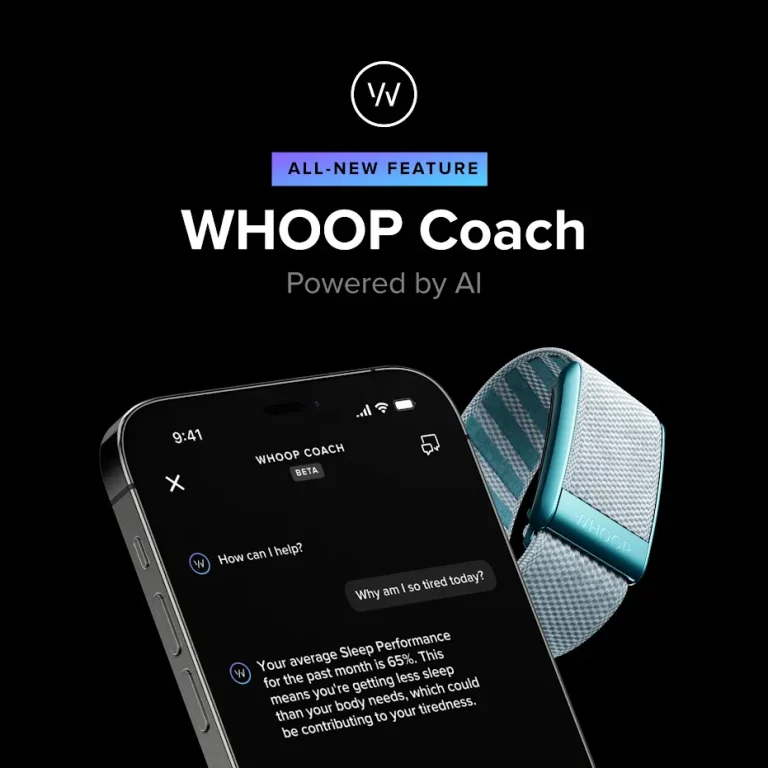
Whoop, the maker of a screenless fitness-tracking wristband, is bringing on a Dutch Nike veteran to whip its brand into competitive shape as it sets its sights on international expansion and an IPO.
Dirk-Jan van Hameren will join Boston-based Whoop later this month as chief marketing officer. The marketer and former Olympic track cyclist is best known for rising through the ranks at Nike, starting as a mailroom assistant in 1992 and taking on the CMO role in 2018. Nike, in a press release announcing his departure in 2023, said he was retiring.
In reality, van Hameren—known as DJ—continued working as an adviser. He agreed to take a permanent role at Whoop after the 14-year-old company announced a $575 million funding round at a $10.1 billion valuation in March. Chief Executive Will Ahmed said at the time he expected the Series G to be the company’s last round of private financing.
But Whoop is going up against household names like the Apple Watch and buzzy tech firms like Oura Health as the concept of wearing a device to monitor health, sleep and fitness marches toward ubiquity. Google’s Fitbit in May introduced the screenless Fitbit Air, a product some tech bloggers dubbed the “Whoop Killer.”
In the first quarter, Apple accounted for around 52% of new health-tracking smartwatch, wristband and ring units shipped, while Google comprised 11.3% and Oura represented 9.8%, according to data from research firm IDC.
Whoop, which provides its wristband as part of memberships starting at $199 a year, represents 1.9%.
The company said it surpassed 3 million subscribers in June, up from 2 million last November.
“The business is now starting to accelerate, and part of that means we’re going from being almost entirely a U.S. business to a global business,” said Ahmed, who founded the company. “The challenges that come with marketing are broader, and the opportunity is bigger, and it all coincides with bringing on a world-class leader in DJ.”
Former Chief Marketing Officer John Sullivan, who joined Whoop in 2017, is no longer with the company, a spokesperson said.
So far, Whoop has focused its marketing efforts on positioning itself as an aspirational brand worn by some of the fittest people in the world in the most rarefied spaces.
Its investors include celebrity athletes, among them LeBron James, Cristiano Ronaldo and Patrick Mahomes, who are frequently photographed wearing Whoop wristbands and on occasion feature in its advertising and promotional content. Last week, the company began airing a commercial charting Ronaldo’s journey to his sixth (now thwarted) attempt at the World Cup trophy, wrapping up his wristband before jogging onto a soccer field. Whoop also signed multiyear partnership deals this year with European soccer champions Paris Saint-Germain and Ferrari’s Formula One team.
In contrast, the 13-year-old Oura has pitched its ring as a lifestyle product that skirts the edges of fashion and pop culture. The company sponsored CNN’s interactive “Magic Wall” during the 2024 presidential election, for example, and last month kicked off a partnership with Kylie Kelce’s “Not Gonna Lie” podcast. In May, Oura filed confidentially for an initial public offering.
Whoop and Oura boasted a similar rate of consumer awareness in the U.S. until around 2024, when more people began to recognize the Oura brand, according to data-intelligence firm Morning Consult. For the week of June 22, 41.7% of surveyed consumers said they had heard of Oura, compared with 35.7% for Whoop. Both trailed Fitbit, with 85.9%.
Van Hameren has no plans to alter Whoop’s aspirational marketing strategy, he said. But he does have the directive to expand its appeal beyond the athletic male American base that evangelized its tech early on.
In recent months, Whoop made a push for more female members, partly by expanding its hormonal insights and menstrual cycle modeling in its app. It has also updated its features and marketing language to encompass longevity as well as fitness.
“We’ve seen our female membership double in the last year, we’ve got a huge percentage of women over 40 joining, and we’ve got members over 60 joining,” Ahmed said. “The balance between men and women is becoming more of an equilibrium, so all that speaks to opportunity around storytelling for different audiences.”



You must be logged in to post a comment.