
A Massive Recall Meets an Earnings Surprise
On November 6 2025, Peloton Interactive announced a major recall of 833,000 Bike+ units after reports of seat-post breakages and two injuries. The announcement came just hours before the release of its Q1 FY2026 earnings, adding tension to an already difficult week for the connected-fitness pioneer.
At first glance, the recall looked disastrous — large-scale replacements mean millions in direct costs and potential damage to brand trust. It also echoed Peloton’s 2023 Bike recall, which affected 2.2 million units, injured 13 users, and cost the company around US $40 million.
Yet when markets opened the next day, Peloton’s stock jumped 14%, rising from $6.78 to $7.73 before closing at $7.66.
What happened?
Financials That Beat Expectations
Peloton’s Q1 FY2026 report revealed better-than-expected performance:
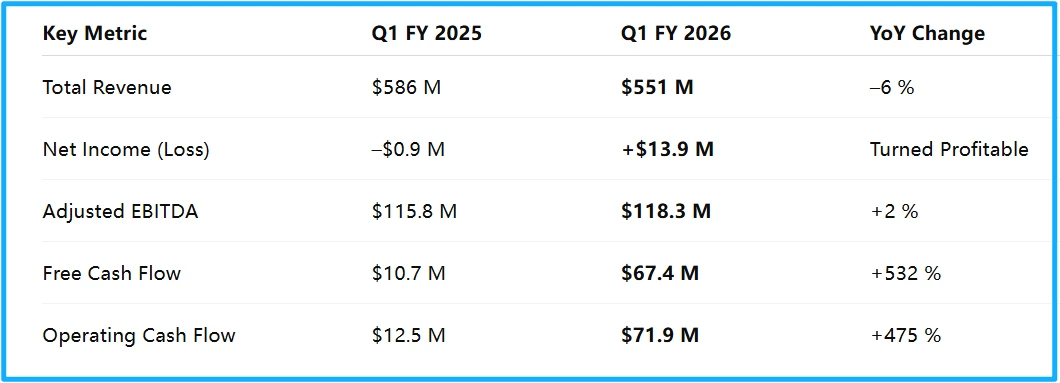
- Despite lower revenue, Peloton returned to profitability for the first time in years.
- Operating expenses dropped 17%, and free cash flow turned sharply positive — signs of tight cost control and improved efficiency.
The company reaffirmed its full-year outlook of $2.4–2.5 billion in revenue and raised its adjusted EBITDA target to $425–475 million, a 12 % increase year-over-year.
Hardware Struggles, Subscriptions Hold Steady
Revenue from connected-fitness equipment fell 5 % to $152 million, while subscriptions declined 7 % to $398 million.
However, subscription margins remained strong at 68.6 %, compared with a weak 6.9 % for hardware.

Peloton ended the quarter with 2.73 million paid connected-fitness subscriptions, down 6 % year-over-year, but with monthly churn improving to 1.6 %.
The data shows that while attracting new customers is tough, existing users are staying longer — a positive signal for recurring revenue stability.
Management credited upcoming innovations such as Peloton IQ, an AI-driven personalized training platform, and its Cross Training Series hardware refresh as the foundation for future growth.
Why the Market Reacted Positively
Three main factors explain the rally:
- Bad news first, good news later – The recall announcement lowered expectations, making the profitable results feel like a relief rally.
- Profitability returned – After years of red ink, investors rewarded evidence of real operational turnaround.
- Steady guidance – By reaffirming revenue targets and raising cash-flow guidance, Peloton signaled financial discipline and stability.
In essence, investors weren’t buying growth — they were buying stability and management credibility.
Risks Remain: Flat Growth and Market Saturation
Analysts remain cautious.
“Peloton’s revenue decline hasn’t reversed, subscription growth is soft, and the connected-fitness market is approaching saturation amid tougher competition.”
Since 2023, Peloton’s hardware user base has fallen for five consecutive quarters. Cheaper, more open competitors — from Echelon to Technogym and Hydrow — are expanding aggressively. Frequent recalls risk further damaging brand trust, while repair and warranty costs could eat into margins. Cost cuts have limits: without renewed subscription growth, profitability may prove temporary.
The company’s challenge now is to shift from survival mode to sustainable expansion.
The Road Ahead: From Stability to Sustainable Growth
Peloton’s turnaround depends on three key levers:
- Monetizing AI and content through Peloton IQ and new digital experiences;
- Restoring product trust by eliminating recurring quality issues;
- Scaling internationally, particularly in Europe and Australia.
This quarter’s rally reflects a vote of confidence in Peloton’s discipline, not yet in its growth.
For a company once defined by pandemic-era euphoria, the current mission is far more grounded — proving it can build a profitable, durable fitness ecosystem in a post-boom world.