
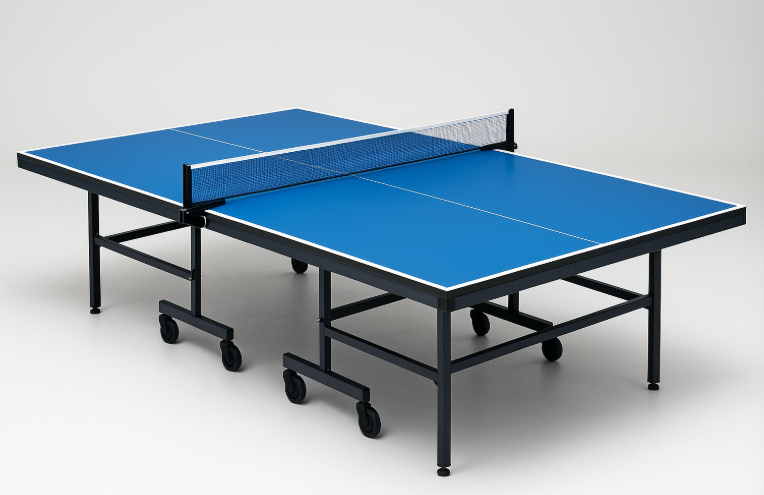
A Knowledge Guide for Manufacturers, Buyers, and International TradersIn 2025, China released a draft revision of the National Standard GB/T 32597 for table tennis tables, replacing the 2016 version. This update introduces stricter requirements on performance, safety, and product testing, aiming to improve China-made table tennis tables for both domestic and international markets.
This guide summarizes the key sections (Part 4–Part 8) of the new draft standard version, providing manufacturers,buyers, importers, and global sourcing managers with useful information to evaluate suppliers and ensure compliance of quality criteria.
1. Classification (Part 4)
Indoor Tables
- Premium grade (优等品): Professional competition use
- First grade (一等品): Training use
- Qualified grade (合格品): Fitness & recreational use
Structure types:
- Type I – Fixed undercarriage, non-folding
- Type II – Fixed undercarriage, foldable
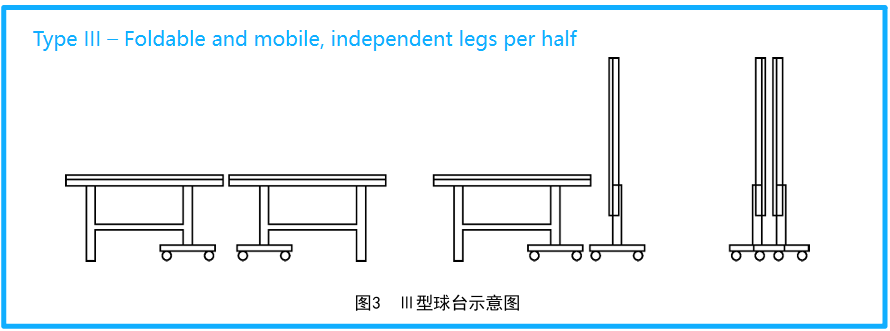
- Type III – Foldable and mobile, independent legs per half
- Type IV – Foldable and mobile, shared undercarriage, halves fold separately
- Type V – Foldable and mobile, halves fold together
Outdoor Tables
- Only Qualified grade is defined, mainly for recreational and community use.
✅ Buyer tip: When sourcing from Chinese manufacturers, clarify the intended application (competition, training, recreation) and the folding/mobility structure to match end-user needs.
2. Materials (Part 5)
- Premium grade tables must use wood-based panels (plywood, particleboard, MDF, etc.).
- Other grades may use wood, plastic, metal, or reinforced composites.
- Indoor tables must comply with formaldehyde emission limit ≤ 0.124 mg/m³.
✅ Buyer tip: For exports to Europe and North America, always request suppliers’ material compliance certificates to avoid regulatory risks.
3. Performance Requirements (Part 6)
Key Dimensions (6.1.1)
- Length: 2740 ±5mm (premium)
- Width: 1525 ±3mm
- Height: 760 ±3mm (adult) / 660 ±3mm (junior)
- Diagonal tolerance per half-table: ≤2mm (premium)
Flatness & Appearance (6.1.2.1–6.1.2.4)
- Flatness: ≤3mm (premium)
- Gloss value: ≤15 GU (premium & first grade)
- No bubbles, peeling paint, dents, or color staining allowed.
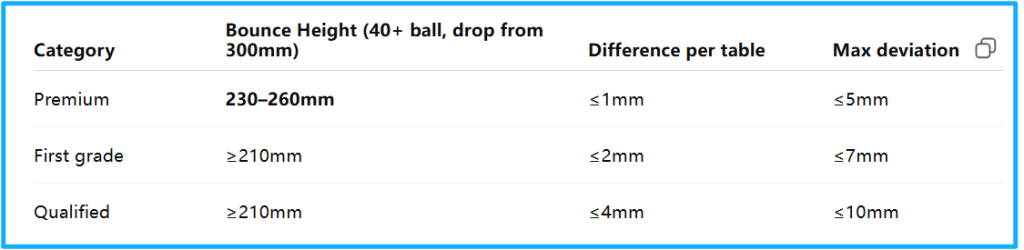
Bounce Height (6.1.2.5)
This is the most critical quality indicator:
Reinforcement & Edge Design (6.1.2.6.2)
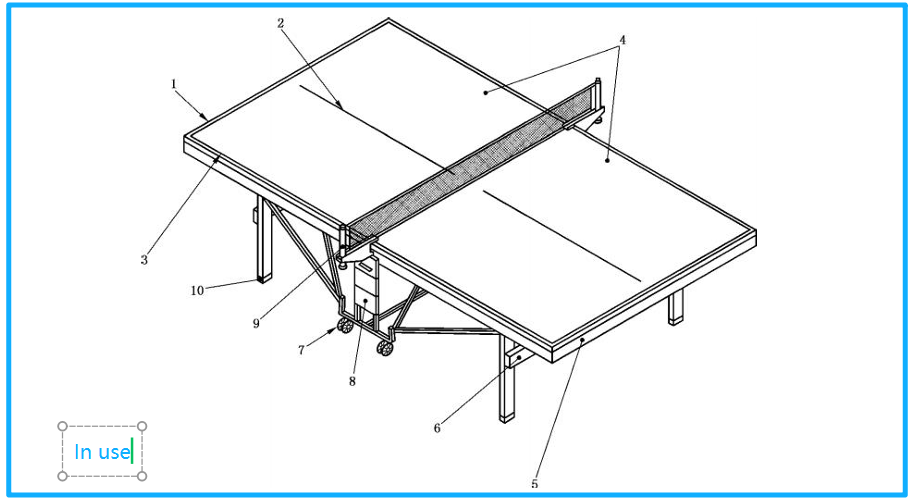
- Tabletop + frame total height: ≤100mm
- Frame edges must have ≥1mm rounded corners
- Premium tables: frame must not extend beyond table edge
Net Assembly Space (6.1.2.7)
- Free space between two halves: >70mm width, ≥100mm depth
- Stability & Friction
- Horizontal displacement: ≤10mm (premium)
- Coefficient of friction: ≤0.6
✅ Buyer tip: Request suppliers to provide bounce test data and CAD drawings of table reinforcement. These differentiate high-performance competition tables from recreational ones.
4. Safety Requirements (Part 7)
- Load Capacity: Premium tables must withstand 80kg load without damage.
- Stability Test: Must resist 300N longitudinal push and 200N lateral push.
- Locking Devices: Foldable tables require ≥2 locks (≥900mm apart), with at least one gravity-based. Unlocking must need two different actions for child safety.
- Wheel Durability: After rolling tests, wheels must remain functional.
- Outdoor Tables: Must pass impact resistance tests with no cracks.
✅ Buyer tip: For schools, gyms, and clubs, pay attention to safety lock mechanisms to minimize liability risks.
5. Testing Methods (Part 8)
The draft specifies scientific testing procedures to ensure uniform quality.
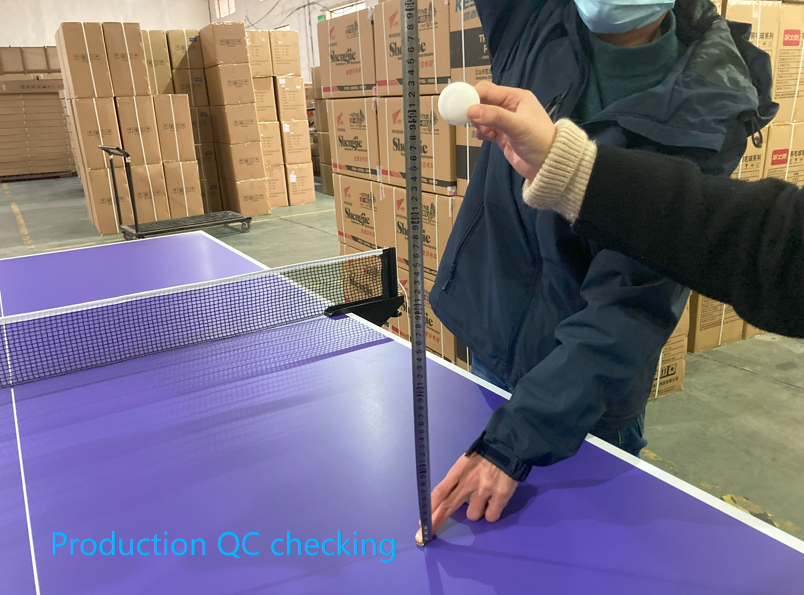
Bounce Test (8.6)
- Drop 40+ ITTF-approved ball from 300mm.
- Measure bounce at 16 positions + 3 specific reinforcement points.
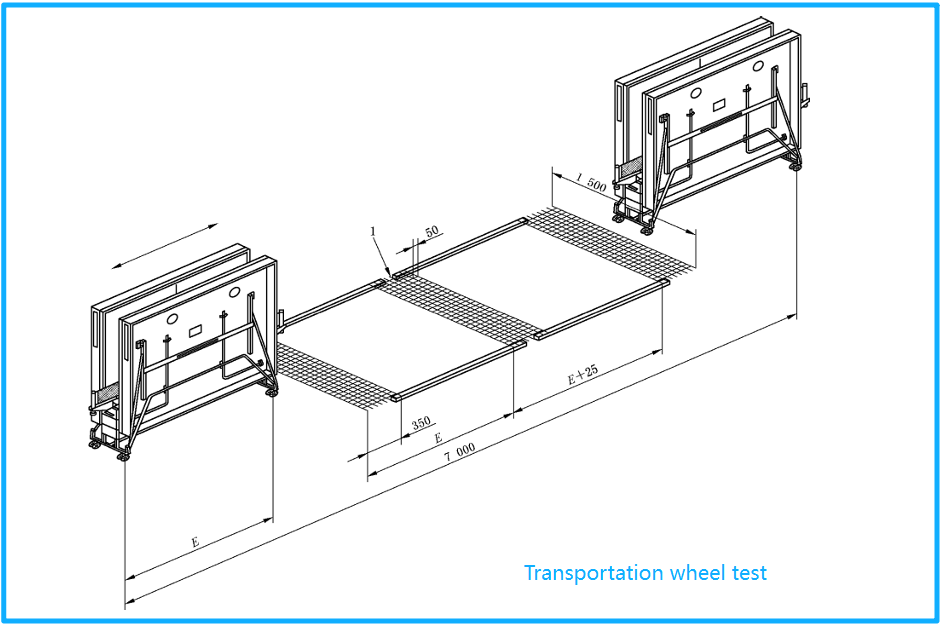
- Rolling & Locking Durability (8.11)
- Place table in storage state, move at 2km/h across steel-wire obstacle grids.
- Must withstand 250 cycles without failure.
Impact Resistance (8.12)
- Drop a 1040g steel ball from 1000mm onto corners and center.
- No cracks or damage allowed.
Other Tests
- Flatness (8.3): Using support blocks on diagonals
- Friction (8.8): Sliding plate with 3 fixed balls
- Load Capacity (8.9): 80kg applied on corners
6. Practical Advice for International Buyers
- Competition Tables: Verify bounce consistency, gloss, frame design. Demand ITTF alignment if needed.
- Training Tables: Balance durability and cost; ensure locking and wheel systems are strong.
- Recreational/Outdoor Tables: Focus on weather resistance and safety locks.
- Importers/Distributors: Request test reports and safety certifications (e.g., EN 14468, GB/T).
7. Conclusion
The 2025 draft of China’s national standard for table tennis tables raises the bar for quality, safety, and testing.
For Chinese manufacturers, it sets clear design and testing requirements.
For buyers and international traders, it provides a reliable framework to evaluate suppliers and reduce procurement risks.
📌 Learn More
If you would like to learn more about China table tennis tables, fitness equipment products, or stay updated with the latest industry regulations, quality standards, and product testing methods, please feel free to contact us. Our team provides professional insights for buyers, international traders, and sourcing managers who are working with Chinese manufacturers and need reliable procurement support.


0 Comments
No comments yet. Be the first to share your thoughts!
Leave a Comment