

In the global fitness equipment industry, brands are often described either as “equipment manufacturers” or “sports brands.” The story of BH Fitness, however, is closer to a broader chapter of European industrial history. It spans manufacturing, sports culture, and the health industry, evolving continuously over more than a century.
________________________________________
Industrial Origins: The Basque Manufacturing DNA Since 1909
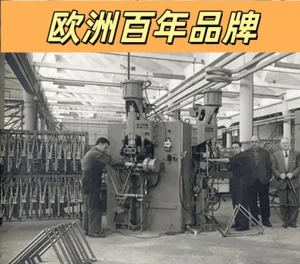
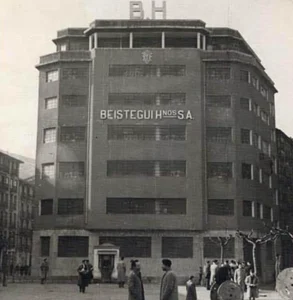
The company did not begin in a fitness club, but in Eibar, an industrial city in northern Spain at the beginning of the 20th century. Eibar was well known in Europe for metalworking and mechanical manufacturing, especially firearms, hardware, and precision components. In 1909, the Beistegui brothers founded the company there, and BH — short for Beistegui Hermanos — was born.
At that time, many workshops in Eibar were small in scale, but highly demanding in craftsmanship. In its early years, BH was less a brand-driven company than a manufacturing workshop deeply focused on precision and structural reliability. Every machined component and every metal connection directly affected whether the final product could be trusted.
This culture of “being responsible for structure” became part of BH’s DNA very early on. It also explains why, in every major transition that followed, BH was able to find a new direction built on the same industrial foundation.
________________________________________
Industrial Transformation: From Arms Manufacturing to Bicycles
After World War I, Europe’s industrial structure began to shift. Traditional demand from the arms sector declined, and many manufacturing companies started looking for new directions. BH responded by moving into bicycle manufacturing.
In the early Spanish market, bicycles were not a lifestyle upgrade product, but a practical means of transportation. BH bicycles had to withstand complex road conditions and long periods of use, which placed high demands on durability.
In many Spanish families, a BH bicycle could accompany a household for more than ten years, sometimes even being passed from one generation to the next. These real-life usage scenarios helped make “reliability” one of the earliest and most important associations with the BH brand.
Bicycles also allowed BH to connect directly with people for the first time. The product was no longer just a mechanical structure; it became part of daily mobility, sports training, and a broader way of life.
________________________________________
A Deeper Understanding of Sport: From Manufacturing Products to Understanding Performance
As cycling culture developed across Europe, BH was no longer merely a bicycle manufacturer. It gradually became involved in competitive sport.
In professional racing, equipment could not simply be “usable.” It had to perform reliably under extreme conditions. Long-distance riding, complex terrain, and high-power output placed greater demands on structure, weight, and efficiency.
In those early races, even small differences in a bicycle could influence the result. This environment pushed manufacturers to rethink their products — not only whether the structure was reliable, but whether movement itself could become more efficient.
Through this process, BH began to develop a deeper understanding of the human movement system: how power is transferred, how posture affects efficiency, and how structure should serve athletic performance.
This understanding was later carried naturally into the field of fitness equipment.
________________________________________
A Key Turning Point: Entering the Fitness Industry
When the global fitness industry began to grow rapidly in the late 20th century, BH once again reached a turning point.
Unlike many brands that entered fitness from scratch, BH’s move had a clear continuity: from cycling to indoor training, and from a single sport to a broader training system.
Early fitness equipment was not necessarily complex, but it demanded high levels of durability and stability. This was especially true in commercial environments, where one machine might be used for long hours every day. In this sense, the logic was very similar to the long-term use conditions BH had already experienced with bicycles.
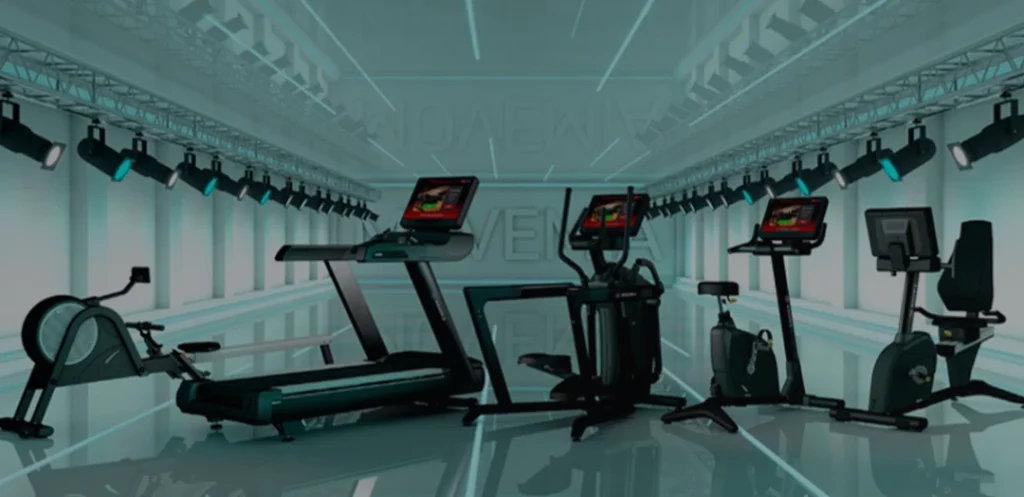
During this period, BH gradually built what is now its core business division, BH Fitness, forming a complete product system around cardio training, strength training, and indoor cycling.
This transformation gave the BH brand a new meaning: from product manufacturing to training and health.
________________________________________
Group Evolution: From Regional Brand to Global Enterprise
In the 21st century, BH evolved from a regional brand into an international enterprise, gradually forming the structure of BH Group.
Its different business divisions are not isolated from one another. They are connected by the shared theme of sport, movement, and health.
The bicycle business continues the brand’s historical roots; the fitness equipment business responds to growing demand for indoor training; and health-related businesses further extend the group into broader lifestyle scenarios.
This structure allows BH to remain stable across different market cycles, rather than relying on a single product category or a single market.
________________________________________
Product System: From Individual Equipment to Integrated Solutions
At the product level, the development of BH Fitness reflects a gradual but clear evolution.
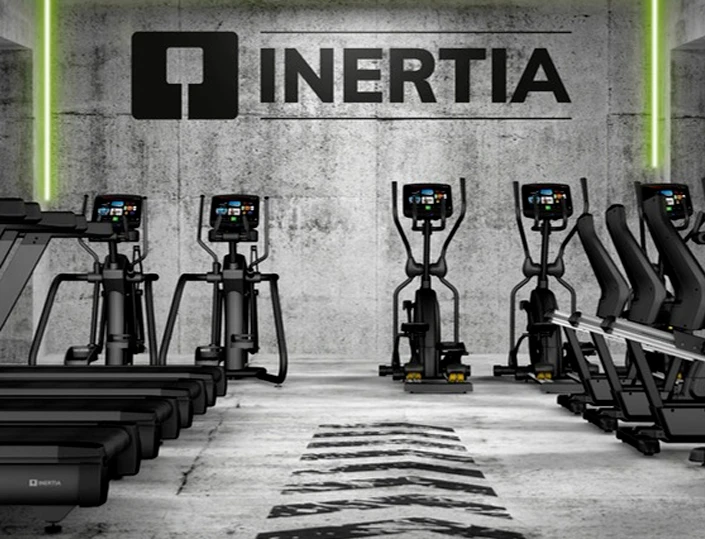
Its cardio equipment carries forward the brand’s strengths in rhythm, movement, and structural stability. Its strength equipment reflects a deeper understanding of human biomechanics. Its indoor cycling products connect most directly with the brand’s original cycling DNA.
In some European fitness clubs, BH equipment can be seen in continuous use for many years. This kind of long-term presence is, in itself, one of the strongest proofs of product reliability.
In recent years, as digital technology has advanced, fitness equipment has increasingly become connected to data systems. Training can now be recorded, analyzed, and optimized. Equipment is no longer just hardware; it has become part of a broader training system.
________________________________________
Brand Essence: A Century of Long-Termism
Looking back at BH’s development, one can see a very typical yet increasingly rare business logic.
BH did not grow through one sudden breakthrough. Instead, at different moments in history, it continued to make choices that were reasonable, measured, and not overly aggressive.
From metal manufacturing to bicycles, from cycling to fitness, and from products to systems, each step may appear natural in hindsight, but each required patience and judgment over the long term.
This kind of development approach is not uncommon among many European family businesses. They tend to care less about how quickly a company can grow, and more about whether it can continue to exist over time.
BH is precisely this kind of company.
This long-termism is reflected in several ways: a commitment to product reliability rather than short-term cost optimization; continuity of brand heritage rather than constant reinvention; and controlled market development rather than blind expansion.
For this reason, BH often chooses gradual market building over rapid rollout.
________________________________________
Conclusion: An Industrial and Sporting Story Still Being Written
Today, when people use a treadmill or an indoor bike in a fitness club, few may realize the history behind the equipment. But for BH, every machine is connected to an industrial tradition that spans more than a century.
From a metal workshop in Eibar, Spain, to fitness spaces around the world, BH’s journey is not simply a story of brand growth. It is a continuously evolving industrial narrative.
And that story is still being written.
You must be logged in to post a comment.