

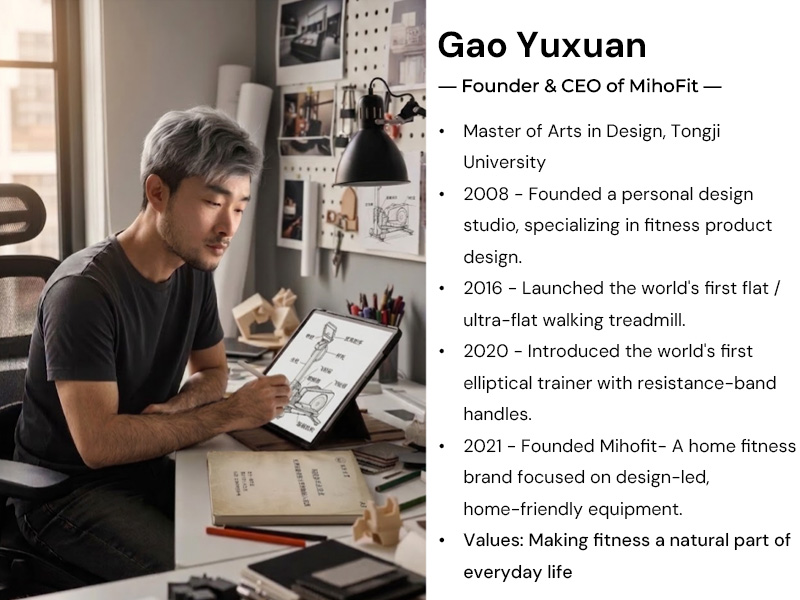
On Gao Yuxuan’s desk sits a yellowed thesis paper from 2007, when he was a student at Tongji University(According to the QS World University Rankings by Subject, Tongji University is currently the highest-ranked design school in Asia.) The title: How to Better Integrate Exercise into the Home.
“I’ve been writing this thesis for 20 years,” Gao says, touching the cover. “And it’s still not finished.”
He is the founder and product manager of MihoFit, a Chinese fitness brand. In 2025, his product — the “Little Wooden Horse” elliptical — received an official recommendation from the Osaka World Expo, the first time a fitness equipment brand has earned this honor. But 20 years ago, all of this was still just a question mark.
In the defense hall of Tongji’s Design and Art Studies program, his advisor, Professor Yang Wenqing, frowned at the thesis title: “This topic is too broad, too new. It won’t be easy to implement.”
Gao’s response at the time: “That’s okay. I can take my time making it real.”
He had no idea that “taking his time” would mean 20 years.
The design philosophy of MihoFit: From “Exercise Equipment Thinking” to “Furniture Thinking”
In the decade-plus after graduation, Gao ran a design firm focused on fitness equipment, serving hundreds of companies.
He saw too many “perfect products” — great specs, full features, multiple functions — bought, brought home, left to gather dust in a corner or on a balcony for three years, and finally thrown out as trash.
“It’s not the user’s fault,” Gao Yuxuan says. “The industry went in the wrong direction.”
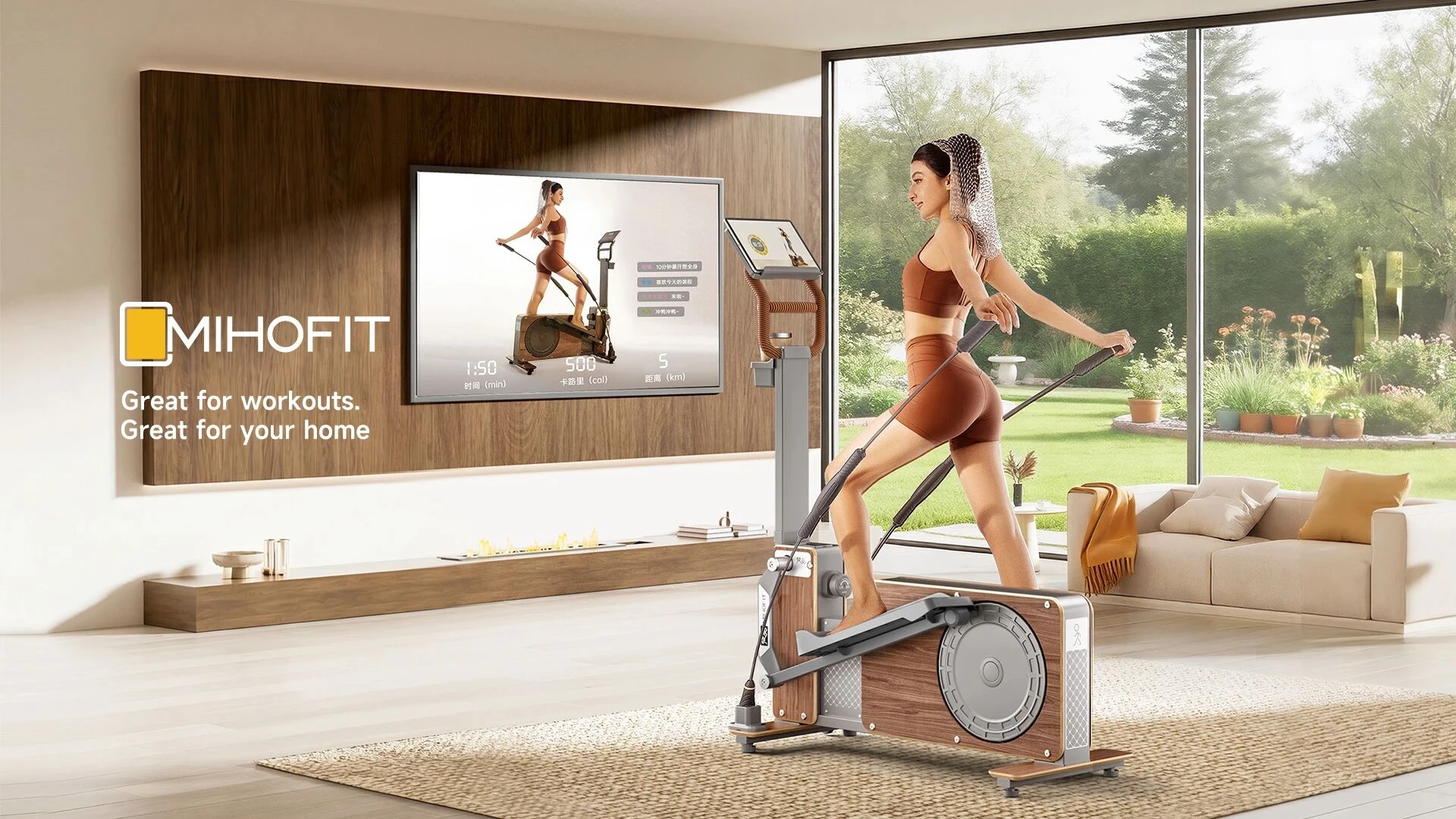
He began to look at fitness equipment through the eyes of a furniture designer. What’s in a living room? Sofa, coffee table, TV stand, side tables… What do these pieces have in common? They’re square, soft, unobtrusive, and fit naturally into the space.
Traditional fitness equipment, on the other hand, is hard, cold, bulky, and an eyesore.
“They’re not even speaking the same design language. What I wrote about in my thesis — ‘integrating into the home’ — has to start with visual integration. If it doesn’t even look right, how can it possibly fit in?”
In 2019, he decided to put more than a decade of learning into writing the most important chapter yet of his unfinished thesis.
The “Little Wooden Horse” That Got Rejected
Gao took the first design draft of the “Little Wooden Horse” to a factory.
“Where are the handles?”
“How can you sell it without handles?”
“The stride is too short. Customers won’t think it’s worth it.”
“This doesn’t meet industry standards.”
Nearly all the feedback said the same thing: It didn’t measure up as an elliptical trainer.. In fact, you haven’t even made a real piece of fitness equipment.
“They were all right,” Gao recalls. “By industry standards, it didn’t measure up. But I wasn’t worried about industry standards. I was worried about the standards of the user’s living room.”
He stuck to his vision. No handles? Replace them with resistance bands, which actually added variety to workouts. Short stride? Redesign the trajectory so every step is effective. As for size, he made it compact — no longer than one meter, the width of a standard sofa — so it wouldn’t get in the way of daily life at home.
No factory wanted to take the order, so he found his own supply chain. No supplier for the resistance bands? He developed his own. No template to follow? Prototype, test, scrap, restart — again and again.
“The hardest part wasn’t the technology. It was everyone telling me, ‘What you’re doing is wrong.’ But I knew that the answer to my thesis was hiding inside all those ‘wrongs.’”
The Turning Point: “This Is the First Machine I Don’t Want to Hide”
In 2021, the “Little Wooden Horse” finally launched. No big promotions, no ad campaigns — just a few real-life photos of it sitting in a living room.
Then the reviews started coming in.
“I’ve bought treadmills and exercise bikes before. They all ended up on the balcony. But this one? I don’t want to hide it. It actually looks good in the living room.”
“My husband asked, ‘What’s that nice-looking piece of furniture?’ I told him it was an elliptical. He was speechless for a second.”
Gao says that when he read those comments, he knew he could finally put the pen down on this chapter of his thesis.
“Our users defined the product for us. It’s not a ‘more powerful machine.’ It’s ‘furniture that doesn’t disturb the home.’ That’s exactly what I meant 20 years ago by ‘integration’.”
Soon after, in its first Double 11 (China’s Black Friday) sales event, the Little Wooden Horse became the top-selling elliptical in its category.
A Thesis Still Unfinished
In 2025, MihoFit received an official recommendation from the Osaka World Expo and was named a Forbes Design Leadership Brand.
Gao’s former advisor, Professor Yang Wenqing, later joked with him: “I think you’re ready to defend your thesis now.”
Gao smiled. “Not yet. I’ve only just started.”
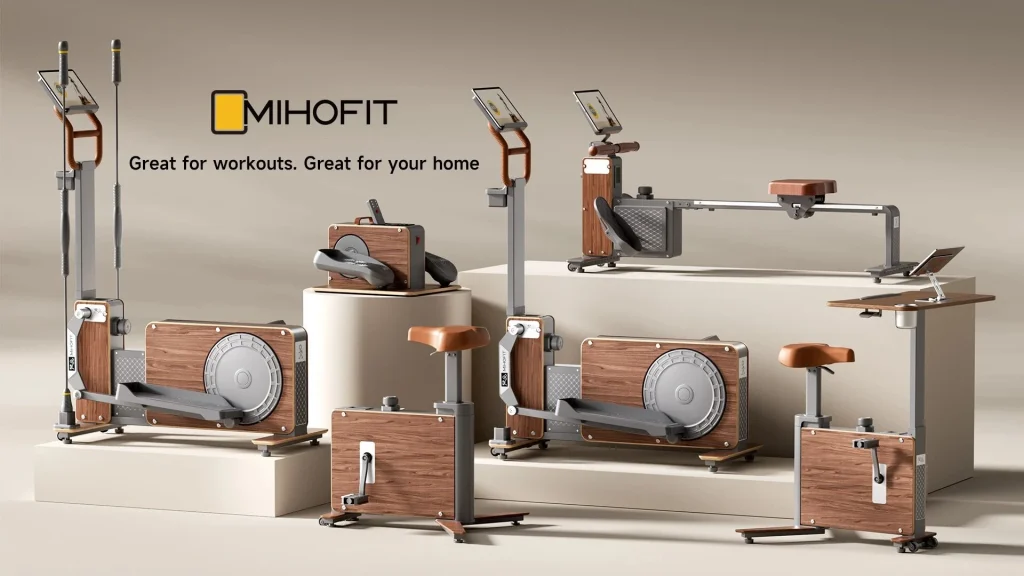
“Now we have an answer for the living room. But there’s still the study, the balcony, the bedroom… Every space in the home needs its own piece of ‘healthy furniture.’ Each chapter of my thesis is a new project.”
Twenty years after graduation, Gao has never thought of that thesis as just an “assignment.” He calls it a question he posed to himself — about how to use design to make healthy living happen naturally, without reminders, without pressure, without willpower.
“A lot of people say, ‘Bring the gym home.’ I don’t agree with that. The gym is the gym. Home is home. What I want to do is design fitness into the home — no need to clear a special space, no need to change clothes, no need to psych yourself up. Just walk by and take a few steps. That’s it.”
Maybe that’s the true meaning of design: no force, no interruption. Just a chance to take care of yourself in the gaps of everyday life.
MihoFit Little Wooden Horse — a workout partner when you need it, a nice piece of furniture when you don’t.
A thesis 20 years in the making. To be continued.
You must be logged in to post a comment.