
Author: Roger (Supply Chain Quality Management Consultant for Fitness Equipment)
Date: October8th, 2026
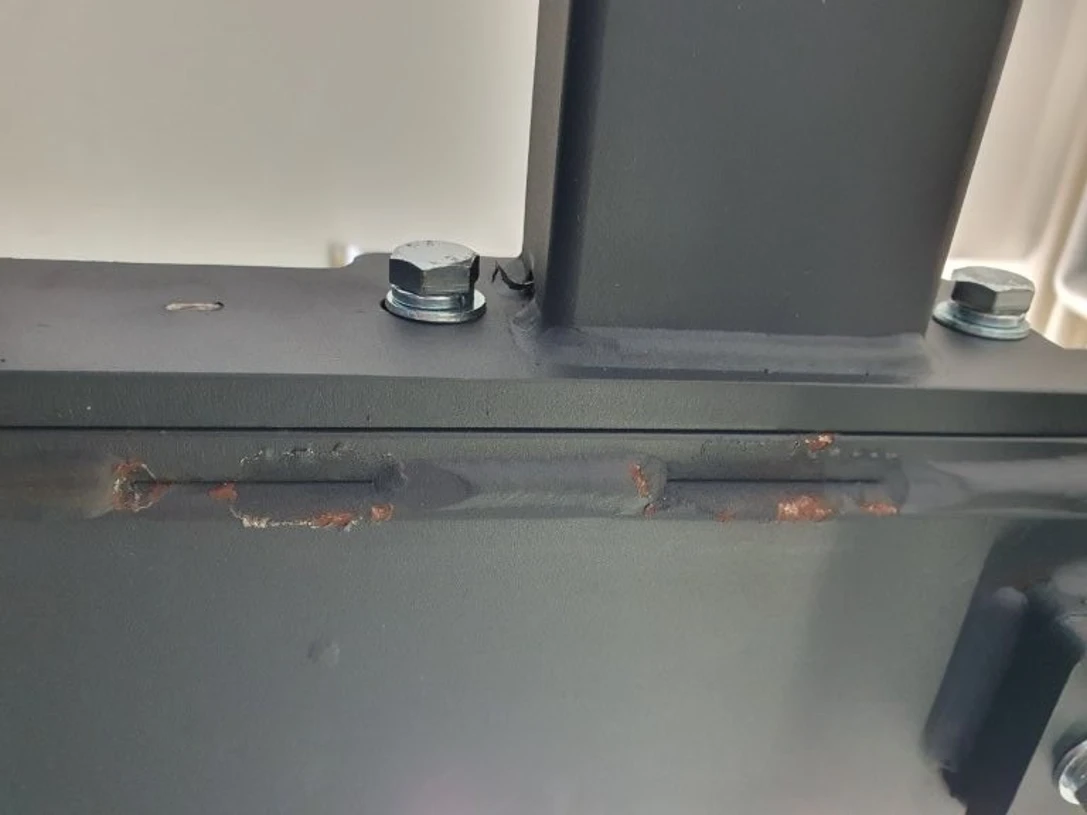
In October 2026, a well-known European fitness equipment brand company (and buyer) received a quality complaint from an end customer (gym owner) regarding rust appearing in multiple areas on the tubing of a Half Rack training equipment. The brand company subsequently communicated with its Chinese manufacturing supplier to handle this quality dispute.
I have compiled the details of this case and integrated my own analytical reflections. This study examines the situation across three dimensions:
technical root-cause analysis, the establishment of standard operating procedures (SOPs) for buyer after-sales management, and supplier complaint response and communication strategies.
The objective is to outline a quality control and complaint resolution framework for the cross-border fitness equipment supply chain, offering actionable insights for both manufacturers and overseas buyers.
I. Case Background and Process Timeline
This case stems from an actual quality complaint handled internally by the German buyer. The timeline and communication process evolved as follows:
In July 2026, a German end customer (a gym owner) purchased a Half Rack and completed its installation for use at its customer side.
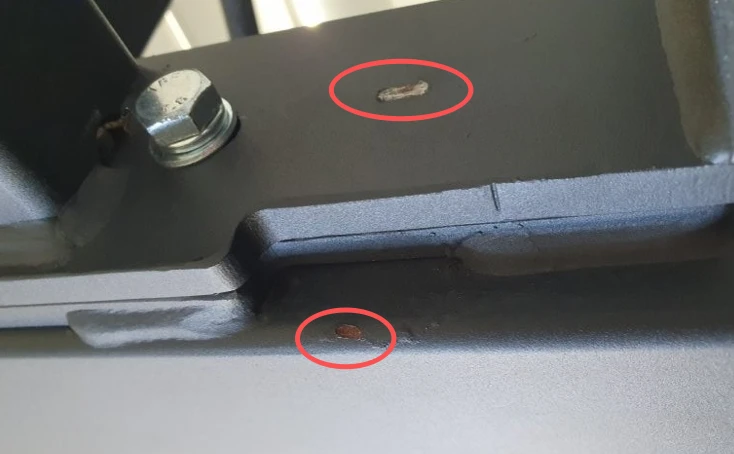
In early September 2026, the end customer (gym owner) reported visible rust spots in several areas of the unit to the German brand owner, attaching an assessment from their technician as well as 4 photos of product rusts. The technician stated: “The rust most likely already existed on the steel beam prior to galvanizing or powder coating—meaning it was processed over pre-existing rust on the substrate.”
On September 9, 2026, the project manager at the European brand emailed contact person “M” at the Chinese supplier, requesting an assessment of the issue and recommendations for subsequent action. The supplier replied on the same day stating that “the issue has been forwarded internally to the technical and quality departments for verification.”
Between September 9 and October 8, 2026, the brand company conducted an internal inventory audit by randomly sampling the existing Half Rack stock in their warehouse. The audit confirmed that all warehouse inventory was in perfect condition, with no signs of rust. Concurrently, internal staff raised a critical question: The Half Rack had been fully installed before the rust was reported; if this was a severe cosmetic defect present upon delivery, why was it not detected when unboxing? Could the protective coating have been damaged during installation, leading to subsequent rusting?
On October 8, 2026, having received no further updates or analysis from the Chinese factory for nearly a month since the initial inquiry, the brand company purchasing manager sent a reminder email.
II. Technical Analysis: Root-Cause Deductions and Probability Assessments
Based on the four photos of the rusted upright tubing provided by the customer and the statement by end customer and brand company, we can systematically evaluate the technical possibilities of this defect within the context of manufacturing processing and the operations afterwards.
1. Process Defect during Manufacturing (Powder Coating) — Probability: Low
If the rust resulted from incomplete pre-treatment (such as inadequate degreasing or acid-pickling rust removal) or poor coating adhesion, the defect would inevitably be systemic and affect entire batches rather than isolated units. Powder coating are continuous batch operations where key production parameters—such as coating material, film thickness, curing temperature, and baking time—remain relatively consistent within a single production run.
In this case, the buyer conducted a strict inspection of the remaining inventory from the same batch in their warehouse, and all units passed. Logically, this rules out the likelihood of a batch manufacturing process defect.
Furthermore, from a metallurgical standpoint, if pre-treatment fails to remove surface rust, the cured powder coating typically exhibits blistering, bubbling, or large-scale flaking, rather than the coating detachment from external impacts seen in the photos. Thus, the initial assertion by the customer’s technician lacks sufficient physical and chemical backing.
2. Physical Collision Damage during Logistics and Packaging — Probability: High
Strength training equipment consists of heavy metal components susceptible to high impact forces during ocean freight container loading, overland transit, and warehouse handling. If internal packaging protection is inadequate—such as lacking PE film or EPE foam separation between steel tubes, or utilizing insufficient cardboard corner protectors—or if the package suffers forklift strikes or drop impacts during transport, the powder coating layer can easily crack or break under compression.
Once the coating layer is compromised, the exposed steel substrate oxidizes when subjected to ambient humidity or high-salinity sea freight conditions, forming visible rust spots over time.
3. Physical Damage during Customer Assembly — Probability: High
Assembling a Half Rack involves securing numerous bolts and joining heavy structural components. If assembly personnel use unshielded metal tools or accidentally strike the components during the assembly of high beams and uprights, they can easily scratch or chip the powder coating layer.
Crucially, the end customer had already fully installed the unit. Under standard fitness equipment installation protocols, if severe surface scratches or defects are present upon unboxing, installation should be halted immediately and reported to the seller. The fact that installation was completed strongly suggests the coating was scratched during installation and subsequently oxidized into rust after being left in place for weeks ( 2 months in this case).
Additionally, the photographic evidence provided by the customer aligns closely with coating damage caused by external mechanical impacts.
4. External Impact during Normal Use — Probability: Low
While barbell bars or heavy attachments colliding with uprights during routine workouts can damage the coating, it is statistically unlikely for severe, multi-point rusting caused by normal exercise impacts to manifest within just two months of purchase.
Summary Evaluation:
Based on these technical evaluations and our industry experience, the rust on the tubing in this case was most likely caused by impact damage to the powder coating layer incurred during transportation or product installation at final customer site. Although this conclusion cannot be empirically verified at this stage, it represents the most logical deduction based on our engineering experience and operational realities.
III. Buyer Perspective: Building a Standardized After-Sales Complaint Evidence Chain
In this incident, the German brand owner provided photos of the issue, initial descriptions, and internal communication records. While this transparent communication helps foster trust with the supplier and meets basic requirements for handling quality complaints, further standardization can significantly improve efficiency.
To prevent shift of responsibility, eliminate repetitive back-and-forth communication, and accelerate resolution, buyers should establish a standardized quality complaint management system centered on a comprehensive Complaint Intake Form.
An effective Complaint Intake Form should capture the following key components:
- 1. Full Traceability Information: Include product Serial Numbers (SN), photos of the nameplate, and corresponding factory batch numbers. This enables the manufacturer to quickly trace production dates, raw material batches, and shipping container records.
- 2. Detailed Timeline: Record sale dates, delivery/installation dates, usage duration and frequency, user habits, and the exact date the complaint was logged. This helps calculate the time-to-failure window and evaluate environmental factors.
- 3. Accurate Defect Rate and Inventory Status: State the precise quantity of defective units and attach inspection reports of existing stock from the same batch. This allows the manufacturer to differentiate between isolated logistics/assembly damage and systemic production defects.
- 4. Standardized Visual Evidence: Require close-up photographs of the defective areas, panoramic photos of the fully assembled unit, and comparative photos of the outer packaging to check for external box damage. This visual evidence is critical in determining whether damage originated from internal assembly or external impacts.
- 5. Preliminary Action and Requests: Clearly outline any emergency measures already taken by the buyer to maintain customer satisfaction (such as issuing replacements or financial compensation), estimated costs, and explicit expectations for supplier involvement.
IV. Supplier Perspective: Complaint Response Workflows and Communication Strategies
The Chinese supplier in this case demonstrated a significant operational bottleneck in its response mechanism. Going silent for a month—from replying “forwarded internally” on September 9 to receiving a follow-up reminder on October 8—erodes overseas customer trust in the supplier’s service efficiency and management capability.
Professional fitness equipment manufacturers should manage quality complaints across three distinct operational dimensions:
A. Response Timeliness and Communication Management
Upon receiving a quality complaint, sales representatives from supplier must officially acknowledge receipt within 24 hours and provide a clear timeline for internal investigation (e.g., promising a preliminary assessment report within 3 business days). Even if internal laboratory tests or liability determinations are ongoing, representatives must proactively update the client on progress at regular intervals (e.g., twice a week), strictly avoiding “silent periods”. Purchasing managers must account to internal customer service teams and customers; timely updates alleviate client anxiety and maintain professional goodwill.
B. Technical Investigation and Evidence Presentation
Manufacturer sales reps should immediately convene a joint meeting with the production, Quality Control (QC), and engineering departments upon receiving a complaint.
• If factory liability is identified (such as an unhandled process defect or inadequate packaging protection like missing protective film or missed QC checks), the supplier should acknowledge the error promptly, apologize, submit a Corrective Action Report, and dispatch replacement parts immediately.
• If manufacturing defects are ruled out and the issue is attributed to transit or installation damage, the supplier must avoid crude rejections. Instead, they should adopt a communicative strategy grounded in logic, evidence, and professional courtesy.
To maintain credibility, the supplier should present internal quality control documentation, including IQC/FQC Inspection Reports, cross-hatch adhesion test records for the coating batch, production SOP compliance logs, and pre-shipment packaging photos. Concrete data and verified workflows demonstrate manufacturing reliability and reinforce customer confidence in the factory’s quality management system.
C. Solution-Oriented Customer Support
Regardless of ultimate liability, the fitness equipment supplier or manufacturer should adopt a collaborative stance focused on resolving the end user’s problem. For example, the sales team can proactively offer remedial advice: guide the client on surface rust removal for minor damage, and ship complementary touch-up paint canisters or replacement parts via express air freight in time. This enables the buyer to resolve the end customer’s complaint rapidly at minimal cost.
V. Summary and Recommendations for Cross-Border Fitness Supply Chains
Analyzing this Half Rack rust complaint yields three strategic recommendations for managing quality within cross-border fitness equipment supply chains:
1. Promote Incoming Quality Control (IQC) and Unboxing Protocols:
Buyers should mandate that local installation teams and distribution partners follow a standard protocol of inspecting all components upon unboxing before beginning product installation at customer site. This prevents secondary assembly damage and eliminates liability ambiguity at the source.
2. Optimize Protective Packaging for Heavy Equipment:
If necessary, engineering and packaging departments at manufacturing plants should optimize packaging specs for heavy structural metal components (such as uprights and crossbeams). Increasing corner protector thickness, integrating internal cushioning materials, and conducting rigorous drop and vibration tests prior to shipment will minimize coating damage during transit.
3. Establish Strict Service Level Agreements (SLAs) for Complaints:
Manufacturers should incorporate complaint response metrics into KPIs for international sales and quality management teams. Standardizing a “24-hour response and 72-hour root-cause/solution report” workflow converts quality disputes into opportunities to demonstrate technical competence and service excellence.
Read more…



0 Comments
No comments yet. Be the first to share your thoughts!
Leave a Comment