

- Deepening academia-industry collaboration is now compressing the lab-to-factory cycle and strengthening China’s original-IP innovation pipeline.
- May 2026 authorized sports-equipment invention patents in China cluster heavily around AI, IoT, and motion-data analytics.
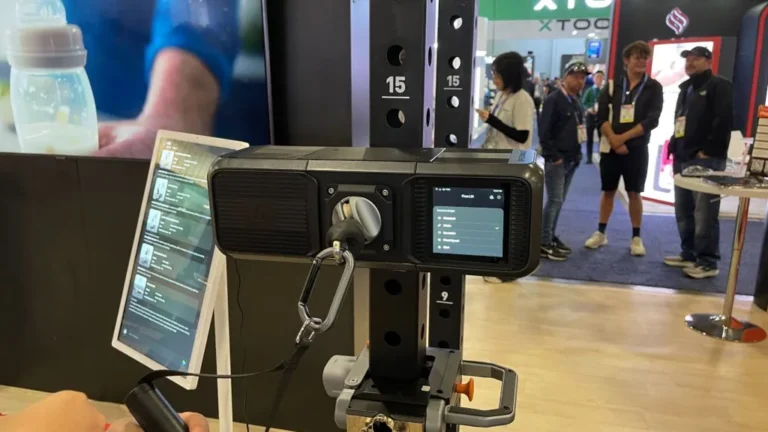
- Leading Chinese makers are shipping “connected by default” fitness gear, embedding sensors and software into core hardware.
- Overseas firms remain active in golf and fishing-gear precision tech, keeping the global patent race competitive.
- CSGA frames the shift as a “smart equipment + digital services” dual-drive reshaping the value chain.
The China Stationery & Sporting Goods Association (CSSGA) has published its monthly review of fitness equipment patents authorized in May 2026, offering a data-driven snapshot of where the world’s largest sports-manufacturing base is placing its innovation bets. The findings point to a clear acceleration of intelligent, digitally connected products across fitness, ball sports, and outdoor segments — a trend with direct implications for buyers, brands, and suppliers worldwide.
Smart & Connected Fitness Takes Center Stage
The May 2026 patent cohort shows artificial intelligence, the Internet of Things, deep learning, motion-data analytics, and intelligent control migrating from consumer electronics into core sports hardware. Covered technologies span smart treadmills, smart skipping ropes, athlete-target detection, training assessment, assistive refereeing, and motion-pattern recognition.
For international buyers, the signal is unambiguous: the next generation of fitness equipment leaving China’s supply chain will arrive “connected” by default — embedding sensors, software, and data services rather than functioning as standalone mechanical devices.
From Hardware to “Smart Equipment + Digital Services”
CSSGA’s analysis emphasizes that innovation has moved beyond traditional structural improvements toward integrated “smart equipment + digital services” models. Intelligent monitoring, motion analysis, training evaluation, and event-service applications are expanding the definition of what a sports product delivers.
This mirrors a global post-pandemic shift in which hardware margins increasingly depend on attached software, subscriptions, and data — a transformation already underway among Western connected-fitness leaders and now visibly taking root in China’s manufacturing heartland.
Chinese Innovators and the Global Supply Chain
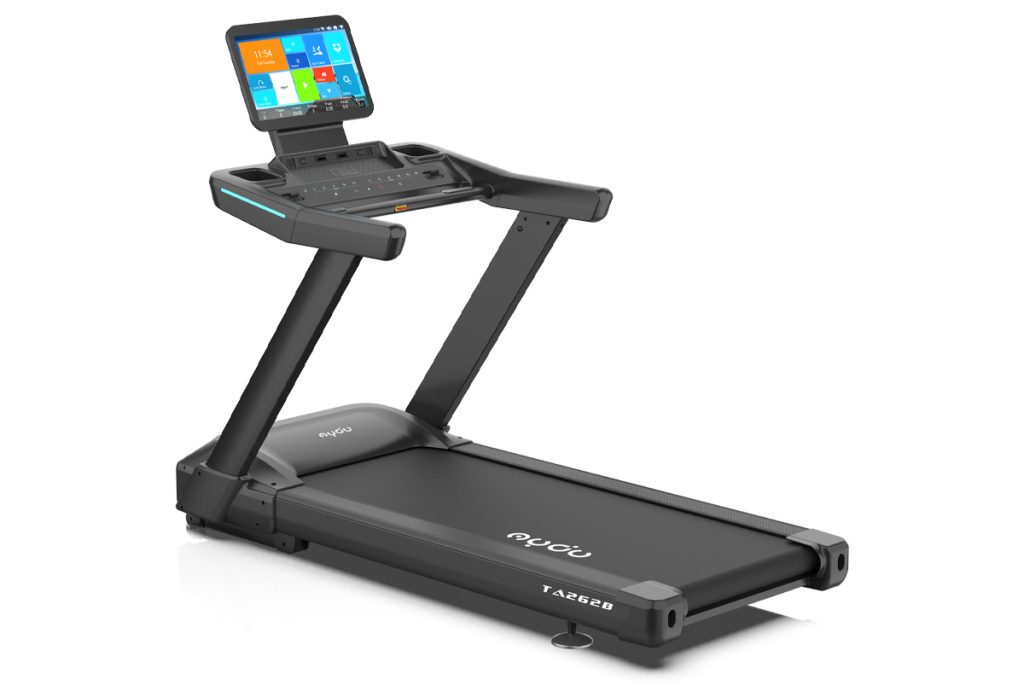
Member enterprises featured in the review illustrate the breadth of the push. Beijing Kingsmith Technology Co., Ltd. secured a treadmill patent integrating lift-adjustment and foldable storage into a single mechanism, improving design efficiency and end-user convenience. Yiwai Technology Co., Ltd. patented a three-axis posture-sensing anti-shake system for fitness equipment screens and cameras, raising human-machine interaction quality and data-capture precision.
Elsewhere, Zhejiang Yipao Health Technology focused on smart treadmills for the home, while Qingdao Chijian Insait Health Technology, together with Xiamen Myray Health Industry, targeted user-trajectory recognition for treadmills. Beijing Zhiyuan Guangrun Surveying Technology developed a deep-learning-based ball-sports training and assistive-refereeing system.
Notably, the review also highlights overseas enterprises deepening precision structures and intelligent control in golf and fishing-gear niches — evidence that the global sports-patent landscape remains a two-way, competitive field rather than a one-region story.
Academia-Industry Collaboration Accelerates
The data underscores tightening links between universities, research institutes, technology firms, and manufacturers. Donghua University, partnering with industry, advanced artificial-feather shuttlecocks and materials — a concrete example of new-material adoption reaching the playing field.
Such collaboration is shortening the path from lab to production line, a dynamic international competitors are watching closely as China’s innovation ecosystem matures from imitation-led to original-IP-led growth.
What It Means for the Global Sports-Tech Market
CSGA concludes that the sector is entering a “dual-drive” phase — smart-equipment upgrades paired with digital-sports enablement — where full value-chain collaborative innovation becomes a long-term competitive pillar. For global brands sourcing from or competing with Chinese manufacturers, the takeaway is strategic: innovation leadership in sports hardware is no longer a Western monopoly, and the bar for “smart” is rising fast.
Illustrative quote, based on CSGA’s published commentary: “Domestic sports enterprises are steadily lifting the intelligence, specialization, and scenario-adaptation of their products,” the association noted. “AI, IoT, sensing, and big-data analytics are accelerating the industry’s transition from traditional manufacturing to ‘smart equipment plus digital services.’”
About the China Stationery & Sporting Goods Association
The China Stationery & Sporting Goods Association is the national industry body tracking innovation, standards, and market development across China’s sporting-goods and fitness-equipment sectors. Its monthly patent reviews translate granular IP data into accessible trend intelligence for members, policymakers, and the broader industry. Learn More: www.csg.org.cn