


An Interview with FitShow CEO Eric Chen on the Future of Connected Fitness Apps
Editor’s Note
As intelligent technologies increasingly merge with sports and health applications, the fitness equipment industry is transitioning from a hardware-driven model toward a software-hardware integrated ecosystem. In this transformation, fitness applications have become the key interface connecting smart fitness equipment with users.
For many traditional equipment manufacturers, developing and operating a fitness app remains a complex challenge — involving software development, data management, compliance issues, and long-term operational investment.
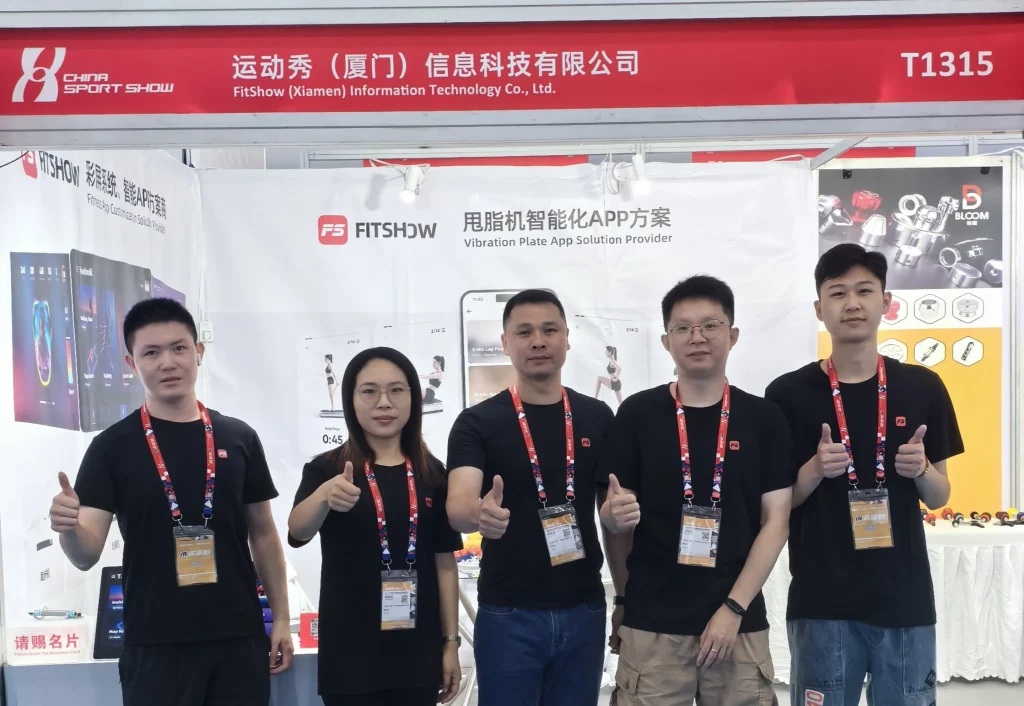
To better understand this evolving landscape, FitGearSource invited Eric Chen, CEO of FitShow (Xiamen) Information Technology Co., Ltd., to discuss how his company provides intelligent solutions for traditional fitness equipment brands, and to share his views on the future development of fitness equipment apps.
From Hardware to Intelligent Ecosystems
FitGearSource: Mr. Chen, could you briefly introduce FitShow and the role your company plays within the fitness equipment industry?
Eric Chen:
FitShow was founded in 2015, at a time when the Internet of Things was beginning to reshape many industries in China. We are a national high-tech enterprise specializing in sports health and smart equipment solutions.
Our core mission is to help traditional fitness equipment manufacturers upgrade their products with intelligent capabilities in a cost-effective and efficient way.
Over the years, our hardware solutions have expanded to support more than ten product categories, including treadmills, exercise bikes, elliptical trainers, rowing machines, jump ropes, ab rollers, massage guns, vibration platforms, and strength equipment.
So far, we have worked with more than 100 companies, enabling smart connectivity for over 10 million devices worldwide, with products distributed across more than 100 countries and regions.
Within the industry, our role can be summarized as an enabler of intelligent transformation for traditional fitness equipment. Through our integrated system combining smart hardware, mobile applications, and data analytics, we connect users, software, and equipment to create a more engaging, data-driven fitness experience.
Workouts become recordable, visualized, and programmable, while also allowing real-time monitoring of exercise intensity to guide users toward safer and more scientific training.
Empowering Manufacturers and Brands
FitGearSource: Who are FitShow’s primary customers today, and what value do your solutions provide for them?
Eric Chen:
Our main customers include:
• Fitness equipment manufacturers
• Electronic control solution providers
• Cross-border e-commerce sellers
• Domestic and international fitness brands
For equipment manufacturers, we provide standardized Bluetooth communication protocols and hardware modules, enabling traditional equipment to quickly gain smart connectivity with minimal cost and development risk.
For brands and e-commerce sellers, our solutions allow them to build their own user data infrastructure. They can gain insights into user behavior, product usage patterns, and regional market trends, which enables them to gradually move toward data-driven operations.
At the center of this ecosystem is our core product — the FitShow App.
The Evolution of the FitShow App
FitGearSource: The FitShow App has become well known in the connected fitness equipment space. How did it evolve over time?
Eric Chen:
The FitShow App was launched in the same year as our company. Its development can roughly be divided into three stages.
2015 – Initial Development
The early version focused mainly on device connectivity, workout data tracking, and basic training guidance.
2016–2021 – Ecosystem Expansion
During this period we expanded compatibility with Bluetooth fitness equipment and introduced features such as personalized training plans, health data tracking, social interaction, and nutrition guidance.
2022–Present – Platform Maturity
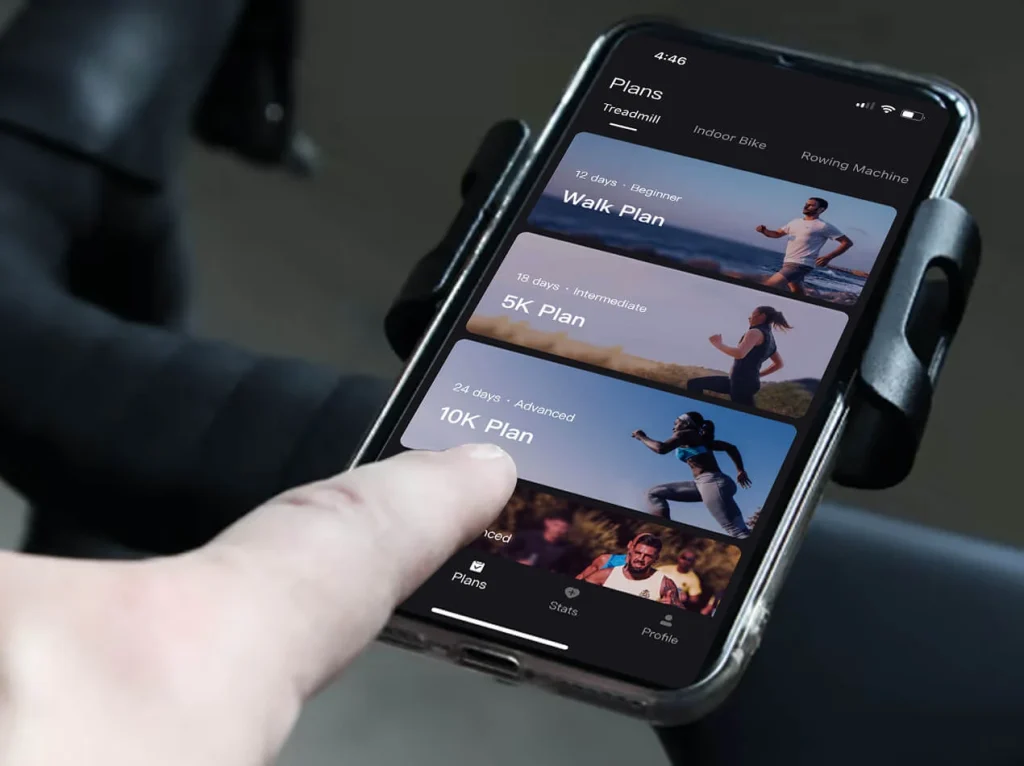
The app has now evolved from version 4.x to version 5.3.0, with stronger data analytics capabilities and improved user experience.
At the same time, we introduced brand onboarding services and OEM/ODM customization, allowing equipment brands to build their own branded app experiences. This has transformed FitShow from a single application into a comprehensive industry solution platform.
Different Paths for Fitness App Business Models
FitGearSource: In the industry we often see two business models: apps as a value-added feature for hardware sales, and apps as a subscription-based service platform. How do you view these approaches?
Eric Chen:
These two models represent different strategic directions.
In the hardware value-added model, the app mainly enhances the product experience and helps improve hardware sales. Its lifecycle is closely tied to the device itself.
This approach works well for manufacturers whose primary focus is equipment sales and rapid market expansion.
The software subscription model is different. In this case, the app and its services become the core product, while the hardware acts as a gateway to deliver those services. Companies like Peloton are good examples.
This model requires strong capabilities in software development, content creation, and community management, but it also enables deeper user relationships and more stable recurring revenue.
FitShow’s role is to provide the infrastructure and technical foundation for brands that want to explore this software-driven model without taking on excessive initial investment or development risk.
The Current Stage of the Connected Fitness App Market
FitGearSource: From your perspective, what stage is the fitness equipment app market currently in?
Eric Chen:
I would describe the current stage as an awareness and early adoption phase.
Many traditional manufacturers now realize that an app can increase product value. However, they are still unsure about how to design the app, operate it long term, and fully leverage its potential.
This situation — recognizing its importance but not knowing where to start — often causes hesitation when companies consider investing in app development.
Looking forward, AI integration and deeper software-hardware collaboration will become the major trend.
Apps may gradually evolve from standalone mobile applications into voice-driven interfaces, platform-level services, and eventually embedded intelligence directly within equipment.
The ultimate goal is to make fitness smarter, more personalized, and seamlessly integrated into everyday life.
Compliance Challenges for Bluetooth Certification
FitGearSource: Fitness apps typically connect to equipment through Bluetooth. Recently, European platforms have tightened certification requirements. What should Chinese exporters pay attention to?
Eric Chen:
Compliance is extremely important in the global market.
Companies must ensure that their Bluetooth modules and wireless components meet the certification requirements of the target market.
Two areas are especially critical.
First, Bluetooth certification itself. The module must obtain BQB certification from the Bluetooth SIG.
Second, national wireless regulatory approvals, such as:
• FCC (United States)
• CE RED (European Union)
• MIC (Japan)
• SRRC (China)
We have seen cases where products lacking required certifications — such as NCC certification in Taiwan — were detained by customs or removed from e-commerce platforms. Such issues can lead to months of delays and significant financial losses.
To support our partners globally, our Bluetooth modules already carry certifications including BQB, FCC, CE RED, IC, RCM, MIC, KCC, SRRC, and NCC.
We are always willing to share our experience to help industry partners ensure smooth and compliant global market entry.
________________________________________
For further information regarding FitShow’s intelligent solutions or certification guidance, please contact: eric@fitshow.com