Beyond China: The Next Phase of Global Fitness Equipment Manufacturing
A New Growth Story — or a Structural Shift?
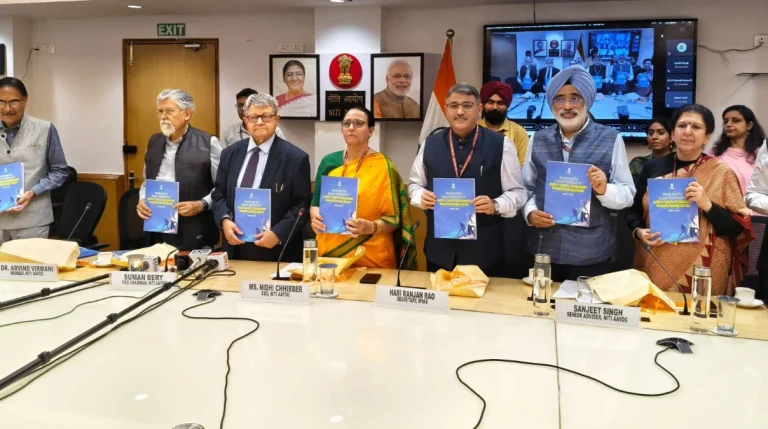
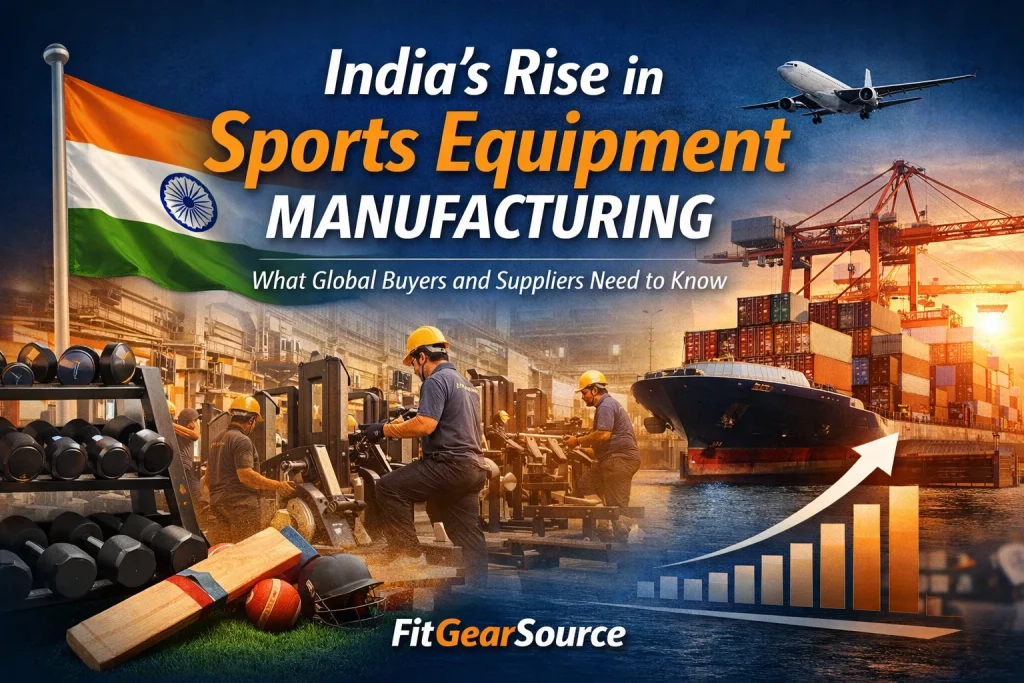
According to a recent report released by India’s NITI Aayog, the country’s sports goods exports could reach USD 8.1 billion by 2036, with the potential to create 5.4 million jobs.
At first glance, this may appear to be a typical growth projection. However, from a supply chain perspective, it signals something more important:
A new phase of global manufacturing redistribution is already underway.
The global sports goods market is expected to grow from approximately USD 140 billion today to nearly USD 300 billion in the coming decade. Despite this expansion, India currently accounts for less than 0.5% of global exports, indicating both its limited current position and significant upside potential.
Current Reality: Low Value, Fragmented Manufacturing
India’s sports goods manufacturing sector remains largely dominated by MSMEs (micro, small, and medium enterprises), concentrated in traditional clusters such as Jalandhar and Meerut.
Product-wise, exports are still focused on:
- Cricket equipment
- Inflatable balls
- Basic fitness products
This reflects a low value-added structure, with limited penetration into higher-end or technically complex categories.
From an operational standpoint, several structural constraints remain:
- Limited automation and scale
- Gaps in testing and certification infrastructure
- Weak integration into global supply chains
Cost competitiveness is also a challenge. According to the report, production costs can be 10–20% higher than competing countries, due to raw material costs, logistics, land pricing, and certification burdens.
On the demand side, Indian manufacturers face additional barriers:
- Limited global brand recognition
- Weak partnerships with leading international brands
- Insufficient marketing and athlete endorsement
- Limited benefits from free trade agreements
Policy Direction: From Manufacturing to “Brand India”
To address these gaps, NITI Aayog outlines a combination of short-term and long-term strategies.
Short-term measures include:
- Reducing import duties on raw materials
- Developing shared testing and certification facilities
- Upgrading manufacturing clusters
- Providing financial support (~INR 200 billion)
Long-term strategies focus on:
- Building manufacturing hubs near ports
- Strengthening domestic raw material capabilities (e.g., carbon fiber)
- Creating a unified “Brand India” identity
- Deepening partnerships with global brands
Major sporting events, including the Olympics and Commonwealth Games, as well as India’s ambition to host the 2036 Olympic Games, are also expected to stimulate domestic demand and industrial growth.
Industry Perspective: What I See from the Supply Chain
From my own experience working within the Chinese fitness equipment supply chain, India’s development is not a sudden phenomenon, but rather a trend that has been building for years and is now accelerating.
From Product Sourcing to Capability Building
During the COVID period, I was already approached by Indian brands asking whether they could source complete assembly lines from China.
This is a critical shift.
It means the objective is no longer just importing products, but building local manufacturing capabilities.
In recent years, I have also seen Chinese industry peers collaborating with Indian manufacturers to establish localized production setups, indicating that supply chain capabilities are gradually being transferred and replicated.
Trade Shows as Early Signals
At major international trade shows such as ISPO and FIBO, the presence of Indian exhibitors has been increasing noticeably.
While most are still focused on sports goods rather than large fitness equipment, the trend is clear:
Investment in local manufacturing is rising.
And in many cases, what appears at trade shows is already the result of several years of behind-the-scenes development.
The Real Driver: Supply Chain Diversification
It would be misleading to interpret this solely as India’s internal industrial upgrade.
The stronger driver comes from global buyers — particularly in Europe and North America — who are actively pursuing:
“China + 1” or even “China + N” sourcing strategies
This is not just about cost. It is about risk distribution and supply chain resilience.
As a result, countries like India, Vietnam, and Indonesia are being integrated into global supply networks, not purely through competition, but through strategic reallocation of production capacity.
What This Means for Chinese Manufacturers
In the short term, China still holds clear advantages:
- Complete industrial clusters
- Mature supply chain systems
- Strong engineering and quality control capabilities
However, in the medium to long term, emerging manufacturing countries are likely to:
- Enter through low-end and mid-range products
- Focus on OEM production
- Gradually expand their capabilities
This will not replace China overnight, but it will create continuous pressure, especially in price-sensitive segments.
The Key Question: Compete on Price or Build Barriers?
The biggest risk for Chinese manufacturers is not competition itself, but how they respond to it.
If the response is simply:
- Lower prices
- Compete on cost
then the industry risks entering a race to the bottom.
Instead, the real path forward lies in building long-term competitive barriers, including:
- Product innovation and engineering capability
- Strong quality and compliance systems
- Technical differentiation
- Brand and channel development
At the same time, companies may need to consider global production strategies — combining China’s strengths with overseas manufacturing footprints.
Conclusion: More Than India — A Shift in the Industry
India’s sports goods growth story is not just about one country.
It reflects a broader transformation:
The global supply chain for sports and fitness equipment is being rebalanced.
For industry players — whether brands, buyers, or manufacturers — the key question is no longer:
“Will this change happen?”
but rather:
“Where will you position yourself in the new global structure?”