
GB/T 17498.2—2024: Strength Training Equipment Safety Requirements and Test Methods
A Deep-Dive Interpretation of China’s New National Standard and Its Alignment with ISO 20957
Keywords:
Strength Training Equipment Standard, Fitness Equipment National Standard, ISO 20957 Alignment, China GB/T 17498, Strength Machine Safety Requirements, Fitness Equipment Testing Methods
1. Background: Upgrading to an Internationally Aligned Safety Framework
The newly revised GB/T 17498.2—2024, officially titled Stationary Training Equipment – Part 2: Strength Training Equipment – Additional Specific Safety Requirements and Test Methods, represents a major step in China’s harmonization with the ISO 20957-2:2024 international framework.
This standard defines specific safety and testing requirements for strength training machines, supplementing the general rules set in GB/T 17498.1 (General Safety Requirements and Test Methods).
Compared with the previous 2008 version, the 2024 revision delivers a significant structural and technical upgrade:
• Introduces 12+ new technical terms and definitions (e.g., guided equipment, drop stop, work arm);
• Refines stability, load safety factors, and durability evaluation;
• Differentiates product categories by usage environment (Home H-class, Studio S-class, Institutional I-class);
• Adds tests for guide rails, limit stops, weight rods, and protective covers;
• Enhances hand entrapment, impact, and static load tests;
• Fully aligns China’s certification logic with ISO 20957 international procedures.
2. Scope and Application
The standard applies to stationary indoor strength training equipment—machines providing resistance through:
• Weight stacks, guide rails, elastic bands, hydraulics, pneumatics, magnetic resistance, or external weights.
Typical equipment includes:
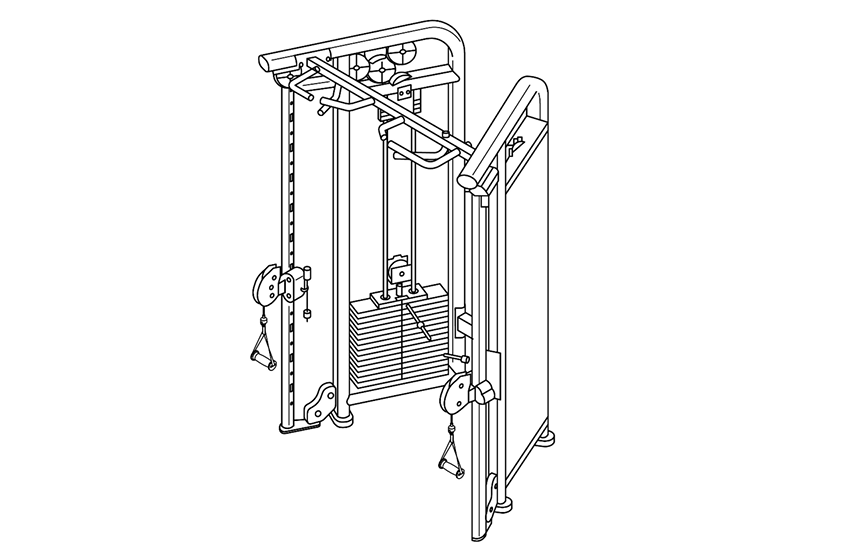
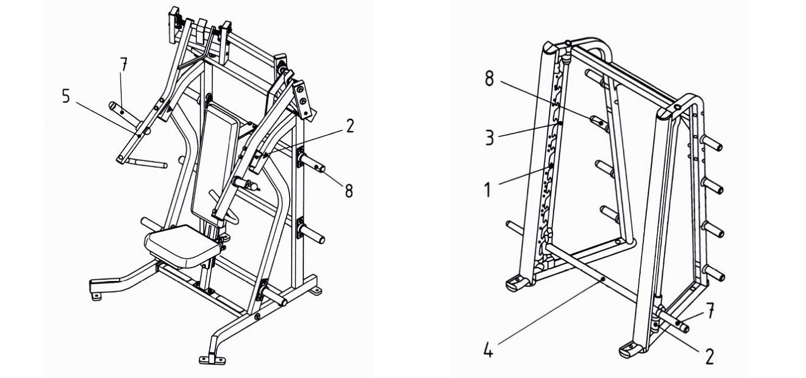
• Multi-function gyms, Smith machines, squat racks, hack squat trainers,
• Chest press, rowing, leg curl/extension machines,
• Functional trainers with user-defined motion paths.
The standard is used together with GB/T 17498.1, where Part 1 defines general safety and testing principles, and Part 2 supplements them with specific mechanical and operational safety requirements for strength machines.




Comments (0)
No comments yet, be the first to comment!