
Meta Description:
Ever wondered what keeps a commercial stairclimber from slipping under heavy load? Explore the rigorous laboratory test protocol used to stress-test the SCHAEFFLER HF2520 needle roller clutch in EMS resistance systems.
Category: Engineering & Tech / Commercial Gym Equipment / Quality Assurance
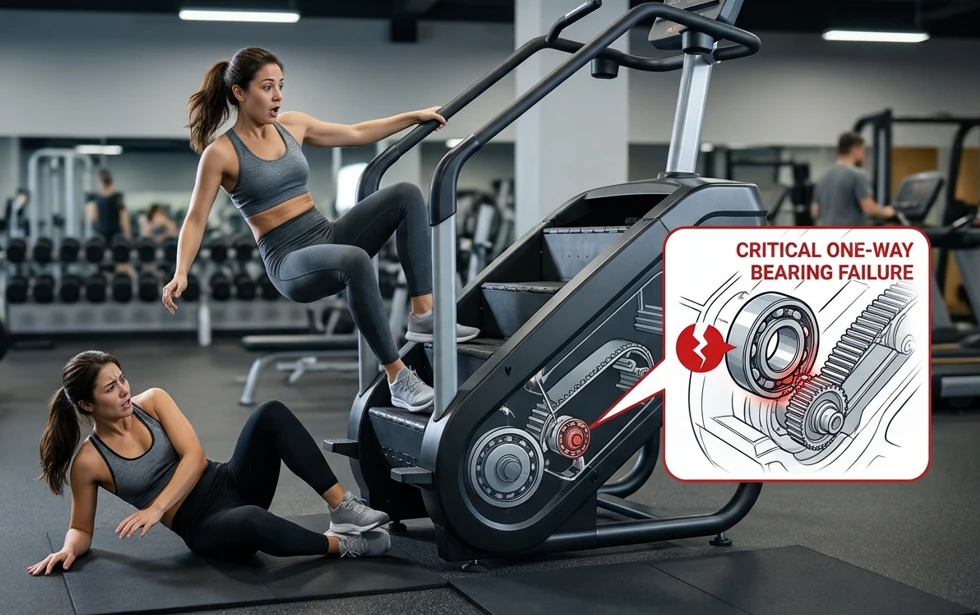
When users step onto a commercial stairclimber, they rely heavily on the machine’s internal resistance and locking mechanisms for both smooth performance and personal safety. Behind the smooth stride of modern Electromagnetic Resistance (EMS) stairclimbers lies a critical, yet often invisible, component: the one-way needle roller bearing (clutch).
If this bearing fails or slips during a high-intensity workout, the steps can instantly lose resistance, posing severe safety risks to the user.
To ensure long-term mechanical reliability and user safety, fitness equipment engineers subject these components to extreme accelerated life testing. Below is an engineering breakdown of the Durability & Stress Test Protocol (Doc ID: FQC-FTP-SC-003-V1) used to evaluate the industry-standard SCHAEFFLER HF2520 one-way needle roller bearing in EMS stairclimber drive systems.
1. Test Objectives: What Are Engineers Looking For?
Under accelerated laboratory conditions, the primary goal of this durability test is to simulate continuous, heavy-user stepping forces over millions of cycles. The evaluation focuses specifically on the SCHAEFFLER HF2520 needle roller clutch within the EMS resistance drive assembly.
Engineers monitor four key reliability parameters throughout the test:
- One-Way Locking Reliability: Ensuring instantaneous, 100% engagement during every stepping force application without lag or free-play.
- Mechanical Wear: Inspecting the wear patterns on internal clamping ramps and needle rollers after high-cycle stress.
- Acoustic Integrity: Detecting any abnormal rotational noise, grinding, or clicking during lock and overrun phases.
- Ultimate Slippage Capacity: Testing the component’s ultimate limit to prevent catastrophic rotational slipping under peak loads.
2. Test Rig & Mechanical Working Principle
How do engineers simulate a 200 lb athlete continuously pounding on a stairclimber inside a lab?
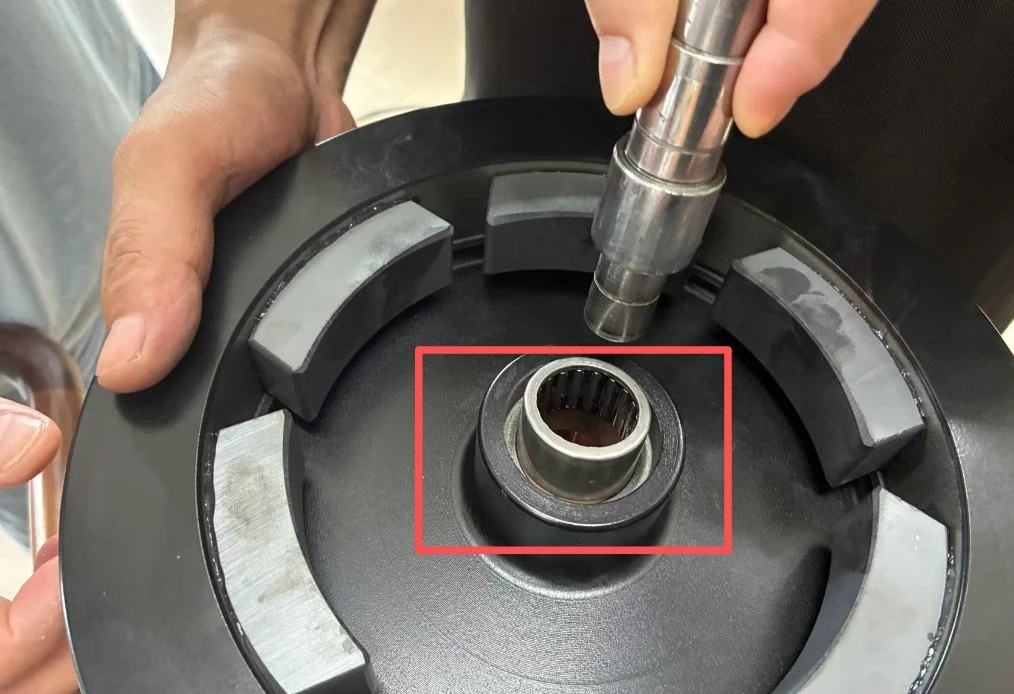
The test bench utilizes a custom pneumatic actuator system connected to a drive crank. This mechanism generates cyclic linear forces that mimic realistic stepping motion. The force is then transferred via a drive belt to the main drive shaft and the HF2520 one-way bearing assembly inside the EMS resistance unit.
Drive Mechanics Sequence:
Step 1: Pneumatic Actuator generates cyclic stepping force.
Step 2: Drive Crank transfers 18 to 48 Nm torque via the drive belt.
Step 3: EMS Shaft & SCHAEFFLER HF2520 Bearing receive the load.
Key Mechanical Torque Specifications:
- Simulated Pedal Force: Preset between 600 N to 1600 N at the crank pedal.
- Transmitted Drive Shaft Torque: Generates approximately 18 Nm to 48 Nm of working torque across the shaft assembly.
- Bearing Rated Maximum Torque: The SCHAEFFLER HF2520 system carries a standard maximum rated torque capacity of 66 Nm, providing an intentional engineering safety margin over working loads.
3. Core Test Parameters & Loading Profiles
To mirror real-world commercial gym environments—where equipment operates up to 10–12 hours a day—the test parameters are set to rigorous standards:
Test Parameter | Target Value | Technical Rationale & Engineering Basis
Total Test Cycles | 200,000 / 600,000 / Run-to-Failure | Multi-stage benchmark evaluation followed by ultimate mechanical lifespan testing.
Test Frequency | 1 Hz (60 cycles/min) | Replicates high-intensity, rapid stepping frequency (Lock & Overrun cycles).
Duty Cycle | ~10 Hours / Day (Continuous) | Simulates daily heavy-duty commercial gym usage.
Peak Applied Force | Up to ~1600 N at the crank pedal | Dynamically regulated up to ~1600 N using the resistance brake system.
Ambient Conditions | Standard Laboratory General Standards | Ensures ambient temperature, humidity, and mounting tolerances meet strict ISO/ASTM lab specs.
4. Laboratory Data Logging & Failure Inspection
Throughout the 600,000-cycle test run, test technicians log real-time data at fixed intervals using standardized test execution forms:
- Real-time Logging Parameters: Test Date, Time Stamp, Duration (Hours), Applied Peak Force (N), Operating Frequency (Hz), and Total Accumulated Cycles.
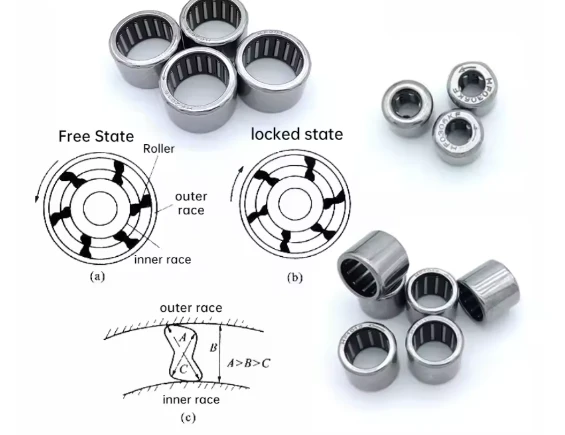
- Post-Test Inspection: After reaching the target cycles or upon detecting rotational noise/slippage, the bearing is disassembled for microscopic inspection of the needle rollers, cage structural integrity, and ramp surface pitting.
Conclusion
The humble one-way needle roller bearing is a prime example of how micro-engineering dictates macro-safety in fitness equipment design. By subjecting components like the SCHAEFFLER HF2520 to 600,000+ cycles at 1600 N force levels, commercial fitness equipment manufacturers ensure that every step you take on a stairclimber is safe, smooth, and reliable.
Please note that actual testing protocols are customized based on the design principles and technical specifications of each specific stairclimber. If you need to build a tailored test protocol for your product, please contact us. We provide professional, customized product testing solutions.
Contact: Roger Yao (cs01@fitqs.com)
Read more…


0 Comments
No comments yet. Be the first to share your thoughts!
Leave a Comment