
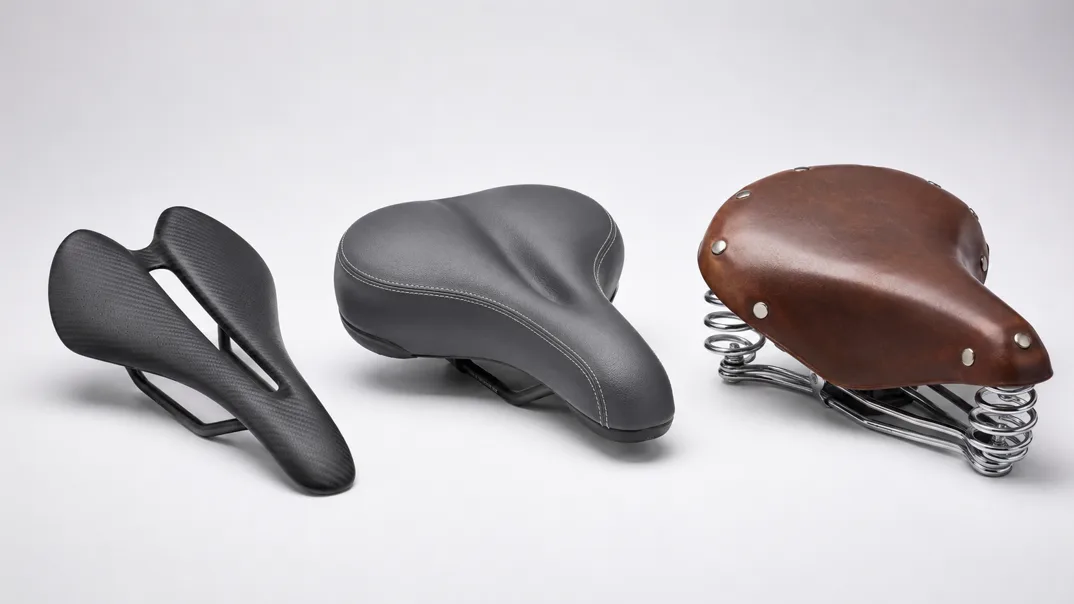
As one of the three primary touchpoints between a rider and their bicycle—and the one that bears the highest proportion of body weight—the cycling saddle is a critical component. Its design and material integrity directly dictate rider safety, biomechanical efficiency, and long-distance comfort.
For Product Designers, Global Procurement Buyers, Brand Managers, and Distributors, a granular understanding of international and regional testing standards and material physics is not just technical trivia—it is a core commercial moat to mitigate liability and drive premium product positioning.
This article deconstructs the bicycle saddle into four critical dimensions: International & Regional Regulatory Standards, Core Mechanical Quality Indicators, Cover Material Specifications & Applications, and Physicochemical Testing Benchmarks.
1. Core Safety & Mechanical Standards: ISO 4210-9 & GB 3565.9
The global gold standard for bicycle safety and compliance is the ISO 4210 series (Cycles — Safety requirements for bicycles). Specifically, Part 9 (ISO 4210-9) dictates the mandatory testing methods and safety requirements for Saddles and seat-posts.
For brands trading globally or manufacturing within China, this aligns strictly with the corresponding regional standards: EN ISO 4210-9 for the European Union and GB 3565.9 (Cycles—Safety requirements for bicycles—Part 9: Saddles and seat-post test methods) for China.
To achieve commercial compliance in regulated markets, every production-grade saddle must pass three rigorous laboratory stress tests:
• Security Test (Clamping Efficiency): This simulates violent shifts in rider positioning or heavy vibrations over rough terrain. A series of alternating lateral and vertical forces are applied to the nose and rear of the saddle. Post-test, the saddle rail must show zero slippage or angular displacement within the clamp beyond strict tolerances (under ISO 4210-9 / GB 3565.9 frameworks).
• Static Strength Test: This evaluates the saddle’s ultimate load-bearing capacity under extreme rider weight or sudden high-impact G-forces (e.g., landing a jump or striking a deep pothole). A standardized, pelvic-contoured loading pad applies a massive static force to the saddle. The rails, shell, and clamp must show no structural fractures or irreversible permanent deformation.
• Fatigue Test (Dynamic Lifespan): The ultimate determinant of product longevity. The saddle is subjected to a minimum of 100,000 cycles of alternating dynamic loads (pulsating forces) on an automated test rig. Neither the rails (metal or carbon) nor the base shell may exhibit micro-cracking, stress failure, or catastrophic snapping during or immediately after the cycle run.
⚠️ Regulatory Red Line: Anti-Injury Structural Clearance
Under ISO 4210-9 / GB 3565.9 standards and the US Consumer Product Safety Commission (CPSC 16 CFR 1512), no part of the saddle’s internal metal clamping mechanism may protrude more than 125 mm vertically above the intersection of the saddle surface and the seat-post axis. This strict civil liability requirement ensures that in the event of a high-speed crash or sudden ejection, exposed metal hardware will not pierce through the saddle padding and cause catastrophic perineal or pelvic trauma to the rider.
2. Core Mechanical & Ergonomic Quality Indicators
Beyond baseline regulatory compliance, premium or race-grade saddles are engineered and audited against four premium performance indicators:
A. Rail & Shell Flex Optimization
A saddle is a composite system consisting of the cover, padding, shell, and rails.
• Saddle Rails: Common materials include Steel, Chromoly (Cr-Mo), Titanium, and Carbon Fiber. Quality control focuses on optimizing the stiffness-to-weight ratio while maintaining structural elasticity.
• Base Shell: Typically molded from Nylon, Carbon-reinforced composite, or Full Carbon Fiber. A premium shell must balance structural rigidity with engineered controlled flex to dampen high-frequency road buzz and micro-vibrations before they reach the spine.
B. Pressure Distribution & Biomechanics (Ergonomics)
• Perineal Relief: Modern performance saddles (Road and XC/Trail) feature an ergonomic central cutout (relief channel) to mitigate pressure on the pudendal artery and nerve, preventing soft-tissue numbness during prolonged pelvic rotation.
• Ischial Support: The rear flare and width of the saddle must be precisely mapped to the rider’s ischial tuberosities (sit bones), ensuring that skeletal structure—rather than vulnerable soft tissue—bears the torso’s weight.
C. Padding Resilience & Anti-Compaction Tiering
• Standard low-tier foam tends to undergo “bottoming out” or permanent compaction within 1–2 hours of continuous riding, rendering the saddle highly uncomfortable.
• Premium Benchmarks: High-performance saddles utilize High-Density EVA, Polyurethane (PU) matrix foam, or cutting-edge 3D-printed liquid resin lattices. These materials must exhibit exceptional compression-set resistance and rebound resilience, returning to 100% of their original volume even after millions of compression cycles.
D. Weatherization & Fluid Impermeability
• Moisture Sealing: Seams, staple lines, or bonded edges must feature flawless liquid sealing. If the internal open-cell foam absorbs rainwater or sweat, it triggers internal hydrolytic degradation, material rot, and ruined riding kit.
• Thermal Deflection (ISO 7854 / GB/T 12586): Saddles must maintain their mechanical properties under extreme environmental cycles, resisting embrittlement at -20°C and structural softening or adhesive delamination at +60°C according to rubber/plastics flex tests.
3. Saddle Cover Materials & Industrial Specifications
For designers and product managers, the choice of cover material establishes the product’s aesthetic identity, tactile premium status, and end-use categorization. Modern commercial configurations are classified into the following four mainstream material options:
A. Microfiber Leather
• Standard Thickness Range: 0.8 mm to 1.2 mm. The surface is typically specified in sleek matte finishes, perforated profiles for enhanced breathability, or high-frequency embossed texturing.
• Technical Profile & Applications: Short for Microfiber Polyurethane Synthetic Leather, this represents the premier textile for high-end performance bicycles (Elite Road, XC/Enduro racing, and固定/Triathlon). Its internal three-dimensional network structure closely mimics natural collagen bundles. It delivers the luxurious tactile hand-feel of premium leather but at a fraction of the weight, boasting superior breathability and absolute immunity to water-logging, dry rot, or mold.
B. PU & PVC Synthetics
• Standard Thickness Range: 0.6 mm to 1.0 mm. This substrate provides an optimal surface for large-scale screen-printing, heat-transfer graphics, or localized 3D brand logo stamping.
• Technical Profile & Applications: These are traditional polyurethane or polyvinyl chloride resins coated onto a knit or non-woven backing. PU offers decent elasticity and soft hand-feel at a moderate price point. PVC is highly cost-effective and rugged but prone to cold-cracking at sub-zero temperatures. Consequently, these materials are widely specified for mass transit, entry-level commuter bikes, and public bike-share fleets.
C. Genuine Leather (Heavyweight Top-Grain Cowhide)
• Standard Thickness Range: Far thicker and heavier than synthetic alternatives, typically requiring a robust thickness of 4.0 mm to 5.0 mm.
• Technical Profile & Applications: Reserved for premium heritage builds, urban folding bikes, and ultra-endurance touring. Unlike modern saddles, a premium leather cover does not rely on an internal plastic base shell. Instead, a single piece of heavy-duty top-grain cowhide is tensioned like a hammock between a front nosepiece and a rear metal cantle. Over an initial multi-hundred-mile “break-in period,” the leather permanently molds to the rider’s unique pelvic anatomy, offering unrivaled, customized skeletal comfort.
D. Kevlar / Aramid Fabrics
• Standard Thickness Range: Ultra-high-molecular-weight technical textiles utilizing high-denier (500D or 1000D) woven textures.
• Technical Profile & Applications: Engineered specifically for gravity-fueled off-road riding (such as Enduro and Downhill mountain biking). Because crash damage is heavily localized on the rear flanks of the saddle during slides, designers rarely use Kevlar for the entire seat. Instead, it is strategically stitched or welded as panels exclusively onto the side wings of a microfiber saddle, providing extreme anti-tear and abrasion armor where the saddle hits the ground.
4. Cover Material: Physicochemical Testing Benchmarks
Quality Assurance (QA) and Procurement teams must demand certified material test reports matching the following internationally and regionally recognized testing frameworks:
A. Abrasion Resistance (Mechanical Wear)
• Test Methods: Martindale Abrasion Method (ISO 12947 / Chinese equivalent GB/T 21196) or Taber Abraser Test.
• Performance Metric: Performance-tier microfiber covers must endure a minimum of 20,000 to 50,000 continuous rubs under specified head weights without exhibiting surface breakthrough, delamination of the polyurethane skin, or pillaging of the base substrate.
B. Color Fastness & Dye Migration (Crocking)
• Test Method: Color Fastness to Rubbing (ISO 105-X12 / Chinese equivalent GB/T 3920), evaluated under both dry and wet/artificial sweat conditions.
• Performance Metric: To ensure that aggressive pedaling friction and acidic sweat do not bleed dye onto a rider’s white or light-colored bib shorts, the material must achieve a minimum rating of Grade 4-5 (Dry) and Grade 4 (Wet) on the standard grayscale chart.
C. UV Aging & Photo-Degradation
• Test Method: Xenon-Arc Light Weathering (ISO 105-B02 / Chinese equivalent GB/T 8427).
• Performance Metric: After a designated multi-hour exposure run, the cover must show no significant color fading (Delta E variant control), zero yellowing, and no surface tackiness or powdering, ensuring aesthetic longevity when parked outdoors.
D. Chemical Safety & Environmental Compliance
Because cycling saddles come into intimate, prolonged contact with the rider’s body—often in a hot, high-sweat environment—chemical compliance is a strict gatekeeper for global markets.
• Regulatory Frameworks: European Union REACH Regulation and RoHS Directive; US CPSIA guidelines; and China’s comprehensive textile health standard GB 18401 (National general safety technical code for textile products).
• Restricted Substance Audits: Total prohibition or strict restriction (measured in parts per million / ppm) of phthalate plasticizers, heavy metals (Lead, Cadmium, Hexavalent Chromium), Azo dyes, and Polycyclic Aromatic Hydrocarbons (PAHs). Under GB 18401, pH values and formaldehyde levels are also rigorously audited to protect sweaty skin from chemical irritation.
5. Strategic Takeaways for Industry Professionals
• For Product Designers: When drawing complex, aggressive modern ergonomics (such as short-nose saddles with deep relief channels), factor in the material’s structural elongation limits. Microfiber behaves more predictably around complex 3D contours during lasting and vacuum-bonding processes than genuine leather. If designing for the off-road or gravity segment, always integrate a high-abrasion textile on the impact zones.
• For Procurement & Brand Managers: When auditing prospective OEM/ODM factories, request verified ISO 4210-9 / GB 3565.9 test certificates from accredited third-party labs (e.g., SGS, TÜV) to insulate your brand from product liability lawsuits. Ensure that your bill of materials (BOM) specifies a microfiber cover with certified Martindale metrics rather than cheap, brittle PVC—especially for premium product tiers.
• For Distributors & B2B Sales Teams: Equip your dealer network with clear, value-driven technical narratives. When positioning performance saddles, lead with the “lightweight, hydrophobic, and zero-maintenance durability of advanced microfiber.” Conversely, when selling heritage components, shift the focus to the “bespoke biomechanical break-in and structural legacy of premium 5mm top-grain leather.”



0 Comments
No comments yet. Be the first to share your thoughts!
Leave a Comment