
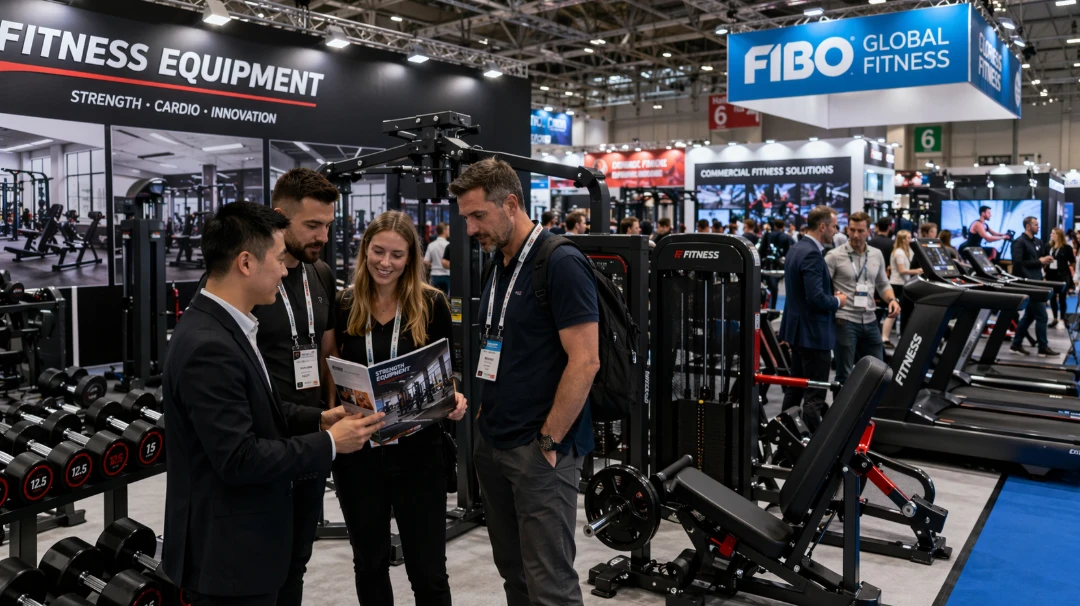
A Practical Exhibition Guide for Fitness Equipment Companies Exhibiting at International Trade Shows
International trade shows are a crucial channel for Chinese export-oriented companies to explore overseas markets and acquire customer resources. However, many manufacturers invest hundreds of thousands, or even millions, in exhibitions every year, often feeling the returns are unsatisfactory.
In the fitness and sporting goods industry, I frequently ask exhibitors about their results and experiences after each show. The common reply is: “The effectiveness seems to decline year after year. The biggest benefit of exhibiting appears to be just meeting with existing clients.”
So, how can one achieve the maximum return on investment (ROI) from exhibiting? In other words, “How to get the best exhibition results with the least amount of money?”
This industry guide uses the fitness equipment sector as a case study. Drawing on practical experience, it provides an in-depth analysis of how to enhance exhibition efficiency and ROI, covering strategic planning, on-site execution, and post-show follow-up. The insights are also valuable for exhibitors in other industries.
Define Your Company’s Marketing Strategy and Budget
- Integrate Exhibiting into Your Overall Strategy: Participating in a trade show should not be a blind endeavor—”exhibiting for the sake of exhibiting.” First, clearly define your company’s marketing strategy and exhibition objectives.
- Determine your goals: Are you aiming to enhance brand awareness, generate qualified leads, launch new products, or strengthen relationships with existing clients?
- Based on this, set clear, quantifiable targets (e.g., “collect 500 qualified leads,” “obtain 100 pieces of feedback on the new product,” or “host meetings with the owners of 3 key VIP clients to solidify product planning for the coming years”). Clear, specific goals guide all stages of your effort and facilitate post-show evaluation.
- Develop a Realistic Budget: Take the total expenditure of Chinese fitness equipment manufacturers at a recent German FIBO show as an example: it ranged from 200,000–300,000 RMB to 2–3 million RMB.
- Exhibition costs include booth rental, booth design and construction, shipping and logistics, promotional materials, and staff travel. It is advised that companies prepare a detailed budget in advance, prioritize different cost items, and seek to reduce expenses through negotiation and process optimization.
- For instance, consider allocating 10%–15% of the budget as a contingency fund to cover unforeseen on-site expenses.
- Notably, various provincial governments in China currently offer subsidies to encourage companies to participate in overseas exhibitions. It is worthwhile to research and utilize these subsidies to offset costs. It is said that the Zhejiang provincial government offers relatively high subsidies for companies participating in international exhibitions.
- Select the Right Shows Carefully: Exhibiting requires significant time, effort, and money, making the selection of which shows to attend critically important.
- Choose exhibitions based on your own business and market positioning, not just by following trends. “Show relevance” is the primary consideration—ensure the show’s visitor profile aligns with your company’s target market.
- For example, manufacturers focused on commercial gym equipment should prioritize professional fitness exhibitions (e.g., FIBO in Germany), while companies specializing in home fitness products might look at comprehensive sports shows (e.g., ISPO Munich).
- In recent years, some OEM-focused companies, eager to expand overseas, attended local exhibitions in smaller countries but found the results very disappointing.
- Therefore, avoid the temptation to overextend yourself. Fully preparing for and participating in two or three key shows per year often yields better results than a scattered, unfocused approach.
Analyze Major Global Exhibitions
Identify the Show’s Positioning to Match Market Needs: Globally renowned fitness and sporting goods exhibitions each have their own focus. Small and medium-sized manufacturers should choose the show that best fits their products and target market.
Below is a comparison of four mainstream exhibitions in the fitness equipment industry:
- FIBO (Global Fitness, Wellness & Health Forum, Cologne): The world’s largest professional fitness trade fair, held every April in Cologne, Germany. FIBO covers fitness, wellness, and health, with a high degree of internationalization. Statistics show FIBO spans 160,000 square meters, attracting over 1,100 exhibitors and 145,000 visitors, including 84,000 trade professionals. FIBO focuses on commercial gym equipment, trendy fitness tech, and nutraceuticals. It is a premier channel for Chinese manufacturers to access the European and global fitness markets, connecting with fitness club owners, distributors, and trainers. It’s an ideal platform for live product demos, collecting feedback, and launching new products to attract media attention.
- IHRSA (International Health, Racquet & Sportsclub Association Show, now The HFA Show): Organized by the International Health & Fitness Association, this annual U.S.-based event is a professional B2B show targeting fitness clubs and chains. While smaller in scale than FIBO, its audience is more targeted. In 2024, for example, IHRSA gathered about 350 exhibitors and attracted over 8,700 fitness industry professionals (nearing pre-pandemic levels, with nearly 10,000 expected in 2025). The audience primarily consists of gym owners, executives, and industry investors, placing high value on on-site business negotiations. However, as exhibitors are often globally renowned brands, the results depend significantly on product uniqueness and on-site promotion capabilities. New entrants need to conduct thorough market research and differentiation beforehand.
- ISPO Amsterdam (International Sports Business Platform): One of the world’s leading comprehensive trade fairs for sports equipment, held every winter (early December) in Munich, Germany in the past 50 years, now will move to Amsterdam in 2026. ISPO covers multiple sectors including sports fashion, outdoor, winter sports, and fitness & health. Visitors include sports goods distributors, retail buyers, and sports enthusiasts. In 2019, ISPO Munich set a record with approximately 80,000 trade visitors and 2,943 exhibitors, highlighting its influence in the sports industry. For fitness equipment manufacturers, the fitness zone at ISPO serves as a display window. However, due to the show’s broad scope, the density of pure fitness buyers is lower than at specialized fitness shows. ISPO is more suitable for companies with diversified product lines (e.g., those offering both fitness equipment and sportswear) or those seeking to expand into sports retail channels.
- China Sports Show: China’s largest domestic sporting goods exhibition, held in different cities (e.g., Nanchang in 2025), typically in May. The exhibition area spans 160,000–180,000 square meters. In 2025, it hosted 1,811 exhibitors across three main zones: Fitness, Sports Consumption, and Venue Facilities. The China Sport Show has long been a key platform for domestic fitness equipment companies to showcase strength and connect with agents and distributors. In recent years, the organizers have actively enhanced its international appeal, attracting a growing number of international brands and overseas professional visitors. Compared to overseas shows, the cost of participating is lower, and government support is stronger, making it suitable for exploring the domestic market and connecting with local gyms and channel distributors. It’s also an opportunity to observe domestic competitors. However, for export-oriented manufacturers, the direct effect on securing overseas orders may not be as strong as at specialized international shows, requiring a careful cost-benefit analysis.
Summary:
Different exhibitions have distinct advantages. Manufacturers should make choices based on their product positioning and market strategy. Generally, commercial fitness equipment makers targeting Europe should prioritize FIBO; those focusing on North America might choose IHRSA; companies seeking cross-over resources could consider ISPO; and those rooted in the domestic and surrounding markets should not miss the China Sport Show or other local exhibitions like IWF.
We advise export-oriented companies to avoid a “scattergun, form-over-substance” approach and blindly follow trends by exhibiting everywhere. Instead of spreading limited budgets and energy too thin across many shows, concentrate your resources on the key exhibitions that best match your products and market positioning. This focused approach is more likely to yield genuine conversions and returns.
However, it must be said that while major shows like FIBO, ISPO, IHRSA, and the China Sport Show offer high visibility and dense traffic, they can also overwhelm small and medium-sized enterprises, making it difficult to stand out. Therefore, export-oriented manufacturers need to think more broadly and adapt flexibly: besides focusing on main exhibitions, they should also explore more efficient complementary marketing methods, such as targeted overseas promotion, cross-border social media strategies, and online-offline hybrid customer acquisition tactics. These can complement traditional exhibition participation, achieving better results with less effort.
Pre-Show Customer Engagement Strategy
- Promote Early to Lock in Target Clients: Pre-show customer engagement is a critical step to enhance exhibition effectiveness. Begin releasing exhibition information and inviting prospective clients 2–3 months before the show. Specific strategies include:
- Multi-Channel Announcements: Use your company website, WeChat official account, LinkedIn, and other social media to announce your participation. Clearly state the show’s name, dates, and your booth number, inviting existing and potential clients to visit. For example, post engaging previews: “We cordially invite you to visit our booth (Hall 6, Stand A18) at FIBO 2025 to experience our new products live.” Repeated exposure increases target clients’ awareness and interest.
- Targeted Invitations for Key Clients: Send personalized e-invitations or emails to overseas distributors, major clients, or high-potential prospects you are already in contact with. The invitation should concisely state your booth information, new product highlights, and include a link to schedule a meeting or a contact person.
- Leverage Organizer and Media Resources: Make good use of the promotion resources provided by the show organizer. For instance, complete your company profile in the official online exhibitor directory. Communicate proactively with the organizer to seek brand exposure in their official promotions (e.g., having a new product launch featured in show press releases). Simultaneously, proactively contact industry media (e.g., publications, influencers) to provide them with highlights, coverage during the show. Generating media and buyer interest during the pre-show phase helps drive more traffic to your booth.
Through sufficient pre-show engagement, you can effectively “pre-book” a group of highly interested visitors even before the doors open. Practice shows that clients scheduled in advance are more likely to result in transactions at the show, whereas the conversion rate for random walk-ins is relatively lower. Therefore, effective pre-show invitations and promotion lay a solid foundation for exhibition success.
Developing the Exhibition Plan (Booth Selection, Design/Construction, Sample Shipping)
- Strategically Select Booth Location: The location of your booth directly impacts visitor traffic and attention. In principle, booths near main aisles, close to hall entrances, or adjacent to well-known brands are more effective. Even with a limited budget, smaller companies should try to apply for these “prime location” spots, even if the area is smaller, rather than opting for a larger booth in a remote corner. The booth doesn’t have to be large, but it must be well-located and the space utilized efficiently. Corner booths or island booths (open on all sides) are even more advantageous for attracting visitors. Also, understanding the hall layout is important; ensure you are placed in the fitness equipment zone or a related themed hall to target the right audience.
- Creative Booth Design: For small and medium-sized exhibitors, the booth’s impact lies not in its size, but in its “clever design.” Overseas clients have mentioned to industry media that many Chinese companies spend significant money on their booths, but the presentation is poor.
A well-designed medium-sized booth is often more attractive than a large but empty and dull one. Focus on the following during design:
-
- Highlight Brand Identity: Prominently display your company logo and key message on the header and main backdrop to reinforce brand recognition. Ensure colors and style align with your brand tone, creating a unique identity amidst the crowd. For example, some manufacturers have successfully projected a professional “Made in China” image at overseas shows using a vibrant Chinese red color scheme and large product imagery.
- Focus on Core Products: Select 2–3 of your most competitive and innovative products as hero exhibits, placing them prominently. Consider using raised platforms or LED screens showing demonstration videos. Avoid cluttering the booth with a chaotic array of equipment. Highlighting star products allows visitors to immediately understand your company’s expertise and become interested in your solutions.
- Open Layout: Adopt an open booth design, minimizing barriers so visitors can see exhibits directly from the aisle and walk in easily. Avoid enclosed designs and high counters, which create distance. An open layout also allows your staff to proactively invite passersby to engage.
- Functional Areas: Designate a simple meeting area in one corner of the booth, equipped with tables and chairs for in-depth discussions. Prepare literature racks with brochures, price lists, etc., for interested visitors. Also, reserve storage space within the booth for spare items and personal belongings to maintain a clean, professional appearance.
- Sample Preparation and Logistics: Fitness equipment is often bulky and heavy, requiring meticulous planning for sample selection and shipping.
- Carefully Select Samples for Shipping: Based on booth size and key promotion goals, select a few representative pieces. There’s no need to bring the entire product line. An overcrowded, cluttered booth gives an unprofessional, tasteless impression. Prioritize new products, bestsellers, or highly differentiated items.
- Logistics Planning: Arrange shipping methods and timelines well in advance. For overseas shows, large items typically need to be shipped via sea freight 2–3 months before the show to allow ample time for customs clearance and transport. For urgent, small items, consider air freight, but be aware of the high cost and use it sparingly. Choosing a freight forwarder experienced with exhibition logistics is crucial, as they are familiar with customs procedures and venue delivery protocols. Ensure you have all necessary documents ready (e.g., inspection certificates, ATA Carnet) to avoid customs delays.
- On-site Setup: Once samples arrive, arrange for technicians to install and test them promptly. Ensure large equipment is stable and safe. Check voltage compatibility for electrical devices (overseas voltages/plugs may differ). Complete setup and test all exhibits at least one day before the show opens.
- Mind Intellectual Property Regulations: In recent years, Chinese companies at international exhibitions have faced incidents where samples were detained by European customs due to lack of CE certification, or products were confiscated and legal action initiated due to patent/trademark infringement complaints from international brands. Therefore, exhibiting companies must carefully review product compliance in advance to avoid legal disputes.
In summary, the exhibition plan needs to be carefully developed months in advance. From booth booking and creative design to sample selection and logistics, each step should be executed according to plan with buffer time (it’s generally advised to finalize the design and shipping list at least 2 months ahead). This prevents last-minute chaos and ensures you present your best from the moment the show opens.
Exhibiting Team Composition and Training
- Form a Competent Team: The “people” on the booth are as important as the “products.” You are showcasing not just the products, but also the professional image of your team. A professional, enthusiastic team significantly enhances visitors’ first impression and trust. Consider the following roles when forming your team:
- Company Leadership/Owner: It is highly recommended that the company owner or top management personally lead the exhibition team. The presence of leadership makes potential clients feel valued and increases trust. Many significant on-site deals are secured with high-level, on-the-spot decisions. “Having the boss present” also demonstrates company strength and commitment to the international market.
- Experienced Sales Staff: Responsible for on-site reception and negotiation. They must know product USPs, pricing, and commercial terms, and be able to quickly assess client needs and provide targeted pitches. Sales should be good listeners, ask probing questions, address pain points, and possess negotiation skills. Language-wise, have at least one salesperson fluent in English. For international shows (e.g., FIBO, ISPO), consider hiring one or two temporary interpreters fluent in languages like German or Spanish—this can yield unexpected benefits. (Don’t skimp on a few thousand dollars when you’ve already spent hundreds of thousands on the exhibition.)
- Technical/Product Experts: Include engineers or product managers who know technical details. When clients have specific questions or need demos, technical staff can provide more convincing explanations. They should be able to operate equipment for live demos and explain technical advantages in accessible language, building client confidence. They can also gather technical feedback for product improvement.
- Booth Assistants/Hosts: Assign presentable assistants to handle greeting, visitor registration, and material distribution. Their task is to proactively invite passersby into the booth, scan/register their information, and direct them to sales staff. They need to know basic scripts (multilingual greetings, introductions) and procedures to ensure consistent messaging.
- Pre-Show Training: Surprisingly, many companies invest heavily in exhibitions but neglect pre-show staff training.
Conduct unified training and drills for all personnel before the show—this is an effort that yields multiplied returns.
-
- Product and Business Knowledge: Ensure every team member thoroughly understands the product line, technical specs, pricing, and target market needs. Prepare unified answers for common questions to avoid vague or contradictory responses on-site. Through training, make all staff product experts capable of handling professional inquiries.
- Booth Etiquette and Reception Skills: Emphasize a professional and friendly attitude. Appearance and attire must be neat and appropriate; comany uniforms (e.g., company polo shirts or suits) are highly recommended as it directly represents the corporate image. Maintain smiles and eye contact during interactions, proactively greet visitors and introduce yourself. Avoid behaviors like chatting in groups or using phones. Practice initiating conversations with open-ended questions (e.g., “Where are you from?”, “What type of equipment are you interested in?”) to understand needs.
- Communication and Coordination: Establish clear roles and collaboration procedures within the booth. For example, when an assistant guides a client in, they should promptly hand them over to the appropriate sales or technical person. If a salesperson identifies a deep technical question during a conversation, they should quickly involve a technical expert. The team should work seamlessly, avoiding situations where multiple people try to engage the same client or pass responsibilities. Simulate different scenarios during training (e.g., handling multiple visitor groups simultaneously) to prepare responses.
- Goals and Motivation: Set reasonable daily goals for the team (e.g., number of qualified leads, demos conducted) to foster a sense of responsibility. Exhibition work is intense; appropriate incentives (e.g., rewards for meeting targets) can boost morale. Also, remind the team to maintain energy and health, to face each day’s visitors in top form.
In short, the professionalism and demeanor of your staff often determine a client’s first impression of your company. A well-trained, proactive team is a tremendous asset to your booth. Conversely, lethargic or inattentive staff can undermine even the best products. Through careful selection and training, ensure your team becomes a walking business card at the show.
Logistics and Booth Services
- Create a Comfortable Environment for Interaction: Trade shows are bustling. Making visiting clients feel comfortable enough to stay a few extra minutes at your booth significantly increases the chance of success. You can achieve this by providing thoughtful services:
- Offer Refreshments: Prepare bottled water, tea, or coffee (if possible) at the booth. Proactively offer a drink to clients during discussions or while they wait. A simple gesture like offering water conveys respect and warmth, leaving a positive impression on visitors navigating a long day. Ensure the booth remains tidy; place drinks discreetly for staff to serve, avoiding clutter.
- Prepare Materials and Business Cards: Ensure an ample supply of promotional materials and business cards. Product catalogs, company brochures, and price lists should be neatly organized and accessible. Provide materials in relevant languages (English is almost mandatory). Ensure all staff have sufficient, correctly printed business cards. Consider providing QR codes for digital materials, showcasing a modern image.
- Maintain On-site Order and Cleanliness: Assign someone to oversee daily booth maintenance, including promptly clearing packaging, organizing clutter, and keeping carpets and surfaces clean. A tidy environment reflects professionalism; Rubbish everywhere is off-putting. Also, schedule staff meal breaks to avoid a crowd eating takeout or chatting on the booth, which harms the booth’s image and focus on clients.
- Private Negotiation Space: If an important client wishes to discuss pricing or cooperation details in depth and the booth is too noisy, consider booking a meeting room at the venue or meeting at a quiet nearby café. Many large shows offer small meeting rooms for rent—inquire with the organizer in advance. Keep notepads at the reception to allow clients to leave contact details for scheduling a detailed discussion later, demonstrating professionalism and respect for key clients.
- Logistics Support: Logistics like accommodation, meals, and transport also impact team performance.
- Book hotels near the venue to reduce commute fatigue.
- Arrange daily lunches and water for the team to maintain energy.
- Carry a basic first-aid kit (band-aids, pain relievers).
- Designate a team member as logistics coordinator to handle unforeseen issues (e.g., material shortages, lost badges).
Good logistical support allows the team to focus entirely on their work. For overseas exhibitions, arranging familiar meals for the team is a great morale booster.
On-site Visitor Management and Post-Show Follow-up
The real value of exhibiting lies in converting booth visitors into tangible business opportunities. Therefore, effectively managing the leads gathered on-site and following up promptly after the show are crucial steps to closing deals.
- On-site Visitor Management:
- Efficiently Collect Client Information: In a busy booth, don’t rely solely on exchanging business cards. Use digital tools to improve efficiency. For example, prepare QR codes linked to registration forms, inviting interested visitors to scan and fill in basic info (name, company, email, needs), possibly with a small gift incentive. Alternatively, use card scanners or apps to quickly capture card details, avoiding manual errors. The key is to obtain valid contact information on the spot (especially email and internationally常用 apps like WhatsApp).
- Lead Qualification and Tagging: Not every visitor who leaves details is a high-value lead. It’s necessary to categorize leads during the show. For instance, classify them as A/B/C: A = Strong interest (expressed clear purchase intent or requested a quote); B = Potential need (showed keen interest, possible future purchase); C = General inquiry. For A-leads, try to schedule another meeting or demo before the show ends. Maintain friendly interaction with B-leads to understand specific needs for follow-up. C-leads are for nurturing. Jot short notes on each card or digital record (e.g., “A – Looking for treadmill distributor,” “B – Interested in opening a gym next year”). This information is invaluable for follow-up. Strive to “categorize and organize daily” to avoid forgetting details post-show.
- Immediate Response and Interaction: For highly interested clients, consider sending a brief thank-you email or message the same evening: “Great meeting you on the first show day. Look forward to further discussion tomorrow.” This prompt interaction shows efficiency and reinforces your impression. If a client had a specific unanswered question, the team should discuss and prepare a response quickly, providing it if the client revisits. Timely responses seize the customer’s excitement, preventing the initial interest from cooling.
- Post-Show Client Follow-up:
The show’s end is not the end of the work; it’s where sales efforts truly begin. Many orders are finalized in the weeks or even months following the show through diligent follow-up. Here are steps for effective follow-up:
-
- Quick Thank-You Contact: Within 24 hours after the show ends, send a thank-you email to all qualified leads. Keep it concise, recap key discussion points, and attach relevant product information and your contact details. Tailor attachments for different lead categories if possible (e.g., a custom proposal PPT for A-leads, an e-catalog for B-leads) to demonstrate professionalism. This timely contact reinforces a positive impression and opens the door for further communication.
- In-depth Follow-up for Key Leads: For A-leads, conduct one-on-one follow-up via phone or video call within a week post-show. Thank them for visiting, confirm receipt of sent materials, probe for decision-making progress and specific needs, and aim to move to the quotation/proposal stage. If a clear purchase intent was expressed at the show, this first week is the golden period for closing the deal. Proactive pursuit can often secure the order faster than competitors.
- Nurture Potential Leads: For B and C leads, establish a long-term nurturing plan. Maintain contact via periodic emails (e.g., sharing new product info or company news) within the first month. Provide value to stay on their radar, rather than just pushing sales. Increase contact frequency when appropriate (e.g., near their procurement cycle). Using a CRM system to record follow-up progress and feedback for each show lead is highly recommended. It prevents missing any lead and allows for data-driven analysis of show effectiveness.
- Internal Review and Optimization: Within one month after the show, hold a debriefing session. Compare actual results against pre-set KPIs: number of qualified leads collected, on-site deals closed, projected order value, etc. Analyze what worked well (e.g., which Interactive Activities attracted the most clients, which products garnered the most inquiries) and areas for improvement (e.g., if language barriers were identified with clients from a certain region, plan to have language support next time). Also, archive accumulated client lists, on-site photos, promotional materials, etc., as resources for future marketing and exhibitions. Continuous learning from each exhibition helps avoid past mistakes and achieve better ROI next time.
Much business is not finalized on the booth but through communication before and after the show. Therefore, exhibition success largely depends on how you utilize the time surrounding the event. Companies that follow up diligently often secure major deals, while those that are lax in follow-up miss opportunities.
Statistics indicate that a staggering 80% of sales leads generated at trade shows are not effectively followed up after the event—meaning most exhibiting companies are “missing out” on the opportunities the show brought. We hope no fitness equipment manufacturer makes this mistake. Seize the golden follow-up period post-show, and meticulously cultivate every potential client you’ve gained. Only then will your exhibition investment truly translate into substantial business returns.
Conclusion: Beyond the Exhibition Booth, a “Combination Punch” is Needed
In today’s increasingly competitive global market, international trade shows remain a key tactic for Chinese fitness equipment companies to make inroads. However, truly unlocking their value goes beyond simply renting a booth and displaying a few machines. To stand out, you must plan and execute every step—from precise pre-show engagement and professional on-site presentation to systematic post-show follow-up—with a “marketing” mindset.
More importantly, don’t put all your chips on the exhibition itself. Faced with realities like high costs, intense competition, and diminishing returns, companies must proactively upgrade their “market playbook”: find a balance between online and offline efforts, and open new customer acquisition channels beyond the booth.
Statistics indicate that a staggering 80% of sales leads generated at trade shows are not effectively followed up after the event—meaning most exhibiting companies are “missing out” on the opportunities the show brought. We hope no fitness equipment manufacturer makes this mistake. Seize the golden follow-up period post-show, and meticulously cultivate every potential client you’ve gained. Only then will your exhibition investment truly translate into substantial business returns.


0 Comments
No comments yet. Be the first to share your thoughts!
Leave a Comment