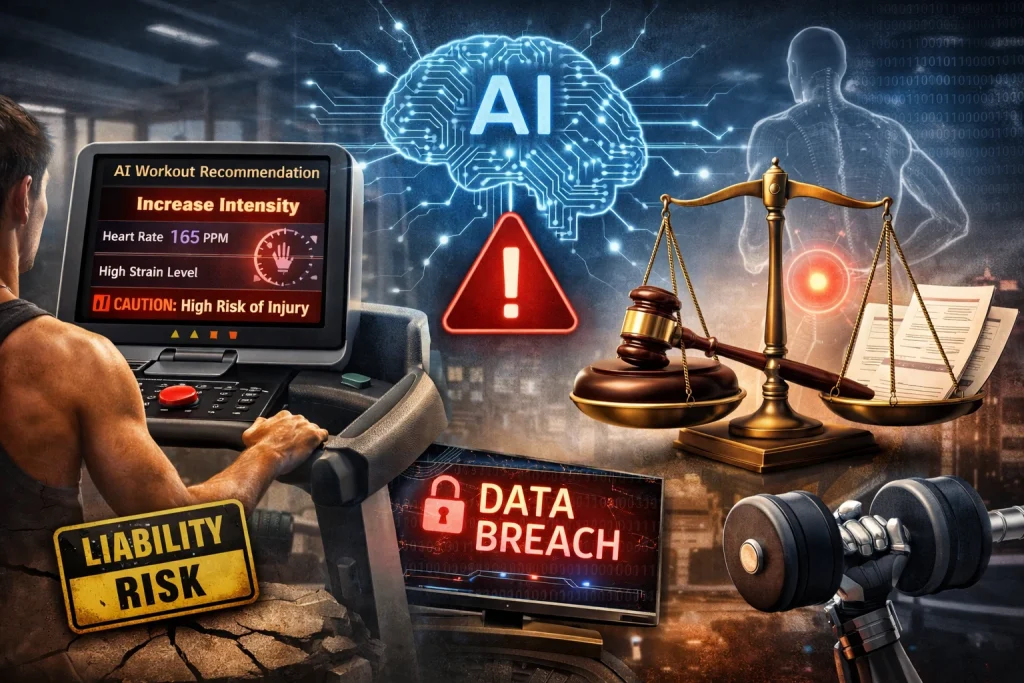
From Mechanical Safety Standards to Algorithmic Accountability
Over the past several decades, the global fitness equipment industry has built its concept of “safety” upon a clear and stable logic. Manufacturers, buyers, and operators have largely shared a common understanding: equipment safety is grounded in verifiable engineering principles. These include mechanical structural reliability (such as EN957 / ISO 20957 standards), material and chemical compliance requirements (including RoHS and REACH), as well as electrical and electronic safety and wireless communication regulations (such as LVD, EMC, and Bluetooth compliance certifications).
Through these standards and regulatory frameworks, the industry has been able to manage foreseeable risks through systematic design controls and testing procedures, ensuring that equipment maintains a controllable and measurable level of safety under normal conditions of use.
Within this traditional framework, fitness equipment has essentially functioned as a passive tool. Machines execute user actions but do not actively influence user decisions. Risks primarily arise from physical factors, such as structural failure, component wear, improper installation, or configuration issues related to electronic components. These risks can be anticipated, defined, and mitigated through engineering design, quality control processes, and standardized testing.
However, as artificial intelligence gradually enters fitness equipment, this long-standing logic is beginning to change.
From Mechanical Products to Intelligent Systems with Decision Capabilities
In recent years, intelligentization has become one of the central directions in fitness equipment development. Early stages of digitalization mainly focused on user interfaces and connectivity features, such as workout tracking, content delivery, or remote management systems. While these improvements enhanced user experience, they did not fundamentally alter the role of the equipment itself.
Today’s new generation of devices performs far more complex functions. AI-enabled systems can automatically adjust training intensity based on historical user data, generate personalized workout recommendations, analyze performance trends, and continuously refine recommendation logic through cloud-based algorithms. Equipment is no longer limited to recording information; it increasingly influences the training process itself.
Once fitness equipment begins to make “recommendations,” it gradually shifts from being an execution tool to becoming a participant in decision-making. Changes in user training behavior may originate from algorithmic analysis rather than coaching expertise or personal judgment. Although subtle, this shift signifies that the functional boundary of equipment is expanding toward behavioral influence.
At precisely this point, traditional product liability logic in the fitness equipment industry becomes more complex.
Why Traditional Safety Standards Struggle to Address AI Risks
Conventional standards such as EN957 are built on a fundamental assumption: risk can be verified through physical testing. Equipment safety can be determined through load testing, fatigue testing, and stability assessments that produce clear and measurable outcomes.
The risks introduced by artificial intelligence, however, rarely manifest as material or structural failures. Instead, they often appear as judgment deviations.
A device may be mechanically compliant yet recommend a training intensity unsuitable for a specific user. A system may generate training pathways based on statistical models while overlooking individual differences. Recommendation logic may continuously evolve through data updates, and these changes may not be equally safe for all users.
In other words, the equipment may function perfectly, yet the outcome may still create risk.
This signals a transition from an era of mechanical safety toward one of system safety, an area not yet fully addressed by existing standards frameworks.
Data Expands Equipment into a New Domain of Responsibility
Modern fitness equipment collects an increasingly broad range of data, extending from basic usage information to metrics closely related to human physical condition, including heart rate trends, training load, body composition, and long-term performance patterns. In many jurisdictions, such information is categorized as health-related data and therefore subject to heightened protection requirements.
For manufacturers, this shift represents more than technological advancement—it reflects a transformation of role. Equipment is no longer a one-time hardware delivery but part of a continuously operating data system. Algorithm updates, platform connectivity, and data usage practices can all influence user experience and risk exposure.
As a result, product responsibility begins to extend beyond manufacturing quality toward system behavior.
The Real Challenge of AI: Algorithmic Invisibility
Unlike physical hardware structures, algorithms are largely invisible. Users can intuitively understand structural strength but rarely comprehend how recommendation systems reach conclusions.
This “algorithmic opacity” introduces a new industry phenomenon: excessive trust in technology. Digital interfaces and data-driven outputs often appear objective and scientific, encouraging users and operators to accept system recommendations with reduced skepticism.
Yet artificial intelligence does not possess medical judgment; it simply calculates patterns derived from historical data. When systems are treated as authorities rather than tools, professional expertise may gradually be weakened.
For this reason, many experts argue that human oversight in AI environments must go beyond formal confirmation and retain genuine judgment, understanding, and intervention capability.
Intelligent Systems Are Also Changing Safety Management
Artificial intelligence also offers clear advantages in maintenance and operational safety. Applications such as predictive maintenance can reduce downtime, anomaly detection can identify unusual usage patterns, and real-time monitoring can reveal equipment load issues before failures occur. These capabilities support a more proactive approach to safety management.
At the same time, excessive reliance on automated systems to trigger safety responses may concentrate risk if systems misjudge conditions or experience interruptions. AI is therefore better understood as a supporting layer within a safety framework rather than a replacement for traditional management mechanisms.
Mechanical safety still depends on engineering design, while system safety requires continuous supervision; both remain essential.
The EU AI Act: Smart Equipment Enters the Regulatory Era
As artificial intelligence expands across industries, the European Union formally adopted the Artificial Intelligence Act (AI Act) in 2024, establishing the world’s first comprehensive regulatory framework for AI systems. The regulation will be implemented in phases between 2025 and 2027 and will progressively impose practical requirements on products and services entering the EU market.
Unlike traditional product regulations, the AI Act follows the EU’s established market access principle: any product or system sold within the EU or used by EU users must comply with its requirements, regardless of where the manufacturer is located. For fitness equipment brands and OEM manufacturers exporting to Europe, the regulation therefore carries direct and practical implications.
Rather than focusing solely on mechanical, electrical, or material compliance, the AI Act shifts regulatory attention from product safety to system risk, classifying AI applications according to their potential impact on health, safety, and individual rights. Low-risk applications may include algorithms optimizing energy consumption or operational efficiency, whereas systems influencing user behavior or decision-making face significantly higher regulatory expectations.
Within the fitness sector, not all intelligent features will be classified as high risk, yet certain applications approach regulatory scrutiny—for example, automatically adjusting training loads based on user biometric data, categorizing members according to behavioral or health profiles, influencing service conditions or pricing through data analysis, or providing automated recommendations that users may interpret as health advice. When equipment performs such functions, companies must adopt higher levels of risk assessment and management throughout system design and deployment.
Implications for Purchasing Decisions: Understanding Systems, Not Just Equipment
For buyers, this transition represents an evolution in evaluation logic. Purchasing decisions historically centered on materials, structure, and price, whereas future decisions increasingly involve software capability and system philosophy.
Procurement managers do not need to understand algorithmic details, but they should consider key questions: Can recommendations be manually overridden? Do users understand how the system operates? Is data usage transparent? Can decisions be traced in the event of disputes?
These factors directly influence long-term operational stability and risk exposure.
Competition Is Shifting Direction
As AI becomes a foundational industry capability, competition may increasingly move beyond performance specifications toward system trustworthiness. The market is likely to distinguish between products that pursue ever more intelligent features and those emphasizing controllable, transparent, and reliable system design.
In this sense, the fitness equipment industry is transitioning from mechanical engineering dominance toward system engineering leadership. Future industry leaders will not only manufacture high-quality equipment but also demonstrate that their technologies can be used safely and responsibly.
Conclusion: From Mechanical Reliability to Decision Reliability
The fitness equipment industry has long established a mature safety framework through engineering standards, and the introduction of artificial intelligence does not invalidate this foundation. Instead, it expands it, requiring deeper understanding of system behavior and algorithmic influence alongside traditional mechanical safety.
The key question of the future is no longer simply whether equipment is durable, but whether the decisions it participates in can be trusted.
As fitness products begin to “think,” the meaning of safety expands accordingly. The shift from structural reliability toward decision reliability may well define the next stage in the evolution of the global fitness equipment industry.