

[IP Knowledge Popularization] How Sporting Goods Enterprises Can Avoid Intellectual Property Infringement Risks (Part One)
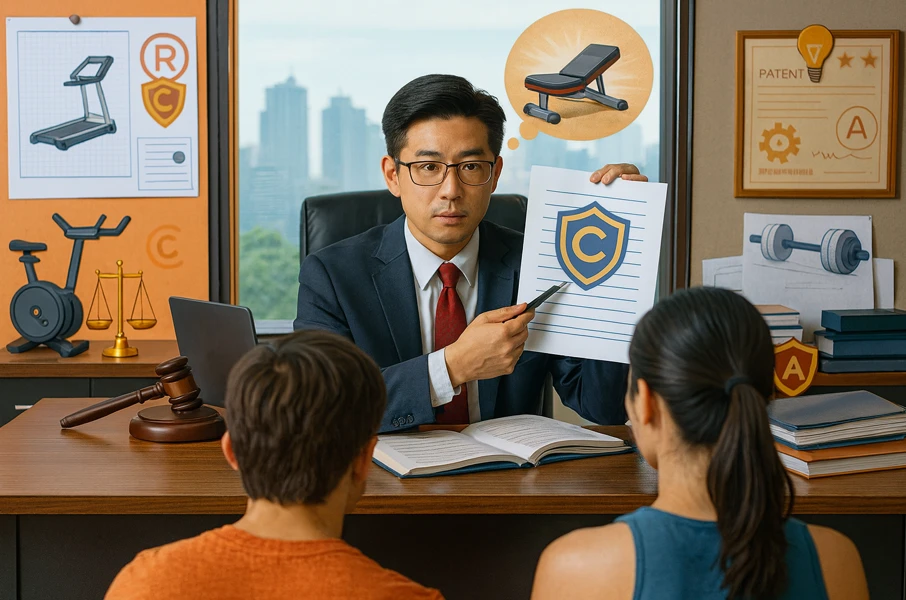
As a lawyer, I often encounter sporting goods companies who come to me with a lawyer’s letter or warning notice and seek advice. Many entrepreneurs feel confused: “I am properly producing my own products—how did I become an infringer? Why must I bear such high compensation?”
It can be said that IP infringement is a common pain point for many domestic sporting goods enterprises. In this series of articles, we will explain how sporting goods companies can reduce and avoid the risk of IP infringement.
1. What Is Intellectual Property
Intellectual property refers to “a general term for rights arising in accordance with the law from creative achievements and industrial and commercial marks,” known in English as Intellectual Property (IP).
According to Article 123 of the Civil Code of the People’s Republic of China, IP rights mainly include the rights enjoyed by the rights holder over the following subjects:
- Works
- Inventions, utility models, and designs
- Trademarks
- Geographical indications
- Trade secrets
- Layout designs of integrated circuits
- New plant varieties
- Other subjects as provided by law
In practice, the most commonly used IP rights mainly include trademark rights (covering trademarks and geographical indications), copyright (corresponding to “works”), and patent rights (corresponding to inventions, utility models, and designs, and broadly including layout designs of integrated circuits and new plant varieties).
2. What Are the Main Intellectual Property Rights
2.1 Trademark Rights
A trademark is a sign used to identify and distinguish the source of goods or services. Any sign capable of distinguishing the goods of a natural person, legal person, or other organization from those of others—including words, graphics, letters, numbers, three-dimensional symbols, color combinations, sounds, and combinations thereof—may be registered as a trademark.
According to China’s Trademark Law, trademarks approved and registered by the Trademark Office are “registered trademarks,” including commodity trademarks, service trademarks, collective trademarks, and certification trademarks. The registrant enjoys exclusive trademark rights, which are protected by law.
The main contents of trademark rights include:
- Allowing the trademark owner to use the trademark in the goods or services designated under the registration
- Allowing the trademark owner to license others to use the trademark within the approved goods/services
- Prohibiting others, without permission, from using identical or similar marks on identical or similar goods/services
2.2 Copyright
Copyright refers to the personal and property rights enjoyed by natural persons, legal persons, and other organizations over their literary, artistic, and scientific works.
According to China’s Copyright Law, the protected objects are intellectual achievements that are original and expressed in a certain form, mainly including:
- Written works
- Oral works
- Music, drama, cross-talk, dance, acrobatics
- Fine art and architectural works
- Photographic works
- Audiovisual works
- Engineering drawings, product design drawings, maps, diagrams, and model works
- Computer software
- Other intellectual achievements meeting the characteristics of “works”
Copyright includes moral rights (e.g., right of publication, authorship, modification, protection of integrity) and property rights (e.g., rights to reproduce, distribute, exhibit, perform, broadcast, adapt, translate, etc.).
Article 10 of the Copyright Law lists sixteen specific rights, including the right of publication, authorship, modification, integrity, reproduction, distribution, rental, exhibition, performance, screening, broadcasting, information network dissemination, filming, adaptation, translation, and compilation.
2.3 Patent Rights
Patent rights refer to exclusive rights granted by the state—upon application by the inventor or designer—based on disclosure of the invention or creation and the requirement that the invention meets statutory conditions and serves public interest.
According to China’s Patent Law, patents include three categories:
- Invention patents – new technical solutions relating to products or methods
- Utility model patents – new practical technical solutions regarding shape, structure, or their combination of a product
- Design patents – new designs of product appearance that possess aesthetic appeal and are suitable for industrial application
To be granted (especially inventions and utility models), an application must meet the “three characteristics”:
- Novelty – not part of existing technology
- Inventiveness – having substantive features and significant progress compared with existing technology
- Practicality – can be manufactured or used and can produce positive effects
Design patents must be distinctively different from prior designs.
3. Intellectual Property Is Everywhere in the Sporting Goods Industry
Although the legal definitions above may seem abstract, IP is present in every aspect of the sporting goods industry.
3.1 Trademarks in Branding
Any enterprise that owns its own brand will inevitably deal with trademarks—company names, brand identifiers, product series names, etc.
Our official account previously reported the successful IP enforcement case by GOLDEN SMITH, which demonstrated the power of trademark rights.
Even pure OEM companies must pay attention to trademark-related infringement risks.
3.2 Copyright in Packaging and Design
In the sporting goods sector, copyright often appears in:
- Packaging design
- Fonts
- Footwear and apparel design drawings
- Product images
- Equipment blueprints
We previously reported a case in which Panatta sued a manufacturer in Shandong for copyright infringement involving product photos.
3.3 Patents as Core Competitive Assets
Patents are core competitive tools for many sporting goods enterprises:
- Design patents are essential for footwear, apparel, equipment, and accessories aiming to stand out in appearance-driven markets.
- Utility models are embedded in equipment upgrades and functional improvements.
- Invention patents drive innovation across footwear technologies, apparel materials, new manufacturing processes, equipment upgrades, sports nutrition products, etc.
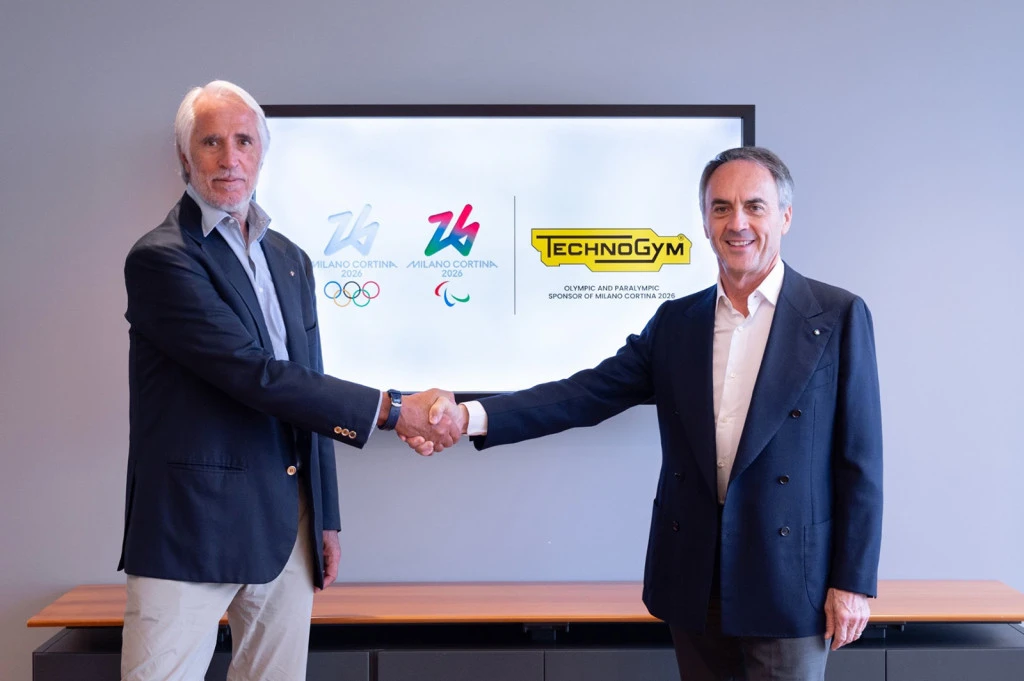
It is no exaggeration to say that in many sub-segments of the sporting goods market, competition often takes the form of patent battles. The Technogym design patent enforcement case is a prime example.
About the Author
Yang Lun
Consultant Lawyer, Longan Law Firm (Guangzhou)
Email: yanglun@longanlaw.com
Mr. Yang graduated from Sun Yat-sen University School of Law and Vanderbilt University Law School, earning his LL.B. and LL.M., respectively. Since beginning his practice, he has focused on foreign-related intellectual property law and cultural and sports law.
He has represented multiple sportswear, sporting goods, and sports equipment companies in trademark, copyright, and patent administrative protection, customs/border protection, criminal reporting of infringement, and civil litigation.
He is recognized as a Rising Talent in Foreign-Related Legal Practice by the Guangdong Lawyers Association and also holds qualifications as a sports agent and a national Class-II volleyball referee.
Related Q&A
Q: If my product is found to be infringed upon in China, how can I identify an experienced and trustworthy law firm to handle the intellectual property matter?
A:
You may contact Yang Lun, Consultant Lawyer at Longan Law Firm (Guangzhou) and also the FitGearSource contributor for intellectual property and copyright topics.
Email: yanglun@longanlaw.com
About Longan Law Firm:
Longan Law Firm, founded in 1992, is one of China’s earliest partnership-based law firms. It operates over 30 offices nationwide, including Beijing, Shanghai, Guangzhou, Shenzhen, and Hong Kong, with more than 3,000 legal professionals. As a full-service firm, Longan offers corporate, commercial, litigation, and intellectual property services. Its IP team has extensive experience supporting both domestic and international clients in rights protection and dispute resolution.

















Comments (0)
No comments yet, be the first to comment!