
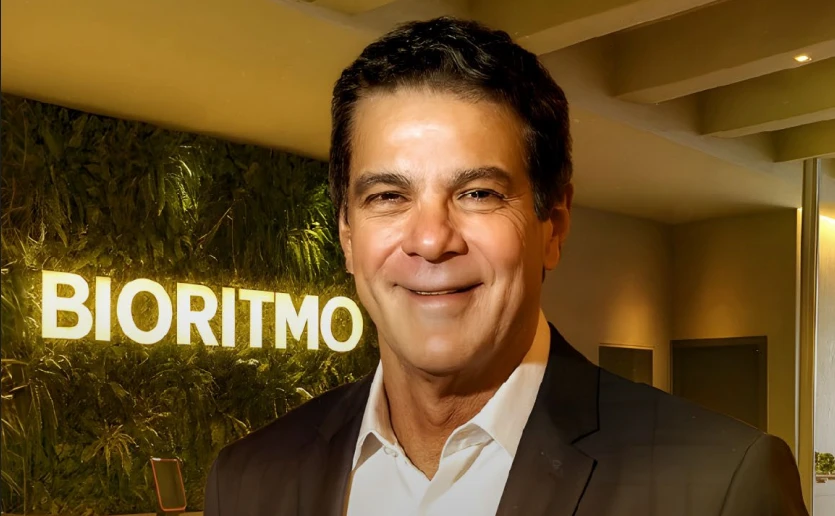
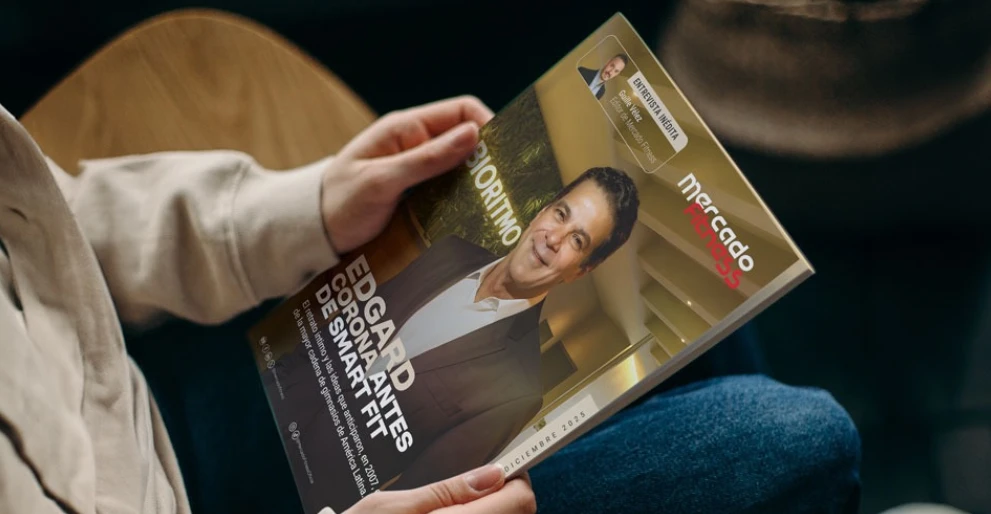
By Guille Vélez, Mercado Fitness — December 2025
In April 2007, at the restaurant of the Faena Hotel in Puerto Madero, Buenos Aires, Edgard Gomes Corona sat across the table—unhurried, composed, and carrying the calm certainty of someone shaped by trial and error. He had traveled with his wife, Soraya, to speak at the third edition of the Mercado Fitness conferences. At that moment, he was known only as the owner of Bio Ritmo, a Brazilian gym chain navigating its own challenges. Smart Fit did not yet exist.
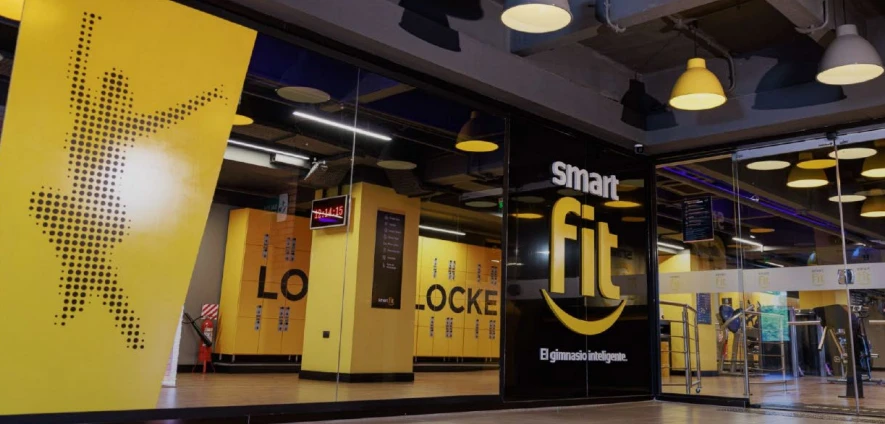
But as he spoke that morning, several of the ideas that would later define Latin America’s largest fitness chain were already there—quietly foreshadowing what, in 2009, would become Smart Fit, now the region’s largest gym network and one of the three biggest in the world.
A Life Shaped by Responsibility and Discipline
Born in São Paulo on October 23, 1956, Edgard Corona carries in his two surnames a blend of Spanish and Italian heritage. As the eldest of five siblings, with one lost to cancer, he grew up in a large family where responsibility came early and naturally.
Sport had been part of his life since childhood. Educated at Colégio Santo Américo, a rigorous semi-boarding school with demanding academics and extensive athletic programs, he played soccer, swam, and competed in water polo at a near-national level. At just 14, he began working out in a gym—unknowingly planting the seed of a future empire.
His family life was equally intertwined with his journey. From his first marriage came three children: Ana Carolina, Diogo, and Camila. From his second, twin daughters Maria Clara and Maria Paula, born in 2006. By 2007, his older children were already studying Business Administration at top universities in São Paulo.
From Sugar Mills to Gym Floors: An Unlikely Career Shift
Before fitness, Edgard lived an entirely different life. Trained as a chemical engineer, he worked in a steel mill before joining Copersucar, which controlled 70% of Brazil’s sugar commercialization. At just 23, he assumed leadership of the family business, Açucareira Corona—an operation with 7,000 employees, revenues of USD 150–200 million, international exports, and production that grew from 1 to 6 million tons under his watch.
Yet it was also here that he accumulated his deepest regret: never personally witnessing the difficult living conditions of sugarcane cutters. Years later, seeing such images on television, he felt the weight of that distance. It instilled in him a principle that would fundamentally guide his approach to leadership:
“Caring for people is not kindness—it’s strategy.”
A family dispute eventually forced him out of the mill, pushing him toward the fitness sector—initially through what he describes as his “first mistake”: investing USD 800,000 into a poorly conceived gym.
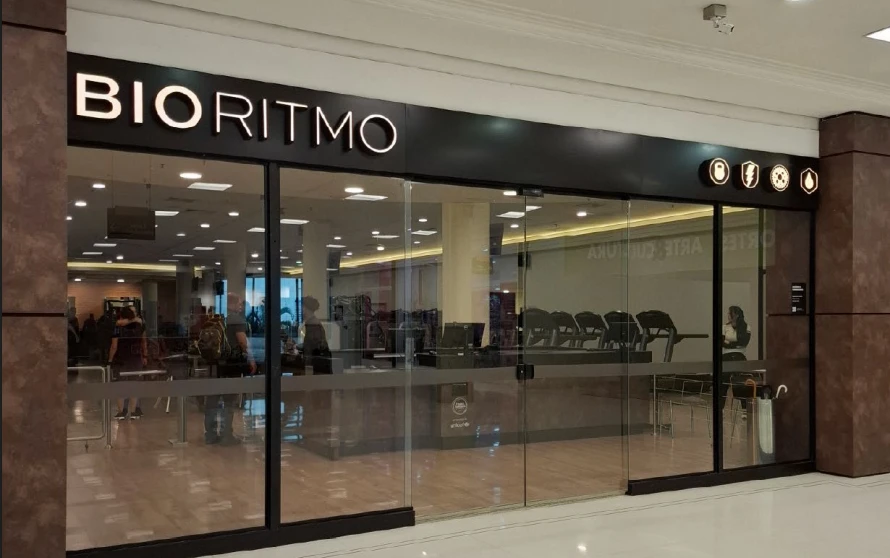
Over time, however, he reclaimed control, opened successful units such as the one on Avenida Paulista, and expanded Bio Ritmo despite acquiring problematic locations with toxic teams, declining neighborhoods, and rising costs. The skills he had developed in the industrial world—selling, leading, structuring processes, innovating—began to resurface.
It was in this transitional moment that our conversation took place.
What Edgard Already Understood in 2007
During nearly two hours of conversation, Edgard demonstrated a remarkably clear, unromantic, and experience-driven understanding of the fitness business. Several insights he shared then remain exceptionally relevant today—and foreshadowed the foundations of Smart Fit’s success.
1. People Come First—Always
From the sugar mill to the gym floor, Edgard believed that teams thrive only when they feel genuinely cared for.
“If you take care of people, people take care of you.”
He emphasized participatory teams, meaningful work, collective decision-making, and prioritizing human beings above numbers—a philosophy that today would be labeled as organizational culture.
2. Selling Is Helping, Not Pushing
Edgard openly rejected commission-driven sales:
“Commission-based selling is like giving a fish to a seal. If there’s no fish, it won’t jump.”
Instead, he taught consultants to understand that their work transforms lives. When this mindset took hold, conversion surged—from 33% to 56% in one unit. His view of consultative, purpose-driven sales was ahead of its time.
3. Retention Is the Ultimate Indicator
Long before “churn” and “LTV” became common industry vocabulary, Edgard already knew:
“Retention measures quality.”
He calculated that reducing churn by a single percentage point could preserve 250–320 members per month, totaling 3,600 annually—representing more than USD 3 million in revenue.
Retention, to him, was not a goal but a consequence of service, culture, and results.
4. Usage Creates Habit — Habit Creates Longevity
He insisted that gyms must actively guide members through their first year:
“Follow-up programs shouldn’t be about selling personal training—it’s about preventing abandonment.”
The purpose was simple: build habits.
And habits build long-term members.
5. Location Is Destiny—But Foot Traffic Is Life
Edgard summarized his site-selection philosophy in one sentence:
“First the neighborhood. Second, the sidewalk flow.”
Not square meters, not flashy architecture—real people passing by. This insight would later become essential to Smart Fit’s geographic expansion strategy.
6. Sustainable Growth Requires Density
He warned against expanding “in all directions,” citing international examples:
- Consolidate a city first
- Build geographic density
- Develop teams
- Strengthen the brand
- Then expand
This disciplined approach later defined Smart Fit’s aggressive yet controlled scaling model.
7. The Market Deludes Itself—And Pays the Price
In 2007, Edgard was skeptical of claims that the Brazilian fitness market was “exploding.” Such rhetoric, he argued, misled uninformed investors, triggered oversupply, and fueled price wars.
“The country doesn’t grow 10% a year. There won’t be any miracles.”
Real growth, he insisted, must come from quality, retention, innovation, and operational discipline.
8. Humility: A Rare Asset
Edgard admitted he had once been arrogant and believed many operators suffered from the same blindness:
- A lack of humility
- A lack of listening
- A lack of learning from competitors
“There’s so much to learn by talking with other operators.”
Coming from someone who would later build Latin America’s largest fitness chain, the message holds exceptional weight.
Before Smart Fit: The DNA Was Already There
That morning in 2007, Edgard did not talk about grand strategies or global domination. He spoke about people, mistakes, processes, sales, retention, culture, and purpose.
He already possessed the core ideas that would, two years later, shape Smart Fit into a continental powerhouse.
His most powerful lesson, then and now:
Fitness is—and will always be—a business built on people.
A Vision That Became Reality
Even before Smart Fit opened its first doors, his thinking already revealed the qualities of a future industry leader:
- A vision for scale and density
- A scientific understanding of retention
- Purpose-driven sales culture
- A pipeline of leaders ready to grow the business
- A foot-traffic-centered site strategy
- A sober, critical reading of the market
Today in 2025, Smart Fit stands as Latin America’s largest gym chain—a testament to how early clarity, grounded experience, and humility can shape an entire industry.
Infomation Source: Guille Vélez from Mercado Fitness














Comments (0)
No comments yet, be the first to comment!