

Background
U.S.-based social fitness platform Strava is reportedly preparing for an initial public offering (IPO) on Wall Street and has invited Goldman Sachs, JPMorgan, and Morgan Stanley to compete for underwriting roles. According to Reuters, Strava could launch its IPO as early as 2026, depending on market conditions.
In May 2023, the company completed a new financing round led by Sequoia Capital, reaching a valuation of USD 2.2 billion (including debt). Founded in 2009 and headquartered in San Francisco, Strava has more than 150 million registered users across 185 countries. The platform built momentum during the pandemic, fueled by community engagement and rich training data, and has since expanded its ecosystem through acquisitions and product innovation. Since 2023, Strava has acquired cycling training app The Breakaway and UK-based running app Runna to strengthen training content. The company has also appointed a new CFO and CMO with prior IPO experience, underscoring preparations for its next growth phase.
By contrast, China’s largest online fitness platform Keep also enjoyed a high-profile rise. After completing its Series F financing in early 2021 at an estimated valuation of USD 2 billion, Keep went public on the Hong Kong Stock Exchange (HKEX: 03650) in July 2023, debuting at a market capitalization close to that figure. However, its share price quickly slumped, hitting a low of HKD 3.45 by late 2023. Over the following two years, the stock remained under pressure. As of mid-September 2025, shares traded at around HKD 5.8, giving Keep a market cap of just HKD 3.0 billion (under USD 400 million)—a decline of more than 80% from its peak.

As of the end of 2024, Keep had amassed over 400 million registered users, 100 million annual active users, and more than 55 million annual workout users.
Business Model and Community Similarities
Despite different market contexts, Strava and Keep share several similarities in business approach:
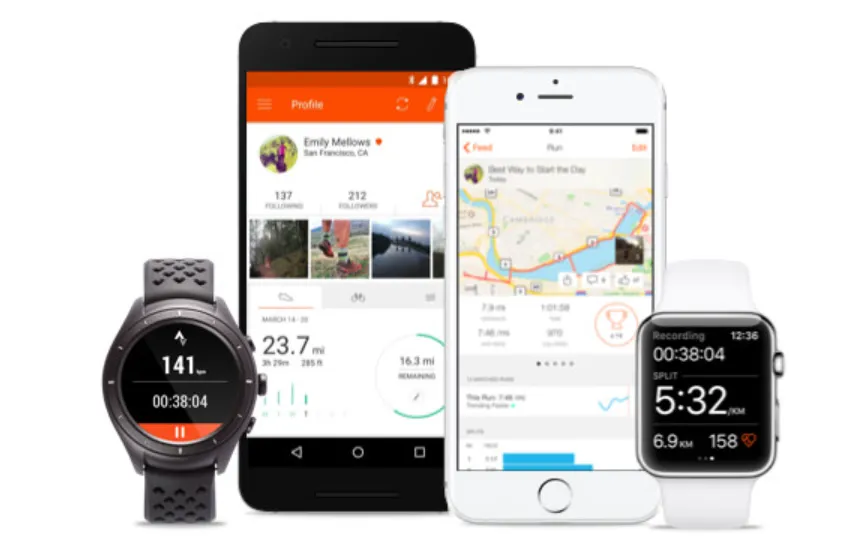
Fitness + Social + Technology: Both platforms combine fitness, social networking, and technology, leveraging large communities to enhance user experience. Strava, often described as the “social network for athletes,” allows users to record activities such as running and cycling, follow each other, and interact through likes and comments. Keep similarly fosters community engagement, enabling users to share workouts, join challenges, and follow influencers for tips. This social stickiness underpins monetization potential.
Investment in AI: Strava has launched multiple AI-driven features in recent years, including route recommendations, race discovery, and anti-cheating tools. Keep shifted its strategy between 2023 and 2025 to emphasize an AI-driven personal trainer, “Kaka”, offering customized training plans and diet tracking. By July 2025, Kaka had reached 150,000 daily active users, particularly in high-frequency features such as meal logging, proving AI’s value and stickiness.
Diversified Revenue Models: Strava’s revenue comes mainly from paid subscriptions, data services via Strava Metro (sold to government agencies), and brand partnerships such as sponsored challenges. Keep relies on a broader “subscription + digital content + hardware + advertising” model: online fitness courses, premium memberships, proprietary equipment and apparel, plus advertising and offline events. Both companies aim to convert their large user bases into multiple revenue streams for sustainable growth.
Market Positioning and Strategic Differences
Target Users and Scenarios: Strava focuses on global outdoor endurance athletes—runners, cyclists, triathletes—emphasizing performance tracking and competitive interaction. Keep targets a mass market of everyday fitness enthusiasts with content covering home workouts, strength training, yoga, and even diet guidance. In short: Strava is akin to an “athletes’ social network,” while Keep is more of an “online fitness club.”
Geographic Focus: Strava was international from inception, spanning 185 countries, primarily in Europe and North America. It supports multiple languages, integrates with wearables, and expands via acquisitions. Keep, in contrast, is overwhelmingly China-focused: over 90% of users are domestic. Strava has yet to formally enter the Chinese app stores, while Keep benefits from China’s massive user base and growing health culture.
Community Culture: Strava emphasizes performance and competition through its signature Segments feature and global challenges, appealing to serious athletes. Keep emphasizes lifestyle and accessibility, encouraging users to log daily workouts, share progress, and discuss weight loss or strength goals—less competitive, more inclusive.
Revenue Mix: Strava remains a light-asset software platform focused on subscriptions and partnerships. Keep pursued a “software + hardware” hybrid, selling branded equipment and wearables. However, this increased supply chain pressure, and in recent years Keep streamlined product lines to focus on profitability.
Capital Dynamics: Keep spent heavily on growth pre-IPO and only approached breakeven after cutting costs and boosting gross margins post-listing. In H1 2025, Keep’s revenue fell 20.8% to RMB 821.8 million, but its gross margin improved to 52.2%, leading to a modest adjusted profit of RMB 10.3 million. Strava’s financials are less transparent but were estimated at USD 200–300 million in revenue in 2023. Strava raised subscription fees and cut 14% of staff to control costs. Both companies face profitability pressure, though their timing and tactics differ.
Strava’s Opportunities
Large User Base and Network Effects: With 150 million athletes, Strava enjoys powerful network effects that reinforce its leadership in social fitness.
Subscription Conversion Potential: Only a fraction of users pay for premium features. Expanding adoption of AI-driven training and analytics could significantly raise revenue.
Event Economy and Offline Integration: Strava launched integrated race discovery tools, capitalizing on a nearly 70% increase in independent events in 2024. By partnering with race organizers, Strava could become the global backbone for event digitization.
AI and Data Leverage: Strava holds vast user movement data. Enhanced AI insights, predictive performance tools, and anti-cheating systems can deepen engagement and open new revenue streams.
M&A and Strategic Expansion: With strong venture backing (e.g., Sequoia Capital, TCV, Go4it Capital Partners), Strava can leverage IPO proceeds for acquisitions, broadening its ecosystem and accelerating global reach.
Strava’s Challenges
Monetization vs. Growth Balance: Aggressive paywalls may risk alienating free users, while IPO investors will demand profitability, raising parallels to Keep’s post-IPO struggles.
Competitive Landscape: Strava faces competition from device ecosystems like Garmin, Apple (Fitness+), and Google (Fitbit), as well as specialized apps like Nike Run Club. Large tech players could erode Strava’s market share.
User Growth Ceiling: While 150 million is significant, broadening appeal beyond endurance athletes to casual users remains difficult. Penetration into Asia and non-core demographics is key.
IPO Risks and Market Sentiment: With investor caution toward unprofitable tech IPOs, Strava risks an overvaluation “hangover” similar to Keep’s stock decline. Regulatory shifts could also complicate listing.
Data Privacy and Compliance: Strava must guard sensitive geolocation and health data. Its 2018 “heatmap” controversy—where military bases were inadvertently exposed—highlights risks. Stronger regulations, especially in the EU, may raise compliance costs and operational complexity.
Conclusion
Strava and Keep share similar roots in blending fitness, social networking, and technology. Yet, their trajectories diverge: Keep’s IPO success quickly turned into market disappointment, while Strava now faces its own crossroads with a USD 2.2 billion valuation and IPO ambitions.
Strava’s global scope and entrenched brand are advantages Keep never had, but its challenges are equally formidable: scaling subscriptions, competing with tech giants, and navigating investor scrutiny.
For industry watchers, Strava’s IPO will be more than just another listing—it will be a litmus test for the long-term viability of social fitness platforms. Can Strava deliver enduring value, or will it echo Keep’s decline? The coming years will provide the answer.













![[Smart Technology] OpenAI Launches ChatGPT Health: AI Enters the “Health Interpretation Layer,” Potentially Redefining the Fitness Equipment & Smart Device Industry](https://www.fitgearsource.com/wp-content/uploads/2026/01/CHATGPT-Health-Launched-.webp)








Comments (0)
No comments yet, be the first to comment!