
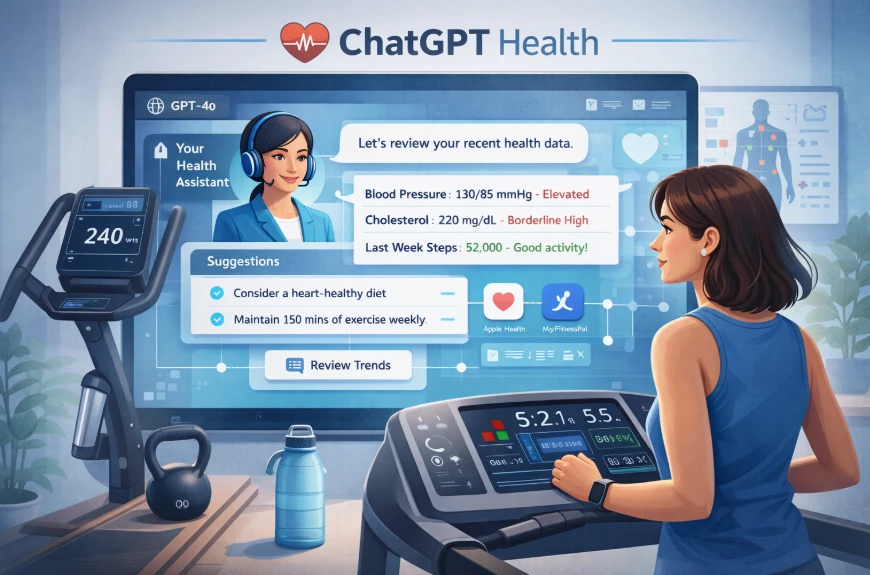
On January 7, 2026, OpenAI officially launched ChatGPT Health, a dedicated health-focused functionality that is being rolled out in phases to selected users.
This move is not merely a feature upgrade. It marks the first time OpenAI has separated health-related usage scenarios from its general-purpose AI interface, creating a dedicated health workspace. With user authorization, this workspace can integrate data from health, fitness, and lifestyle sources.
Against the backdrop of the ongoing convergence of health management, intelligent fitness, and digital healthcare, ChatGPT Health is widely viewed by the industry as a clear signal that: AI has formally entered the “Health Interpretation Layer.”
A Question That Follows Naturally: Where Are the True Product Boundaries of Fitness Equipment?
With the emergence of “health interpretation layer AI” such as ChatGPT Health, a fundamental question is becoming increasingly visible within the fitness equipment industry:
Where exactly do our product boundaries lie?
For years, many smart fitness devices and their companion apps have promoted “AI” and “intelligent algorithms” as core selling points—covering areas such as training recommendations, automatic intensity adjustment, data analysis, and personalized programs.
However, when general-purpose AI systems begin to aggregate exercise data, behavioral data, and even body assessment or health check information, and then explain these inputs in a more intuitive and understandable way, the “intelligence” that once resided mainly at the device or traditional app level is now being redefined.
In the era of ChatGPT Health, the value of fitness equipment and its apps may no longer depend on how much data they collect or how many algorithms they embed, but rather on:
• Which capabilities must remain within the device and system itself
• Which capabilities can—or even should—be delegated to higher-level AI interpretation systems
This is not merely a technical choice; it is a strategic question about product positioning and long-term competitiveness.
I. What Is ChatGPT Health?
Not a Medical System, but a “Health Interpretation Layer”**
Based on OpenAI’s official positioning and publicly disclosed information, ChatGPT Health does not provide medical diagnoses or treatment recommendations, nor is it intended to replace doctors or healthcare institutions.
Instead, its core role is closer to:
• Interpreting health and medical information
• Organizing multi-source health and exercise data within context
• Supporting user understanding of health management and exercise behavior
Structurally, health-related conversations, documents, and data are stored and managed separately from general chats, emphasizing clear boundaries for privacy and usage scenarios.
II. Core Capabilities: What Can ChatGPT Health Do?
1️⃣ Assistance with Medical and Health Report Interpretation
• Explains medical terms, test indicators, and health check reports
• Helps users understand professional recommendations from doctors
• Assists in organizing medical history highlights and questions before consultations
⚠️ The boundary remains explicit: interpretation ≠ diagnosis
2️⃣ Health & Lifestyle Management Support
• Guidance on nutrition, sleep, and stress-related health concepts
• Periodic summaries of long-term health goals
• Helping users understand the relationship between behavior changes and health status
This area clearly aligns with Wellness and Preventive Health, rather than clinical care.
III. A Key Signal: ChatGPT Health Can Connect to Fitness & Health Platforms
Confirmed by Official Information and Multiple Reports
With user authorization, ChatGPT Health can already connect to various third-party health and fitness platforms, including:
• Peloton (training records, classes, exercise behavior data)
• Apple Health (activity, sleep, heart rate, etc.)
• MyFitnessPal / Weight Watchers (nutrition and diet data)
• AllTrails (outdoor activity data)
• Other health management applications
It is important to emphasize: 👉 This represents a connection between the data layer and the interpretation layer, not a commercial hardware partnership or deep system-level integration with equipment brands.
Typical Application Logic in the Peloton Context
With user consent, ChatGPT Health can use Peloton data to:
• Summarize training frequency and intensity trends over time
• Help users understand the relationship between training load and recovery
• Provide lifestyle and exercise management suggestions aligned with personal habits
Its essence is not AI controlling devices, but rather:
Transforming existing exercise data into health information that users can truly understand and act upon.
IV. Privacy & Compliance: A Foundational Principle Emphasized by OpenAI
Health data is inherently more sensitive than general conversational content. Accordingly, ChatGPT Health emphasizes:
• Logical separation between health conversations and general chats
• Full user control over data connection, deletion, and disconnection
• Explicit disclaimers that it does not provide medical diagnosis or treatment advice
This approach is widely seen as a strategic preparation for expansion into highly regulated markets such as Europe.
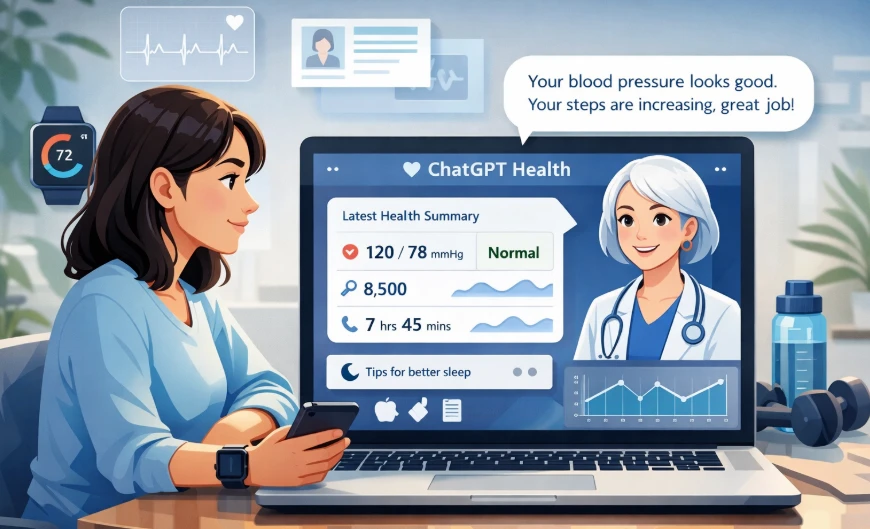
V. Industry Implications: What Does This Mean for Fitness Equipment & Smart Devices?
1️⃣ Fitness Equipment as Data Acquisition Systems
Modern fitness equipment has evolved far beyond mechanical devices; it is now a highly integrated exercise data acquisition terminal:
• Treadmills: speed, incline, time, distance, heart rate
• Power bikes / indoor cycling: power (watts), cadence, resistance, heart rate
• Strength equipment: load, repetitions, sets, training volume
However, data collection does not equal data understanding.
2️⃣ Traditional Fitness Apps: Strong at Aggregation, Weak at Interpretation
For more than a decade, the dominant industry model has been app-based aggregation:
• Consolidating multi-device exercise records
• Combining personal data with training frequency
• Generating charts and statistical summaries
Yet these systems largely focus on display and statistics, not interpretation or decision support.
For many users, data is abundant, but actionable clarity is missing.
3️⃣ The Real Shift Introduced by ChatGPT Health
The significance of ChatGPT Health lies not in collecting more data, but in bridging three previously fragmented information systems:
1. Exercise data from equipment and wearables (heart rate, power, speed, load)
2. Behavioral and personal data from traditional apps (frequency, sleep, weight)
3. User-provided body assessment and health check information
Without crossing medical boundaries, AI begins to explain why changes occur, what deserves attention, and how to adjust behavior.
4️⃣ From Algorithm Output to Logical Explanation
Unlike fixed-rule algorithms, ChatGPT Health focuses on:
• Explaining underlying reasons rather than issuing simple scores
• Helping users distinguish meaningful changes from normal fluctuations
• Providing context-driven behavioral guidance
This logic-based explanation capability is something traditional fitness apps struggle to achieve independently.
5️⃣ A Practical Wake-Up Call for Brands: Competition Is Shifting Toward Cognitive Experience
For fitness equipment and smart device brands, competitive focus is changing:
• Hardware performance differentiation is narrowing
• Marginal returns from adding parameters and indicators are declining
• What users increasingly seek is simple but critical:
“What does my current state mean, and what should I do next?”
The future battleground may no longer be who collects more data, but rather who explains data more clearly, compliantly, and credibly.
VI. Conclusion: A Clear Direction, Not the Final Destination
The launch of ChatGPT Health does not disrupt the medical system; instead, it clearly defines a long-missing layer in health and fitness:
Helping people truly understand their health and exercise data—without crossing into medical diagnosis.
For fitness equipment manufacturers, intelligent solution providers, app developers, and brands, this represents not just a technological update, but a long-term strategic question about product boundaries, data value, and user experience.


















Comments (0)
No comments yet, be the first to comment!