
Introduction
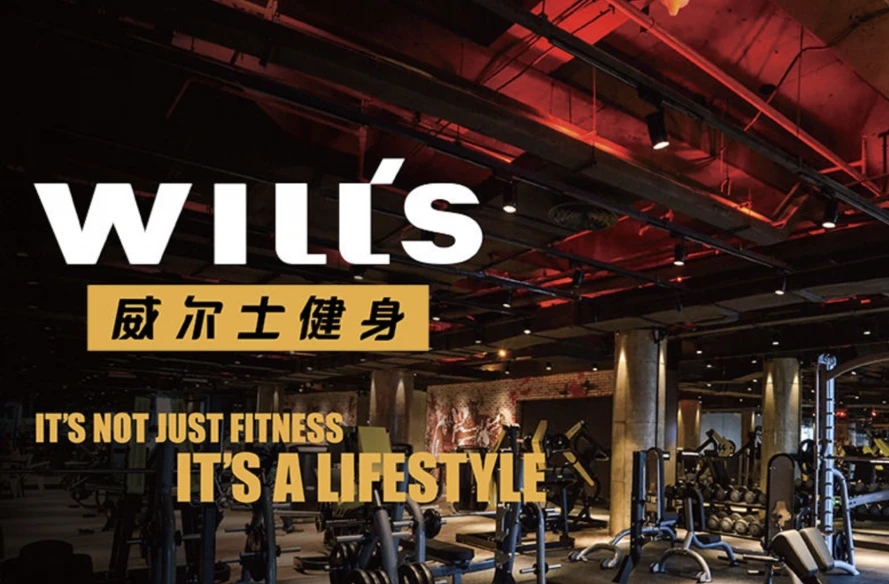
When LVMH’s investment arm, L Catterton, spent $300 million to acquire China’s Will’s Fitness in 2018, many believed it marked the dawn of “luxury fitness” in China. Seven years later, that dream has unraveled—Will’s is nearly gone, and the once-celebrated investment stands as a cautionary tale.
What went wrong? And what does this failure reveal about China’s evolving fitness landscape, where new models like Lefit are quietly reshaping the industry’s future?
1. The Collapse of a “Luxury-Grade” Fitness Dream
Back in 2018, few questioned LVMH’s investment instinct. When its private-equity arm L Catterton poured US $300 million into Will’s Fitness, China’s largest premium gym chain, the move looked visionary.
At the time, Will’s owned more than 80 flagship gyms across China’s top commercial districts, each valued at over US $4 million. The idea was to elevate fitness into a luxury lifestyle experience—a “gym for the elite,” where design and exclusivity mirrored the aura of Louis Vuitton.
The acquisition was structured more like a bargain-price takeover than a growth partnership. Yet seven years later, the dream has evaporated. By mid-2025, Will’s had shuttered almost all of its 165 locations, leaving only two clubs in Shanghai.
The company’s debt now exceeds RMB 1.1 billion (about US $150 million), with 80 percent of liabilities tied to unfulfilled prepaid memberships. Once hailed as “China’s Equinox,” Will’s has instead become a case study in how capital optimism can collide with structural decay.
2. What L Catterton Misread: The Equinox Fantasy
L Catterton’s strategy wasn’t random. Internally, Will’s was seen as a high-frequency offline traffic entry point connecting directly to LVMH’s affluent consumer base—60 percent of Will’s members reportedly earned over RMB 250,000 a year.
The plan was to replicate the Equinox playbook: premium fitness blended with cafés, spas, and designer retail collaborations. The goal was to merge luxury consumption and wellness—imagine trading LV points for personal-training sessions or hosting fashion previews inside “wellness lounges.”
In practice, however, Will’s never escaped its old sales-driven model. Despite store redesigns and the “W+ Flagship” upgrade initiative led by LVMH’s design consultants, profitability deteriorated. The problem wasn’t lack of aesthetics—it was a broken business logic: high rent, high payroll, and a reliance on long-term prepaid memberships to fund short-term operations.
By 2024, with Chinese consumer spending tightening and overseas luxury purchases surging due to exchange-rate shifts, Will’s collapsed under its own weight. LVMH, facing a slowdown in Asian sales, quietly chose to cut losses rather than double down on a failing model.
3. The Three Structural Faults Behind the Failure
1️⃣ High-cost model meets consumer downgrading.
Will’s concentrated in expensive downtown real estate such as Shanghai’s Lujiazui and Beijing’s CBD. As disposable incomes shrank, high-end annual memberships became the first expense to go. Rent and renovation costs remained fixed, pushing the brand into a profit-free spiral.
2️⃣ The prepaid-card illusion collapsed.
Will’s cash flow once thrived on multi-year prepaid packages, effectively a financial leverage game disguised as sales. When closures began, refund requests exploded and new sales dried up, turning its core business model into a liability.
3️⃣ Governance and execution failure.
Post-acquisition management turnover was chaotic. Top executives chased short-term numbers, key coaches left for competitors, and customer service disintegrated. The brand’s once-premium image eroded into a consumer-rights crisis.
4. Lessons Learned: Brand Alpha Can’t Beat Market Beta
Was this a case of bad luck or a bad model? The truth is that L Catterton misjudged both timing and operating reality. Capital alone cannot repair a flawed business structure. Will’s still relied on the very practices the modern fitness consumer has rejected: high pressure sales, expensive contracts, and poor transparency.
In contrast, China’s new-generation fitness chains are thriving precisely because they are small, flexible, and user-centric.
5. The Rise of “Small and Smart” Models — Lefit as a Case Study
As traditional gym giants falter, new players such as Lefit (HILEFIT) are redefining China’s fitness landscape. According to the 2025 HFA Global Report, Lefit ranks among the world’s top five fitness chains with over 1,800 locations and more than 14 million registered users, second only to Planet Fitness in global membership base.

Unlike Will’s, Lefit pioneered monthly subscription pricing, giving users flexibility and eliminating risky long-term prepayment. Its “pay-per-month, open-anytime” model mirrors the success of Anytime Fitness and Planet Fitness in Western markets, while adapting to China’s digital-native consumer behavior.
Lefit has also evolved into a multi-brand ecosystem, spanning personal-training studios (FEELINGME), next-gen fitness clubs (RECORE), strength gyms (LOVEFITT), and yoga/Pilates studios (YOGA POD). Through a combination of digital operations platforms and partner-driven expansion, Lefit is rebuilding consumer trust and professionalizing coach development—an area where legacy brands failed.
The contrast is stark: Will’s sold luxury; Lefit sells reliability and freedom of choice.
6. Conclusion: Beyond the Luxury Mirage
The fall of Will’s Fitness shows that branding and capital cannot substitute for operational integrity. LVMH sought to import luxury’s scarcity logic into a market moving toward accessibility and transparency. It bought what it thought was “China’s Equinox,” but what it actually acquired was a high-leverage prepaid model already past its peak.
The lesson extends beyond one company. In an era of economic deflation and shifting consumer values, success in the fitness industry no longer depends on opulence but on trust, adaptability, and genuine value creation.
Capital can buy a company, but not sustainability.
Branding can lend prestige, but not credibility.
The future of China’s fitness market will belong to nimble, tech-driven, service-oriented players like Lefit—those who understand that in fitness, as in life, real strength lies in consistency, not glamour.










![[Smart Technology] OpenAI Launches ChatGPT Health: AI Enters the “Health Interpretation Layer,” Potentially Redefining the Fitness Equipment & Smart Device Industry](https://www.fitgearsource.com/wp-content/uploads/2026/01/CHATGPT-Health-Launched-.webp)






Comments (0)
No comments yet, be the first to comment!