
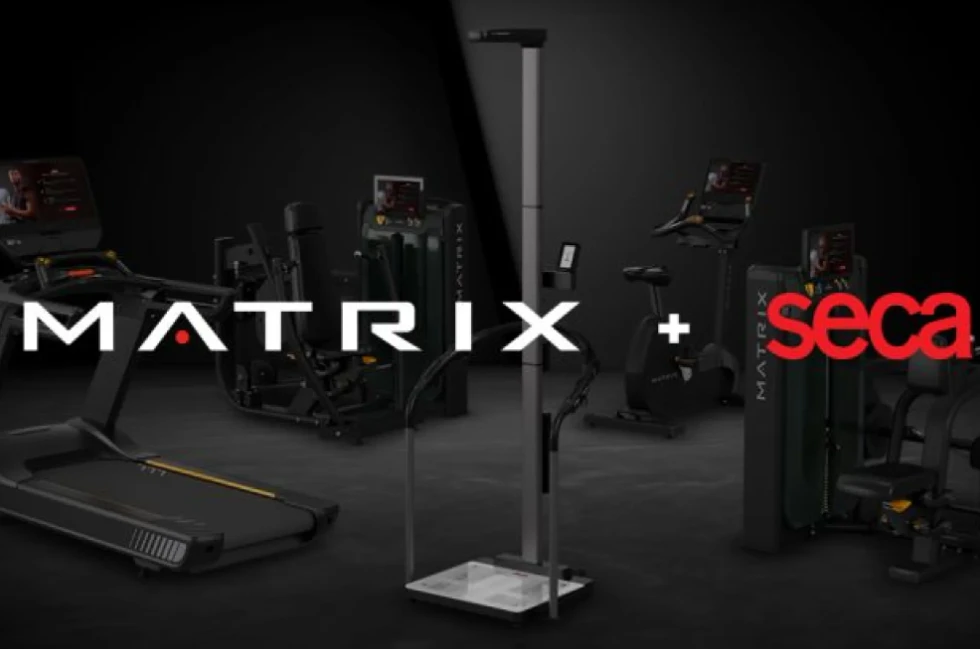
Recently, Matrix Fitness announced a strategic partnership with German medical measurement specialist seca. The collaboration focuses on developing an integrated solution that connects clinically validated body composition analysis with AI-driven training programming.
The goal is not merely to share data between systems, but to translate medical-grade measurement into guided, intelligent training experiences on the gym floor. The companies plan to formally introduce this integrated solution at major global industry events in 2026, including The HFA Show and FIBO.
At its core, the partnership aims to address a persistent challenge in the fitness industry: how to turn increasingly sophisticated data into clear, actionable training decisions—without adding operational complexity for operators or coaches.
This is where my analysis begins.
________________________________________
For many years, “digitalization” and “intelligence” have been recurring buzzwords in the fitness equipment industry. From connected cardio machines to cloud-based training platforms, from body composition uploads to app dashboards, technological progress is undeniable.
Yet if we step back and assess the industry objectively, a difficult truth emerges: very few of these innovations have truly integrated with meaningful health management. In many cases, data has been collected and displayed—but not structurally embedded into training decisions. The result is often a layer of visualization rather than a transformation of logic.
This is why the Matrix × seca partnership deserves closer attention.
At first glance, it may look like a typical integration—body composition equipment connected to a training ecosystem. But I believe the significance goes deeper.
What Matrix (under Johnson Health Tech) is attempting is not simply a hardware upgrade. It is an effort to move beyond the traditional role of a fitness equipment supplier and enter a more professional, health-oriented domain. By integrating clinically validated body composition metrics with an intelligent execution environment, Matrix is exploring how equipment can become part of a health decision framework—not just a training tool.
For years, our industry has excelled at building machines. We have improved motors, biomechanics, connectivity, and user interfaces. But we have not consistently answered a more fundamental question:
How does this data change what the member actually does tomorrow?
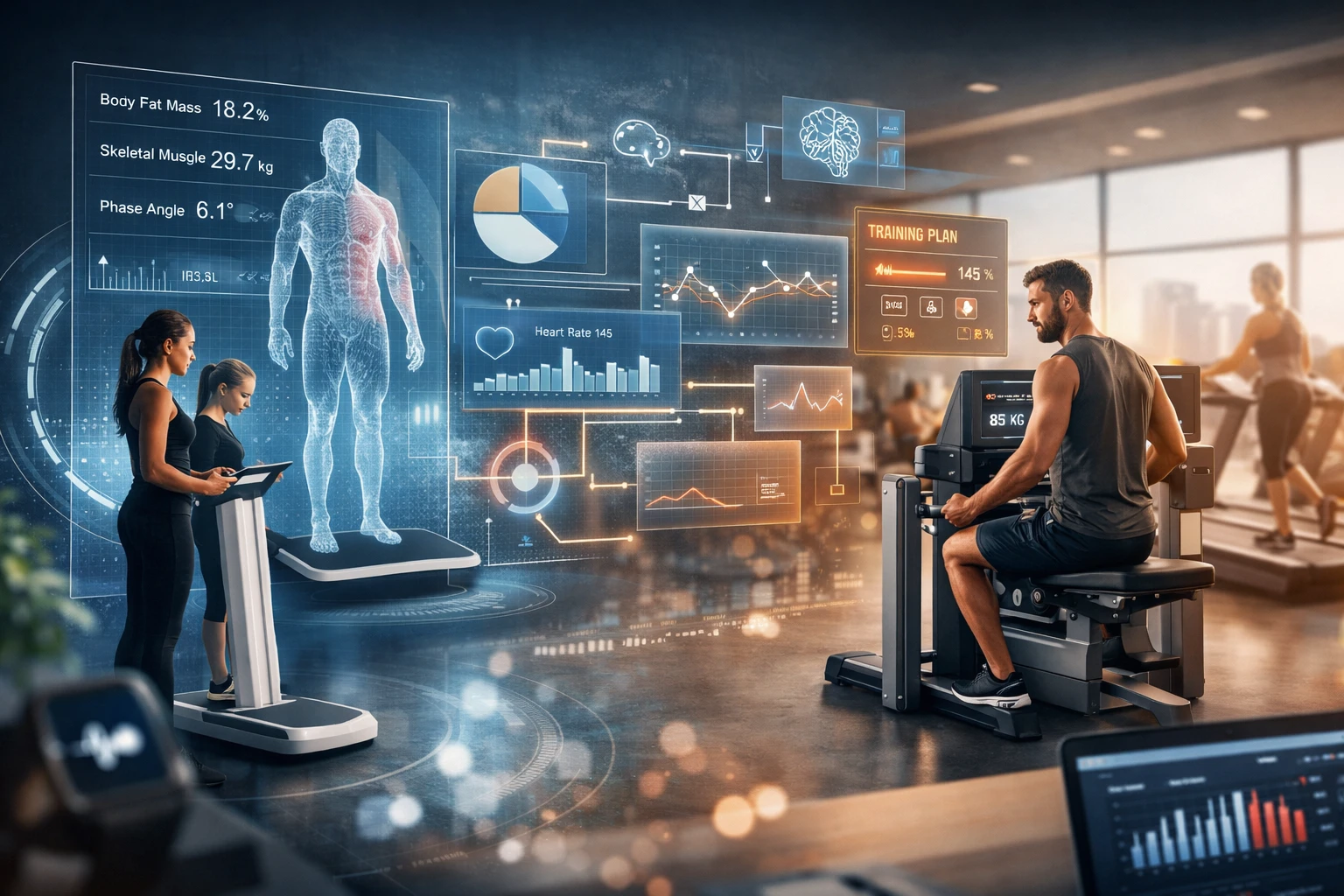
seca’s multi-frequency BIA systems provide medically meaningful parameters—such as phase angle, intracellular and extracellular water balance, and skeletal muscle distribution. These are not lifestyle metrics; they carry physiological implications. Matrix, meanwhile, has been building a connected ecosystem capable of structuring load progression, managing training cycles, and embedding AI-driven programming logic.
If these two systems are truly integrated—not merely connected—what emerges is not a hardware bundle, but a decision loop:
Assessment → Interpretation → Training Prescription → Execution → Feedback → Reassessment.
This represents a structural shift.
Whether this attempt will ultimately succeed remains to be seen. Integration at the algorithmic and operational level is complex. Translating medical indicators into training variables requires more than software compatibility—it demands methodological clarity and disciplined execution. Time will judge its effectiveness.
However, from an industry evolution perspective, this direction is necessary.
Today, many fitness equipment brands are trapped in intense price competition and product homogenization. Hardware differentiation alone is increasingly difficult. In such an environment, the more important strategic question is not how to add features, but how to redefine value.
Matrix’s move suggests a pathway. Instead of competing only within the boundaries of equipment manufacturing, brands can explore cross-disciplinary integration—bridging fitness, health data, and preventive care. Not everyone needs to replicate this exact partnership model. But the mindset behind it—breaking out of the hardware-only framework and seeking structural innovation—is worth serious reflection.
The next phase of competition in our industry may not be about who has more connected machines, but about who can turn credible data into confident decisions.
As someone who has spent more than two decades working across sourcing, product development, and global supply chains in fitness equipment, I see this as a meaningful experiment. It signals that some leading players are no longer satisfied with being “smart equipment brands.” They are attempting to become part of a broader health ecosystem.
That shift, in my view, deserves attention—not because it guarantees success, but because it challenges the industry to think differently.















Comments (0)
No comments yet, be the first to comment!