

Overview & Methodology
Now in its fourth year, the PureGym UK Fitness Report provides a comprehensive snapshot of the UK’s health, fitness and wellbeing landscape. The research combines PureGym internal data with external sources including YouGov, Google search data, and a nationally representative survey of over 2,000 people, supported by expert insights from personal trainers, the British Heart Foundation and Andy’s Man Club.
Health Aspirations vs Reality
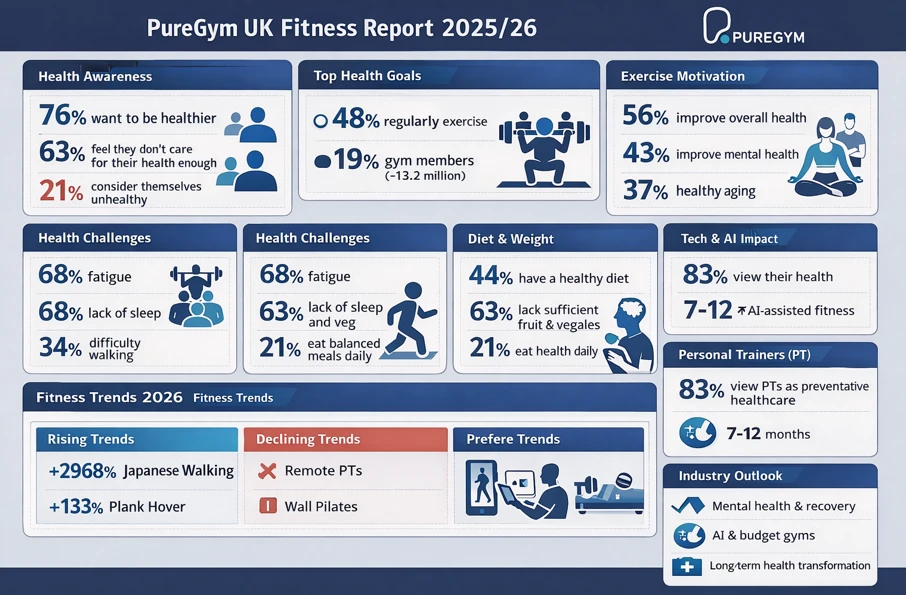
Health ambition remains high in the UK. 76% of people aspire to be fit and healthy, a figure unchanged over the past three years. However, a persistent gap remains between intention and action:
• 63% feel they do not look after their health enough
• 21% do not consider themselves healthy at all (down slightly from 22% in 2024)
• Women are more likely than men to feel unhealthy (23% vs 20)
Key improvement priorities have shifted toward sleep quality (34%), energy levels (32%), and mental health (29%), reflecting widespread fatigue and stress.
Participation in Exercise
Only 48% of the UK population currently exercises, a figure unchanged from 2024. Among those who do:
• Gen Z (18–24) leads participation at 63%
• London remains the most active region (60%), while the East of England is lowest (40%)
• Just 31% meet NHS moderate activity guidelines, though 61% meet strength-training recommendations
Fatigue is a major national issue, with 68% of people reporting low energy levels.
Motivation & Barriers
The primary reasons people exercise are:
• Improving overall health (56%, +7% YoY)
• Supporting mental health (43%, +9% YoY)
• Improving appearance (36%)
Conversely, barriers to exercise are increasing:
• 31% dislike exercise (+11% YoY)
• 12% experience “gymtimidation”, particularly women (17% vs 5% men)
• Mental health is a growing barrier among younger adults
Exercising in front of others remains the top source of gym anxiety (79%).
Gym Usage & Behaviour
Gym penetration continues to grow:
• 19% of the UK population are gym members (≈13.2 million people)
• 17% are considering joining a gym in the next 12 months
• The 25–34 age group has the highest gym participation
The main reasons for gym cancellation remain cost (27%) and lack of time (14%).
Usage patterns show:
• Mondays are the busiest gym days
• Sundays and December are the quietest
• Average gym visit length is 68 minutes
Technology, AI & Digital Fitness
Technology is increasingly embedded in fitness behaviour:
• 61% use smartphones to track fitness
• 42% use smartwatches
• 33% now use AI tools for fitness (+6% YoY)
AI is primarily used for:
• Nutrition and meal planning (41%)
• Basic workout plans (38%)
• Learning exercises and technique (36%)
While most users report positive outcomes (greater awareness, motivation, mood), 18% report anxiety or guilt from data tracking.
Diet, Hydration & Supplements
Nutrition remains a weak point nationally:
• Only 44% feel they have a healthy diet
• Average water intake is just 662 ml/day, far below NHS guidelines
• 63% consume fewer than five portions of fruit and vegetables daily
Supplement use is widespread (32%), yet 20% mistakenly view supplements as a replacement for a healthy diet, raising public-health concerns. Interest in Ozempic and weight-loss injections is growing, though actual usage remains low (4%).
Personal Trainers & Preventative Healthcare
The report highlights the evolving role of personal trainers:
• 83% of PTs see themselves as part of the UK’s preventative healthcare system
• 77% cite client relationships as the key to retention
• GP exercise referrals remain limited, despite strong alignment with public health goals
Social & Community Impact
Gyms increasingly function as social spaces:
• 41% say gym friends improve consistency
• 40% feel more motivated
• 33% socialise with gym friends outside the gym
Community is shown to positively impact both adherence and wellbeing, particularly among younger adults.
Outlook: Fitness Trends for 2026
Search data points to a shift toward accessible, low-impact movement:
Top emerging trends:
• Japanese walking (+2,968%)
• Walking yoga (+2,414%)
• Plank hover (+967%)
Declining trends include remote personal training, wall Pilates, and overly rigid workout structures, indicating consumer fatigue with complex or restrictive formats.
Industry Implications
The 2025/26 report paints a picture of strong health intent, slow behavioural change, rising fatigue, and growing reliance on technology and community. For gym operators, fitness brands and equipment manufacturers, the findings reinforce the importance of accessibility, affordability, inclusivity, mental-health awareness, and hybrid digital-physical solutions as the industry moves into 2026.